
What is Information Technology: Digital Transformation for IT Leaders
Discover what IT leaders need to know about digital transformation, including strategies, challenges, and implementation insights in the context of what is information
Introduction
Digital transformation for IT leaders has become a defining challenge for information technology leaders navigating markets where visibility, conversion, and pipeline depend on more than infrastructure decisions. The work is no longer confined to selecting platforms or modernizing systems—it now encompasses how companies are discovered, how they communicate value, and how they convert attention into revenue. For IT leaders whose responsibilities have expanded into digital growth, content operations, and buyer journey design, the transformation agenda touches every layer of the go-to-market stack.
The shift is structural. Companies with real products and existing subject-matter expertise are finding that their digital presence underperforms not because their offerings are weak, but because their messaging, targeting, and conversion architecture were built for a different search and buyer environment. IT leaders are being asked to solve problems that sit at the intersection of technology, content, and commercial strategy—problems that require search intelligence, AI-visibility baselines, and the ability to operate a content engine that adapts to rankings, impressions, and conversion feedback in real time.
What separates successful transformation programs from stalled initiatives is clarity about where the work starts. The principals who have built live environments for testing search, messaging, and conversion operations understand that digital transformation begins with business context, not prompts. It requires planning for Google rankings, AI Overviews, answer engines, source authority, and citation readiness—all while connecting visibility to pipeline through buyer journeys that reflect how decisions are actually made. For IT companies generating enterprise leads, this means building systems that convert keywords into pain points, comparison paths, decision pages, and conversion moments.
The work starts with business context, not prompts—and the first 90 days determine whether the transformation becomes an operating system or a stalled project.
The transformation timeline is compressed. The first 30 days establish the intelligence layer: technical baseline, content inventory, search opportunity map, and AI-visibility baseline. Days 31 through 60 focus on improving the existing asset—refreshing high-value pages, fixing structural gaps, improving internal linking, and launching the first optimization wave. By day 90, the engine is operational: ongoing content production, GEO-ready output, executive reporting cadence, and a conversion feedback loop that turns performance data into the next operating queue.
What IT Leaders Must Understand
Digital transformation for IT leaders is not a single project with a defined end state. It is the establishment of a continuous operating model that integrates search intelligence, content velocity, and conversion strategy into a system that adapts as markets, algorithms, and buyer behavior evolve. The companies that succeed are those whose IT leadership recognizes that transformation is measured not by the number of tools deployed, but by the ability to turn visibility into pipeline, content into authority, and operating leverage into sustained growth.
What Challenges Do IT Leaders Face in Digital Transformation?
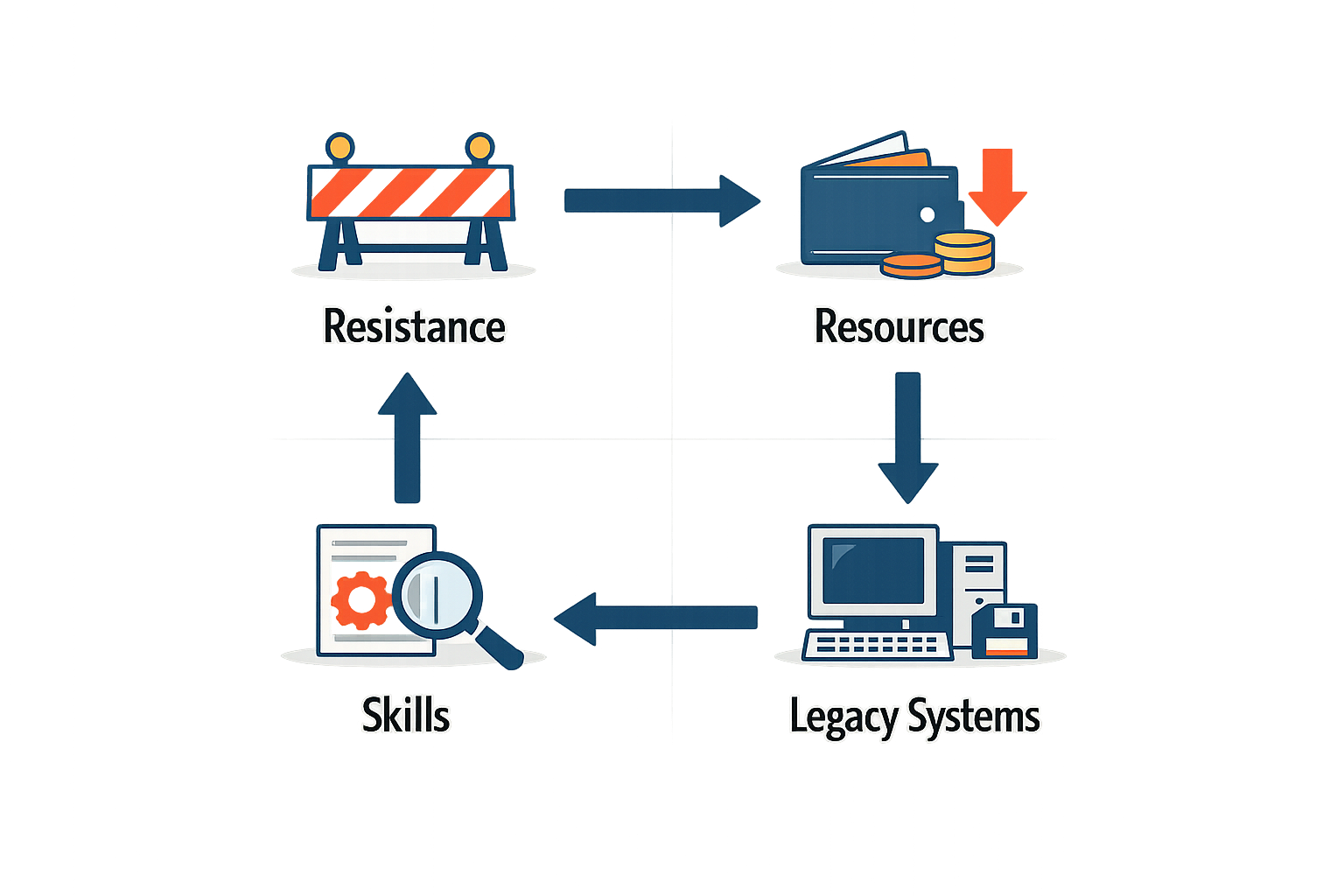
IT leaders today face a paradox: digital transformation promises competitive advantage, yet the path forward is littered with obstacles that traditional technology management never prepared them for. The challenge isn't simply adopting new tools—it's orchestrating fundamental shifts in how organizations operate, compete, and deliver value while maintaining operational stability.
The Underperforming Digital Presence
Many IT leaders inherit digital ecosystems that fail to meet business objectives. Websites don't convert visitors into leads. Customer portals create friction instead of reducing it. Data sits in silos, inaccessible to the teams who need it most. These aren't minor inefficiencies—they're strategic liabilities that compound over time.
When your digital presence underperforms, the cost isn't just measured in lost revenue. It's measured in competitive position, customer satisfaction, and the credibility of the IT organization itself. Addressing this requires more than incremental improvements; it demands a comprehensive digital growth strategy that aligns messaging, targeting, buyer journeys, and conversion architecture with actual business outcomes.
Technical Debt and Infrastructure Constraints
Legacy systems weren't designed for the scale, speed, or integration requirements of modern digital operations. IT leaders must balance the need for innovation against the reality of technical debt—outdated code, fragmented databases, and infrastructure that can't support new capabilities without significant rework.
The infrastructure layer presents its own set of challenges. Ensuring that crawling permissions are properly configured in robots.txt and across CDN layers isn't glamorous work, but it's foundational. When these technical fundamentals aren't in place, even the most sophisticated digital initiatives fail to reach their intended audiences. Regular site verification becomes essential for discovering and diagnosing issues before they escalate into business-critical problems.
Organizational Resistance and Skill Gaps
Technology transforms faster than organizations do. IT leaders face resistance from teams comfortable with existing processes, budget constraints that limit hiring and training, and a talent market where digital expertise commands premium compensation. The gap between what the business needs and what the current team can deliver widens with each passing quarter.
The hardest part of digital transformation isn't choosing the right technology—it's building the organizational capacity to use it effectively.
This organizational friction manifests in delayed projects, incomplete implementations, and solutions that technically work but fail to drive adoption. IT leaders must simultaneously upgrade systems and upgrade people, often without the luxury of pausing operations to do either properly.
Measurement and Accountability Challenges
How do you prove the value of digital transformation when benefits are diffuse and costs are immediate? IT leaders struggle with measurement frameworks that capture both technical performance and business impact. Traditional IT metrics—uptime, response time, ticket resolution—don't translate cleanly to digital transformation outcomes like customer lifetime value, conversion rate improvement, or market share gains.
Without clear measurement, digital transformation initiatives become vulnerable to budget cuts, scope reductions, and executive skepticism. IT leaders need frameworks that connect technical investments to business results in language that CFOs and board members understand. For those seeking structured approaches to digital growth, exploring enterprise lead generation strategies for IT companies can provide insight into measurement frameworks that bridge technical and business metrics.
The Integration Complexity Problem
Digital transformation rarely involves a single system or process. It requires integrating CRM platforms with marketing automation, connecting e-commerce systems to inventory management, and ensuring that customer data flows seamlessly across touchpoints. Each integration point introduces complexity, potential failure modes, and ongoing maintenance requirements.
IT leaders must architect solutions that work today while remaining flexible enough to accommodate tomorrow's requirements. This means choosing platforms and approaches that support extensibility without creating new forms of lock-in. The integration challenge isn't technical alone—it's strategic, requiring decisions about which systems serve as sources of truth and how data governance will be enforced across the enterprise.
How Should IT Leaders Approach Digital Transformation?
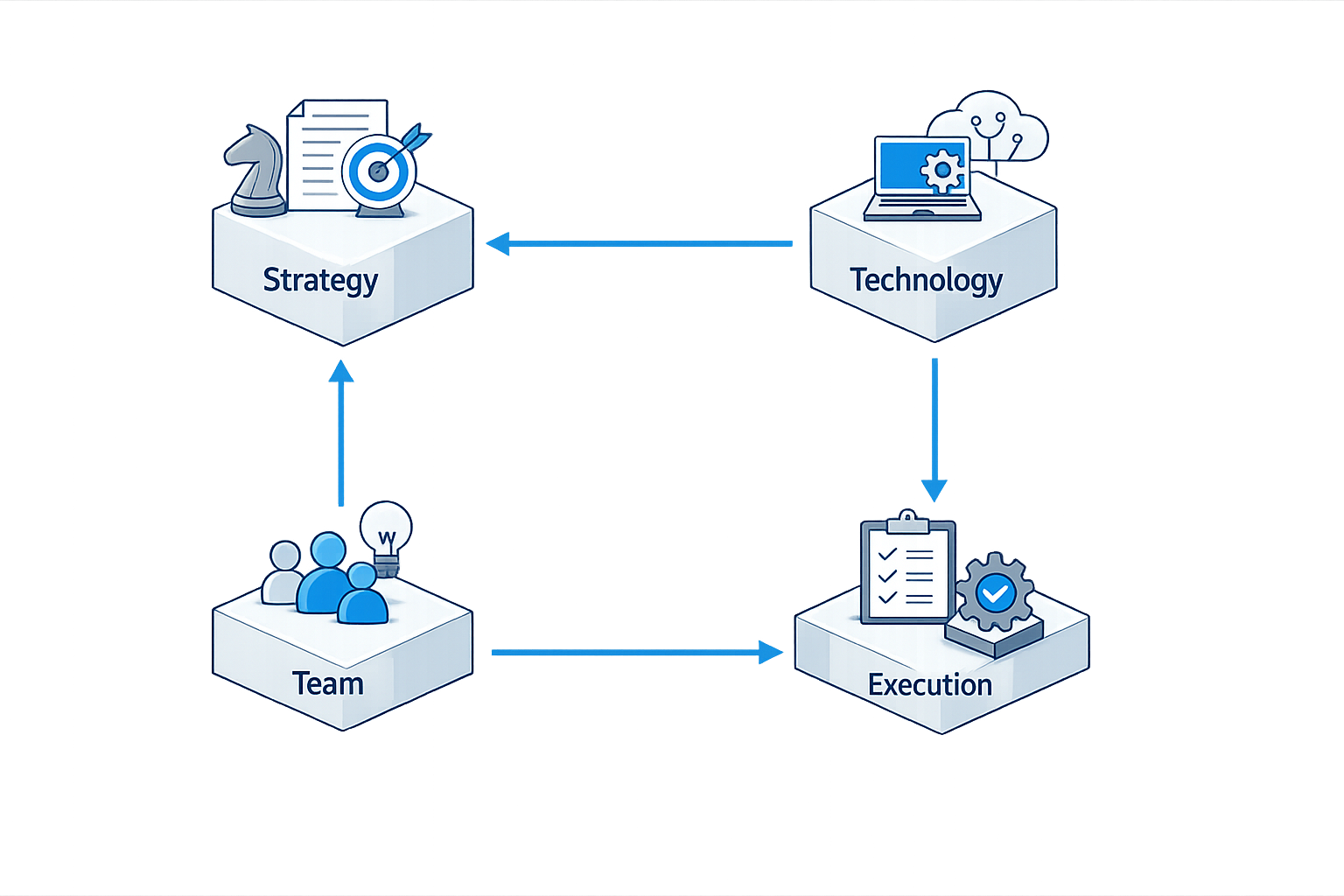
Navigating digital transformation for IT leaders requires a structured approach that balances immediate operational needs with long-term strategic goals. IT leaders must build systems that deliver measurable results while positioning their organizations for sustained growth.
Build the Intelligence Layer First
Before launching new initiatives, establish a baseline understanding of your current state. Document your technical infrastructure, catalog existing content assets, and map search visibility across owned properties. This intelligence layer becomes the foundation for prioritization decisions and resource allocation.
Step 1
Establish your technical baseline
Catalog systems, integrations, and data flows before introducing new capabilities. Identify gaps between current infrastructure and the requirements of modern search, AI visibility, and content operations. This baseline prevents redundant investments and reveals hidden technical debt.
Step 2
Inventory content and search assets
Document every page, post, and resource your organization publishes. Tag content by topic, format, performance, and strategic value. This inventory exposes content gaps, duplication, and opportunities for consolidation or refresh.
Step 3
Map your search opportunity
Analyze where your organization appears in search results, which queries drive traffic, and where competitors capture visibility you lack. This map guides content strategy and helps marketing teams prioritize high-value topics.
Improve the Existing Asset
Once you understand the baseline, focus on extracting more value from what you already have. Refresh high-performing content, fix structural issues that limit discoverability, and strengthen internal linking to distribute authority across your site.
Address technical gaps that prevent search engines and AI systems from understanding your content. Improve page structure, add schema markup where appropriate, and ensure mobile performance meets current standards. For organizations with enterprise lead generation goals, these technical improvements directly impact conversion rates.
Operate the Engine
Digital transformation is not a project with a fixed end date. IT leaders must establish ongoing processes that continuously improve search intelligence, content velocity, and AI-search readiness. This operating model requires clear ownership, defined workflows, and regular feedback loops.
Step 4
Launch ongoing content operations
Establish production workflows that convert subject-matter expertise into published content. Define roles for strategy, drafting, review, optimization, and publishing. Build feedback mechanisms that route performance data back to content creators.
Step 5
Implement executive reporting cadence
Create dashboards that connect content activity to business outcomes. Track rankings, traffic, conversions, and content contribution. Report on AI citations and search visibility trends. This reporting cadence keeps transformation efforts aligned with executive priorities.
Focus on AI-Search Readiness
As AI-powered search tools reshape how buyers discover solutions, IT leaders must ensure content is structured for extraction and citation. This means optimizing for clarity, source quality, and extractability—not just keyword density.
Test content against AI search tools. Verify that key claims are properly sourced, that page structure supports question-answer extraction, and that technical markup helps AI systems understand context and relationships.
Operating leverage comes from systems that improve performance without proportional increases in headcount or budget.
Establish Conversion Feedback Loops
Connect search performance to revenue outcomes. Track which content drives qualified leads, which topics convert at higher rates, and where prospects drop off in the buyer journey. Use this feedback to refine content strategy, adjust technical priorities, and allocate resources to high-impact initiatives. Understanding how to design quote request forms that capture qualified jobs becomes essential when conversion architecture meets buyer intent.
For B2B companies with real products and existing subject-matter expertise, this feedback loop transforms content from a cost center into a measurable growth driver. IT leaders who build these systems position their organizations to scale visibility and conversions without scaling headcount proportionally.
Tips and Tricks
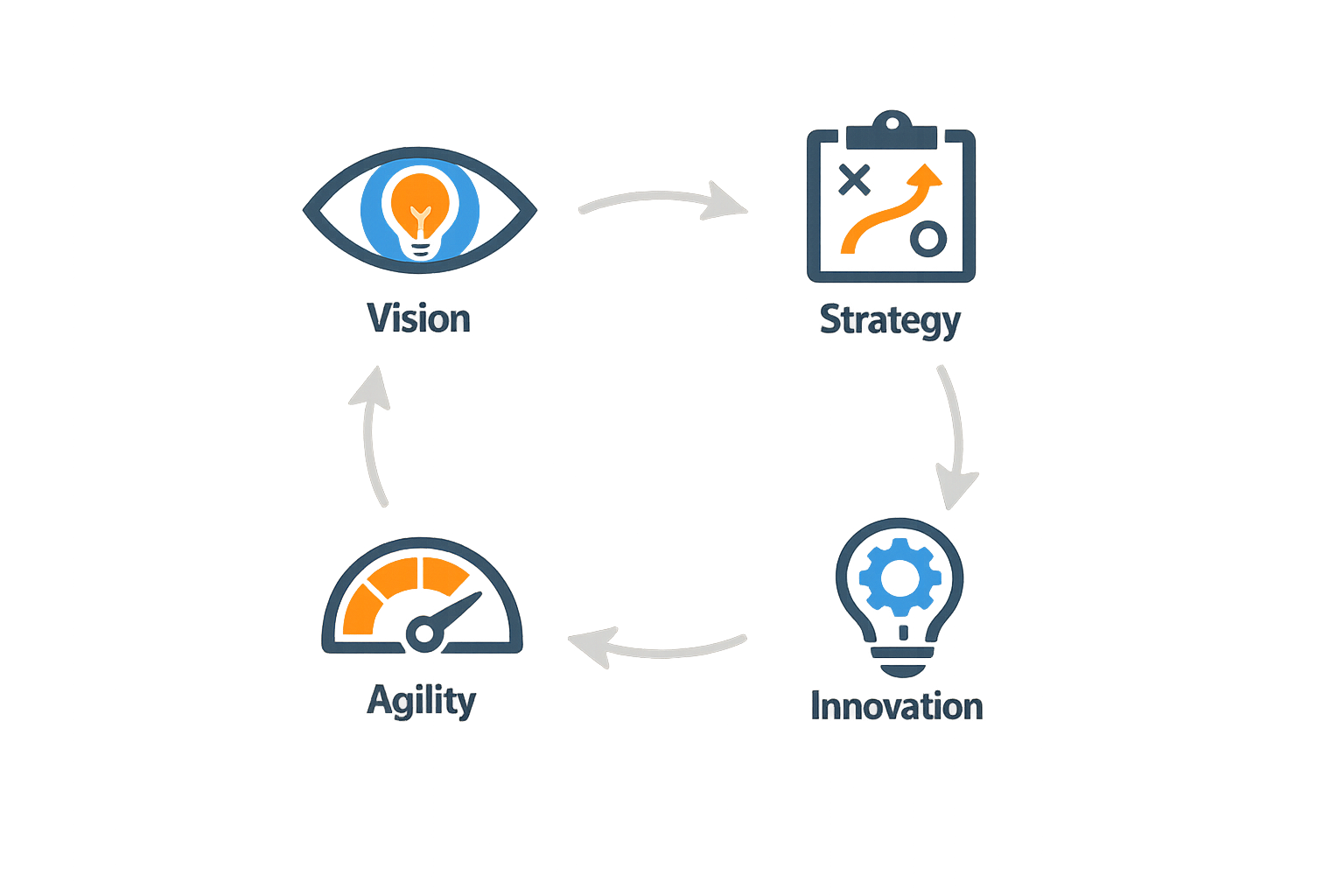
Successful digital transformation for IT leaders demands more than strategic vision—it requires practical execution discipline that IT leaders can apply immediately. The gap between planning and delivery often widens when teams treat transformation as a one-time project rather than an operational shift. These tactical approaches help bridge that gap.
Align Digital Capabilities with Revenue Pathways
Digital transformation initiatives frequently stall when they remain disconnected from measurable business outcomes. IT leaders should map every major technology investment to a specific buyer journey stage or conversion event. Planning for Google rankings, AI overviews, and buyer journeys connects visibility to the sales pipeline, ensuring that digital strategies integrate directly with marketing efforts rather than operating in parallel.
Focus on lead capture and conversion strategies to enhance overall digital performance. When evaluating vendor proposals or internal roadmaps, prioritize capabilities that reduce friction in quote requests, response times, and qualification workflows. These operational improvements compound over quarters, while feature additions often deliver one-time gains. Organizations can learn from lead response time strategies for service businesses when designing their conversion architecture.
Treat Content as Infrastructure, Not Campaign Output
Most organizations treat content as a marketing expense rather than a technical asset. IT leaders should ensure that important content is available in textual form, indexed properly, and structured for both human readers and machine interpretation. This isn't a content-team responsibility—it's an infrastructure requirement that determines whether your digital presence can be discovered, cited, and acted upon.
Step 1
Audit content accessibility
Review your top 20 landing pages to confirm that core value propositions, product specifications, and service descriptions exist as crawlable text—not locked in PDFs, hidden behind forms, or rendered only through JavaScript. If a search engine can't read it, neither can an AI system summarizing your category.
Step 2
Verify technical eligibility
Ensure that crawling is allowed in robots.txt and by any CDN or hosting infrastructure. Confirm that pages meet basic snippet eligibility and that metadata supports structured interpretation. These aren't SEO optimizations—they're baseline technical requirements for digital discoverability.
For companies managing complex digital roles, the execution burden often exceeds what one hire can carry. Some organizations are posting SEO/GEO roles that require one person to manage a comprehensive search stack, content system, technical roadmap, AI visibility program, conversion layer, and executive reporting cadence. When a role spans that many functions, IT leaders should evaluate whether the business actually needs the operating system around the hire—combining internal ownership with managed capabilities that handle execution at scale.
Instrument Before You Optimize
Transformation efforts frequently prioritize feature delivery over measurement infrastructure. IT leaders should establish conversion tracking, funnel analytics, and attribution models before launching new digital experiences. Without baseline data, you can't distinguish progress from noise, and optimization becomes guesswork.
The companies that scale digital capabilities fastest are the ones that can show a live demo, an account-specific analysis, and the operating plan before the engagement becomes a long-term program.
Set up diagnostic dashboards that surface technical issues quickly. Verify your site in Google Search Console, connect analytics to conversion events, and track time-on-site alongside form submissions. These signals reveal whether visitors are engaging with your content or bouncing after reading a snippet in search results.
Test in Live Environments, Not Staging
IT leaders often rely on staging environments that don't reflect real user behavior, network conditions, or search engine interpretation. Whenever possible, test messaging, conversion flows, and content structures in production using controlled experiments. A/B testing on live traffic produces signal that staging environments can't replicate.
Companies with owned content networks or multiple properties can validate approaches across different audiences before rolling them out to flagship domains. This reduces risk and accelerates learning cycles, turning digital transformation from a multi-year initiative into a continuous improvement process.
Conclusion
Digital transformation for IT leaders is no longer optional for IT leaders managing complex B2B operations. The strategic initiatives outlined in this guide—establishing an intelligence layer, improving existing assets, and operating a continuous improvement engine—form the foundation of sustainable modernization. When executed methodically, these steps position technology organizations to respond to market changes, enhance operational visibility, and deliver measurable business outcomes.
The most successful transformations share a common pattern: they start with baseline assessment, prioritize quick wins that build organizational confidence, and then scale systematically. IT leaders who treat digital transformation as an ongoing operating discipline rather than a one-time project create compounding advantages. Real-time insights into business operations enable informed decision-making, while structured content and process improvements accelerate team velocity and reduce friction across departments.
Employee satisfaction matters as much as technical implementation. Features and systems that improve team experience—whether through better payroll processes, clearer communication tools, or streamlined workflows—directly impact transformation success rates. When your team trusts the systems you deploy, adoption accelerates and resistance diminishes.
For organizations with established products and subject-matter expertise, the path forward is clear: build the intelligence infrastructure first, optimize what already works, then establish the rhythms that keep momentum going. Lead generation for IT companies and other growth initiatives gain traction faster when supported by solid digital foundations.
The IT leaders who thrive in the next decade will be those who recognize that transformation is not about chasing every new technology trend—it's about building systems that extract maximum value from the capabilities you already possess while positioning your organization to adopt what comes next. Start with clarity, move with purpose, and measure what matters.
Frequently asked questions
What is digital transformation for IT leaders?
Digital transformation for IT leaders is the establishment of a continuous operating model that integrates search intelligence, content velocity, and conversion strategy into systems that adapt as markets, algorithms, and buyer behavior evolve. It begins with business context rather than technology selection.
How long does digital transformation take for IT organizations?
The first 90 days establish the foundation: days 1-30 build the intelligence layer, days 31-60 improve existing assets, and by day 90 the engine becomes operational with ongoing content production, executive reporting, and conversion feedback loops.
What are the biggest challenges IT leaders face in digital transformation?
IT leaders face underperforming digital presence, technical debt, organizational resistance, measurement challenges, and integration complexity. Success requires balancing innovation with operational stability while building organizational capacity alongside technical systems.
How should IT leaders measure digital transformation success?
Measurement frameworks should connect technical investments to business results: track rankings, traffic, conversions, content contribution, AI citations, and search visibility trends. Success is measured by the ability to turn visibility into pipeline, not by the number of tools deployed.
What role does AI-search readiness play in digital transformation?
AI-search readiness ensures content is structured for extraction and citation by AI-powered search tools. IT leaders must optimize for clarity, source quality, and extractability while testing content against AI search engines to verify proper structure and technical markup.
Explore key insights for Information Technology Leaders regarding Digital Transformation in this informative guide.
Sources(13)
- ServiceTitan
- Jobber — Pricing page
- Managed Search & Content Intelligence
- FieldPulse
- Xenco Labs — Digital Growth Strategy
- Xenco Labs — Services
- Xenco Labs — Local Service Business OS SEO/AEO/content strategy (2026-10-08)
- ServiceTitan
- Housecall Pro
- Google Search Central documentation
- Google Search Central documentation
- IT Leaders: 6 Essential Skills to Help Develop Your Team
- Innovation challenges of digital transformation
Written by
Xenophon Giannis
Published November 6, 2026 · 15 min read
Xenophon Giannis is the founder and CEO of Xenco Labs, where he designs, builds, deploys and operates production AI software solo — on his own multi-node cluster, with his own LLM gateway and automation infrastructure. Twenty-five years in enterprise technology came first: a decade at AboveNet, hired as its first sales rep after bankruptcy and promoted until he ran the entire Western Pacific region, then sales leadership at Black Lotus and Nexusguard in DDoS mitigation. He writes about what he actually ships, and what actually breaks in production.
You Might Also Like
More from the Xenco Labs blog

Agile Project Management Software: Tools for Sprints & Iterations
Explore Agile Project Management Software designed for sprints and iterations to enhance team collaboration and project efficiency.

Scheduling Software for Project Teams: Coordinate Resources
Explore how scheduling software for project teams helps coordinate resources, streamline workflows, and improve project management efficiency.

How Wearable Technology Is Transforming Field Operations
Explore how wearable technology field operations are being transformed through smart devices that enhance efficiency, safety, and real-time communication.

Best Inventory Management Software for Small Warehouses
Explore the best inventory management software for small warehouses and growing businesses to streamline operations and improve efficiency.