
Lead Generation for IT Companies: Enterprise Strategies
Learn effective lead generation for IT companies and infrastructure strategies, turning search demand into a strong sales pipeline.
Enterprise lead generation strategies for IT and infrastructure companies that convert search demand into qualified pipeline without cold outreach.
Introduction
Enterprise lead generation is the systematic process of identifying, attracting, and converting high-value business prospects into qualified sales opportunities through digital channels, content marketing, and automated systems that work continuously without direct sales intervention.
For IT and infrastructure companies, enterprise lead generation works differently than it does for consumer businesses. Your prospects are technical buyers, procurement teams, and infrastructure decision-makers who spend weeks researching before they'll talk to anyone. They compare vendors in private, they read documentation, and they disqualify options based on what they can't find as much as what they do find.
The companies that build reliable pipeline are the ones who show up in that research phase with answers. They rank for the searches that happen when a CTO realizes the current backup solution won't scale, or when a facilities director needs to compare colocation providers, or when a security team lead gets asked to evaluate DDoS mitigation options. Those searches represent real demand, and the companies that capture them don't have to cold-call their way into conversations.
Most IT companies approach lead generation backward. They build a technical product, write a feature list, and then wonder why the pipeline stays thin. The disconnect is simple: buyers don't search for features, they search for solutions to problems they can describe. SEO for technology companies starts with understanding what prospects type into search when they're comparing options, not what you want them to know about your platform.
The pipeline you're trying to build doesn't start with a demo request. It starts the moment someone searches for a solution category you serve, finds your content, decides you understand the problem, and keeps you in mind as they move through procurement. That process takes time, and it requires a lead generation system that works while your sales team is doing other things. The goal is to turn search demand into a qualified pipeline without adding headcount or burning budget on ads that stop working the moment you stop paying.
Problem Statement
IT and infrastructure companies face a distinct challenge in enterprise lead generation: the sales cycle is long, the decision committee is large, and the buyer rarely fills out a form on first contact. A prospect evaluating data center services or network infrastructure spends weeks comparing vendors, reading case studies, and building internal consensus before ever reaching out. By the time they submit a contact request, they have already narrowed the field — and if your digital presence did not answer their questions during that silent research phase, you were not in consideration.
How does form friction impact enterprise lead generation?
Most IT company websites demand too much before a conversation can start. Eight-field forms, mandatory phone numbers, and gated content create drop-off points that eliminate viable prospects. Research from Formstack and Unbounce shows that every additional field in a lead form reduces conversion by 4–6 percent. When a technical buyer wants a quick answer about compliance certifications or geographic coverage, they will not fill out a sales intake form to get it — they will check your competitor's site instead.
Why does content quality determine lead capture?
IT buyers expect immediate answers to common questions: service areas, certifications, technology stack compatibility, and pricing models. If those answers require a phone call or a demo request, the buyer continues their research elsewhere. The companies that capture enterprise leads early are the ones whose websites function as always-on sales engineers — handling objections, clarifying scope, and qualifying interest before a human conversation ever happens. An AI chat window that answers common questions day and night keeps prospects engaged when your sales team is offline.
What visibility gaps cost IT companies qualified leads?
Many IT and infrastructure companies rely entirely on referrals and outbound sales, which means they are invisible to prospects actively searching for solutions. When a decision-maker types "ITAD services for healthcare" or "colocation provider with SOC 2" into a search engine, the vendors that appear in results are the ones building the pipeline. Analyzing your current website, competitors, and search visibility reveals where you are losing ground to competitors who invested in discoverability. If your site does not rank for the terms your prospects use, your lead generation starts behind the competition — or does not start at all.
Solution Steps for Effective Lead Generation
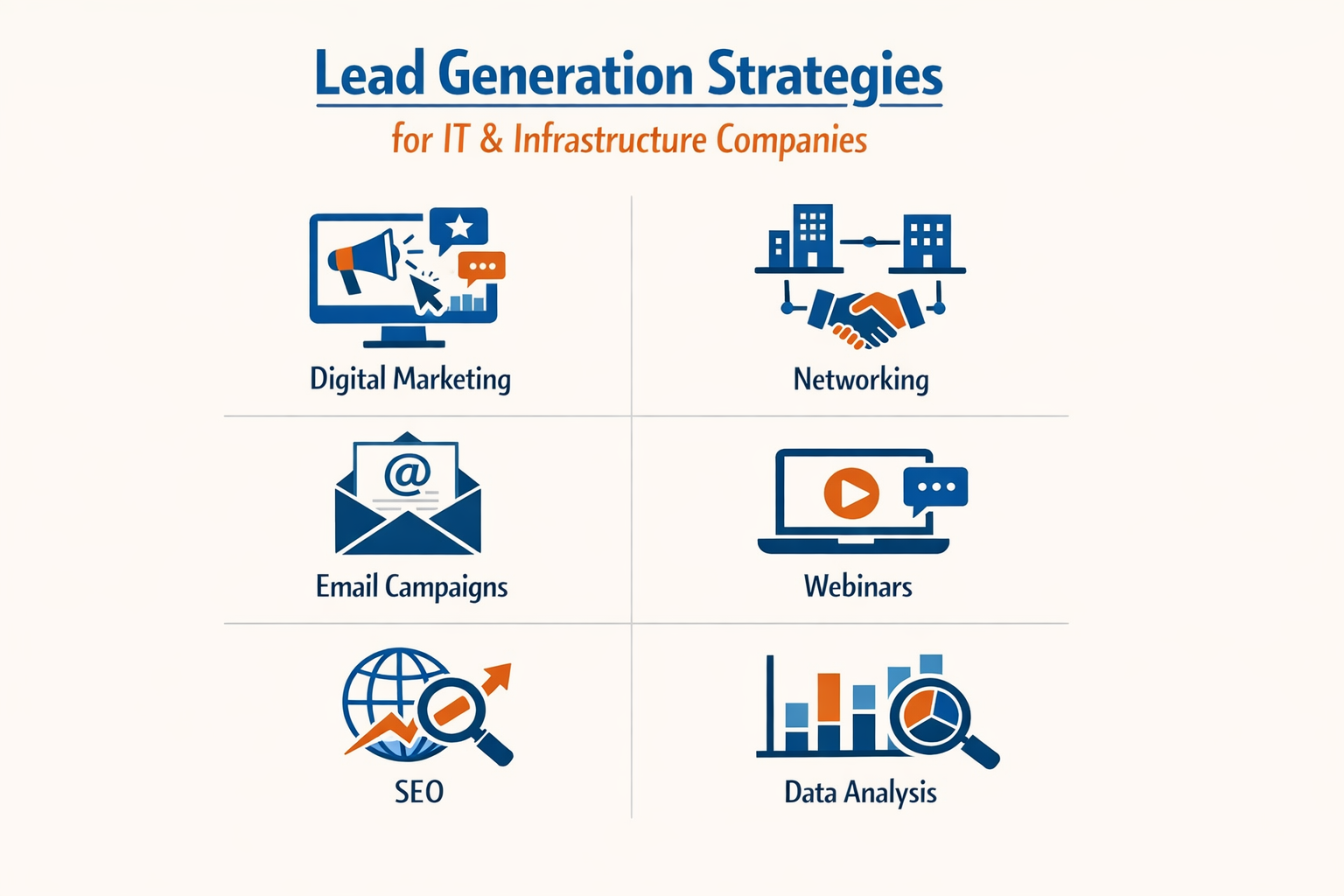
Enterprise lead generation for IT and infrastructure companies requires a structured approach that addresses visibility, conversion friction, and opportunity tracking. The following steps outline a practical framework for building a pipeline that converts search demand into qualified sales conversations.
Step 1: Audit Your Current Digital Presence
Start by evaluating your website, competitor positioning, and search visibility. Document where prospects find you, what they see when they arrive, and where the process breaks down. This baseline reveals the specific gaps preventing lead capture — whether that's poor search rankings, unclear messaging, or conversion barriers that push prospects away before they engage.
Most IT companies discover that their technical expertise is invisible to the buyers actively searching for solutions. The audit should cover organic search performance, competitor content strategies, and the friction points in your current lead capture process. When you understand what prospects see versus what you want them to see, you can prioritize fixes that directly impact pipeline volume. SEO reporting KPIs for executives help measure the connection between search visibility and revenue outcomes.
Step 2: Reduce Conversion Friction
Long forms kill enterprise lead generation. Every additional field you require before a prospect can engage drops conversion by a measurable margin. Review your contact forms, demo requests, and quote processes — then strip them down to the minimum viable information needed to start a conversation.
The goal is to lower the threshold for initial contact while still capturing enough context to route the lead appropriately. IT buyers expect a professional intake process, but they abandon forms that feel like interrogations. Test shorter forms, conversational chat options, or calendar links that let prospects book time directly with technical staff.
Step 3: Automate Opportunity Discovery and Tracking
Manual lead tracking introduces delays and lost opportunities. Implement systems that automatically surface sales opportunities, track every deal from initial contact through close, and ensure no potential lead slips through the cracks. Automation reduces the administrative burden on your sales team and creates a consistent process for nurturing prospects through longer enterprise sales cycles.
For companies selling infrastructure solutions or managed services, the sales cycle often spans months. Automated tracking ensures that a prospect who downloads a whitepaper in January is still in your pipeline when they're ready to evaluate vendors in June. The system should log every touchpoint, assign follow-up tasks, and flag opportunities that match your ideal customer profile. Small business automation principles apply equally to enterprise lead management.
Step 4: Optimize for Search and AI Discovery
Prospects researching IT solutions increasingly rely on search engines and AI tools to build vendor shortlists before ever talking to sales. Your content must be structured to appear in both traditional search results and AI-generated summaries. This means clear technical documentation, case studies with measurable outcomes, and service pages that directly answer the questions your prospects are asking.
SEO for technology companies requires aligning your content with the specific queries decision-makers use when evaluating infrastructure providers. Focus on the problems you solve rather than the features you offer — prospects search for solutions to capacity constraints, security gaps, or compliance requirements, not for lists of technical specifications. AI search engine optimization ensures your content surfaces in both traditional and generative AI results.
Step 5: Build Custom Outreach for High-Value Accounts
For enterprise deals, generic marketing rarely moves the needle. Develop custom pitches that address the specific challenges of your target accounts. This might include tailored presentations that reference the prospect's industry, competitive landscape, or known pain points. Custom outreach signals that you understand their business and have invested time in developing a relevant solution.
Generic campaigns generate generic results — enterprise buyers expect you to demonstrate familiarity with their operational context before they'll invest time in a discovery call.
This approach works best when paired with account-based marketing tactics that coordinate sales and marketing efforts around a defined list of high-value prospects. The investment in customization pays off in higher response rates and shorter sales cycles, particularly for deals where differentiation is difficult and relationships matter.
Tips and Tricks for Optimizing Lead Generation
Once the foundational systems are in place, optimization becomes a matter of removing friction and feeding the pipeline with better inputs. The difference between a struggling lead-generation program and one that consistently delivers qualified opportunities often comes down to a handful of tactical decisions — decisions that compound over time.
Reduce Form Friction to Increase Conversion
Every field you add to a contact form drops conversion by 4–6%. Eight-plus fields before a visitor can talk to you creates unnecessary barriers. For IT and infrastructure companies, the instinct is to pre-qualify aggressively — to ask for budget, timeline, technical environment, and decision-maker status upfront. That instinct costs you visibility into the full funnel.
If you must ask for more detail, do it after the initial submission — in a thank-you page survey, in a follow-up email, or during the first sales call. The goal is to lower the activation energy required to raise a hand.
Track Every Opportunity Back to Its Source
Real-time insights into the sales pipeline and individual performance metrics are crucial for optimizing lead generation efforts. When you can trace a closed deal back to a specific blog post, a PPC keyword, or a LinkedIn comment thread, you know where to double down. When you cannot, you are guessing.
Most CRMs support UTM tagging and first-touch attribution. Use them. Tag every campaign, every piece of content, and every referral source. Over time, the data will tell you which channels produce qualified leads and which produce tire-kickers. That distinction matters more than total lead volume.
The cheapest lead is the one that closes; the most expensive is the one that wastes a senior engineer's time on a discovery call that goes nowhere.
Build Custom Pitches for High-Value Segments
Custom-built pitches as part of a digital growth strategy can effectively target enterprise lead generation efforts. A $48M global ITAD company used digital presence optimization and an inbound lead strategy to enhance its sales pipeline — not by chasing more traffic, but by aligning messaging to the specific concerns of IT asset managers, compliance officers, and procurement teams.
For enterprise IT and infrastructure companies, one-size-fits-all messaging underperforms. A data-center operator evaluating colocation has different priorities than a CIO evaluating managed security services. Segment your content, your landing pages, and your email sequences by role and pain point. The incremental effort pays off in qualification rates and deal velocity.
Test Messaging Before Scaling Spend
Before committing budget to paid campaigns or large-scale content production, test your core messaging in low-cost environments. Run small LinkedIn ad tests. Publish a few blog posts and measure engagement. Send a cold-email sequence to a narrow list and track reply rates.
If the messaging does not resonate at small scale, it will not improve at large scale. If it does resonate, you have a validated hook to build around. This test-then-scale approach reduces wasted spend and shortens the feedback loop between hypothesis and evidence.
For companies looking to tighten the connection between search visibility and pipeline performance, SEO for Technology Companies: Effective Search Strategies covers the technical and content foundations that make inbound lead generation sustainable.
Conclusion
Effective enterprise lead generation for IT and infrastructure companies requires a system that works when your sales team is offline. The strategies outlined—optimizing for search visibility, reducing form friction, deploying AI chat to handle common questions, and maintaining a content engine that answers prospect questions at every stage—create a pipeline that converts prospects who never pick up the phone.
The difference between a lead system that delivers and one that disappoints comes down to execution discipline. Audit your current conversion path, measure drop-off at each step, and test one variable at a time. When a prospect searching for "enterprise ITAD services" or "data center decommissioning" lands on your site, the next sixty seconds determine whether they become a qualified lead or a competitor's opportunity.
We've seen this pattern across technology service companies: the ones that treat their website as a lead-handling system rather than a brochure consistently outperform competitors with bigger ad budgets. Your prospects are searching, comparing, and deciding right now. The question is whether your digital presence is built to convert them—or whether you're sending qualified traffic to competitors who made it easier to start a conversation.
For IT and infrastructure companies ready to turn search demand into a predictable sales pipeline, the fundamentals remain constant: understand what your prospects search for, answer their questions before they ask, remove friction from the conversion path, and measure what matters. Execute those four disciplines, and SEO for technology companies becomes a revenue channel rather than a marketing expense.
FAQ
What is enterprise lead generation for IT companies?Enterprise lead generation is the process of identifying and attracting high-value business prospects through digital channels, content marketing, and automated systems that convert search demand into qualified sales opportunities without cold outreach.
How does form friction impact conversion rates? Research from Formstack and Unbounce shows that every additional field in a lead form reduces conversion by 4–6%. Forms with eight or more fields create significant barriers that cause technical buyers to abandon the process and check competitor sites instead.
Why is search visibility critical for IT lead generation?IT buyers complete 70% of their research before contacting vendors. Companies that rank for relevant search queries capture prospects during the research phase, while invisible competitors never make the consideration set regardless of product quality.
What content should IT companies publish to generate leads?IT companies should publish content that answers specific buyer questions: service areas, certifications, technology compatibility, pricing models, and case studies with measurable outcomes. Focus on problems solved rather than feature lists.
How long does enterprise lead generation take to show results?Enterprise sales cycles typically span 3–6 months from initial contact to close. Content and SEO investments often require 6–12 months to build search visibility and begin generating consistent qualified leads.
Sources(20)
- Xenco Labs — Websites & Landing Pages
- Xenco Labs — Digital Growth Strategy
- Managed Search & Content Intelligence
- ServiceTitan
- Synthflow — Pricing
- Smith.ai
- Local Service Business OS
- Xenco Labs — Services
- Google Business Profile guidelines
- Google Business Profile Help — Guidelines for representing your business on Google
- Google Business Profile guidelines
- Google Search Central — Local business (LocalBusiness) structured data
- Google Search Central documentation
- managed-search-content (shared_fact)
- digital-growth-strategy (xl_local_os_editorial)
- managed-search-content (xl_local_os_editorial)
- websites-landing-pages (shared_fact)
- local-service-business-os (shared_fact)
- managed-search-content (xl_local_os_editorial)
- servicetitan (competitive_claim)
Written by
Xenco Labs Editorial
Published October 20, 2026 · 13 min read
The Xenco Labs editorial team writes about building and shipping AI products to production.
You Might Also Like
More from the Xenco Labs blog
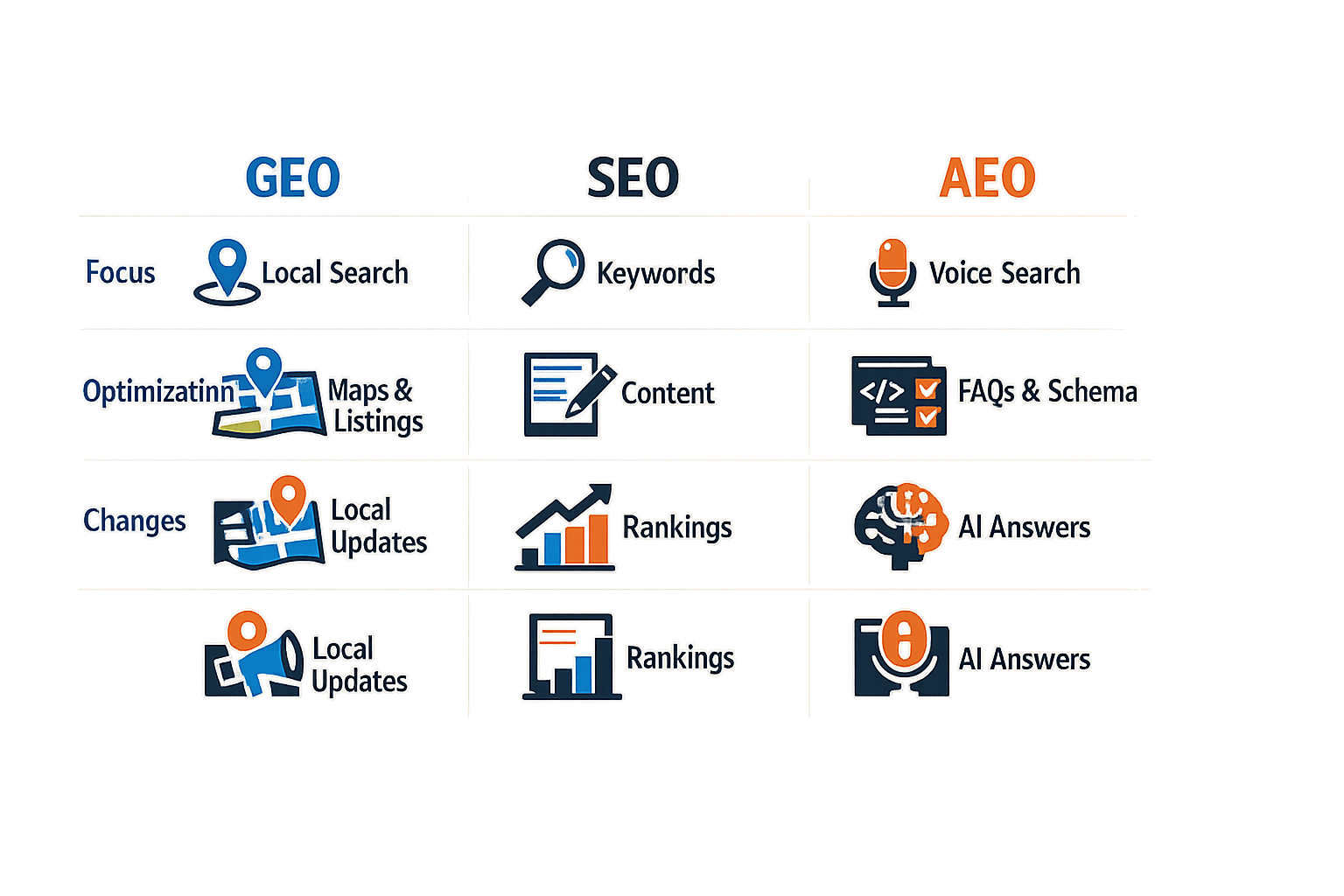
Geo vs SEO: AEO vs SEO: Key Changes for Search Teams (+ GEO Explained)
Explore the differences between AEO vs SEO and GEO, and understand what changes for search teams and what remains the same in modern search optimization. Learn about geo

SEO Manager Job Description: In-House vs Agency
Explore in-house SEO vs agency options through the SEO Manager job description, covering key responsibilities and when each approach fits your organization.
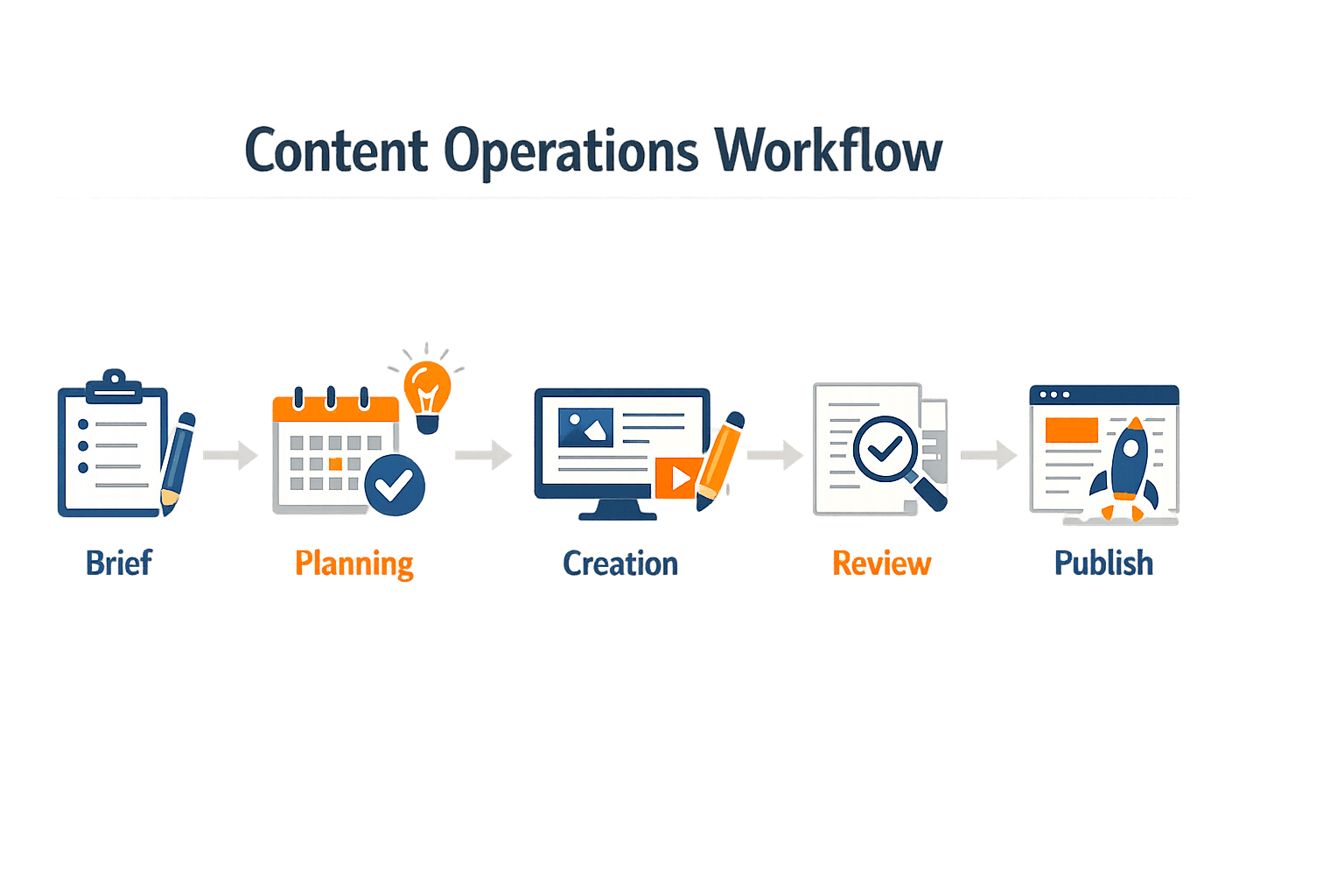
SEO Content Brief to Published Page: Content Operations Workflow
Explore the content operations workflow from seo content brief to published page, ensuring efficiency and quality at every stage.

SEO Reporting KPIs for Executives: Essential Metrics to Review
Explore key SEO reporting KPIs for effective executive reviews, ensuring data-driven decisions and measurable business impact.