
Agile Project Management Software: Tools for Sprints & Iterations
Explore Agile Project Management Software designed for sprints and iterations to enhance team collaboration and project efficiency.
Introduction
Agile project management emerged from software development teams who needed faster feedback loops and tighter collaboration than traditional waterfall methods allowed. Today, Agile Project Management Software extends those principles beyond code: any team managing iterative work — from field service crews to marketing campaigns — benefits from platforms designed around sprints, backlogs, and continuous delivery.
The core promise is simple: break large projects into manageable increments, track progress in real time, and adjust based on what you learn. Workflow automation for small business extends this philosophy by eliminating repetitive handoffs that slow iteration cycles. When your team can see what's in progress, what's blocked, and what's ready for review without a status meeting, velocity increases and coordination overhead drops.
Modern platforms go beyond task boards. They centralize drawings, plans, and documents in one secure place so your team references the current version rather than hunting through email threads. They provide dashboards that surface budget variances, resource allocation, and sprint burndown without manual reporting. The best systems integrate with your existing tools — accounting, CRM, scheduling — so data flows automatically and your team works from a single source of truth.
For distributed teams, real-time visibility is non-negotiable. When field technicians, project managers, and stakeholders all see the same task status and can update progress from any device, iteration cycles compress and miscommunication evaporates. The platform becomes the shared workspace where planning, execution, and retrospective all happen in context.
Choosing the right Agile Project Management Software means evaluating how well a platform adapts to the way your team already works, how cleanly it integrates with your existing stack, and whether it scales as your projects grow in complexity. The goal is not to adopt Agile for its own sake — it's to accelerate delivery, protect margins, and give every team member the visibility they need to make decisions without waiting for permission.
Problem Statement
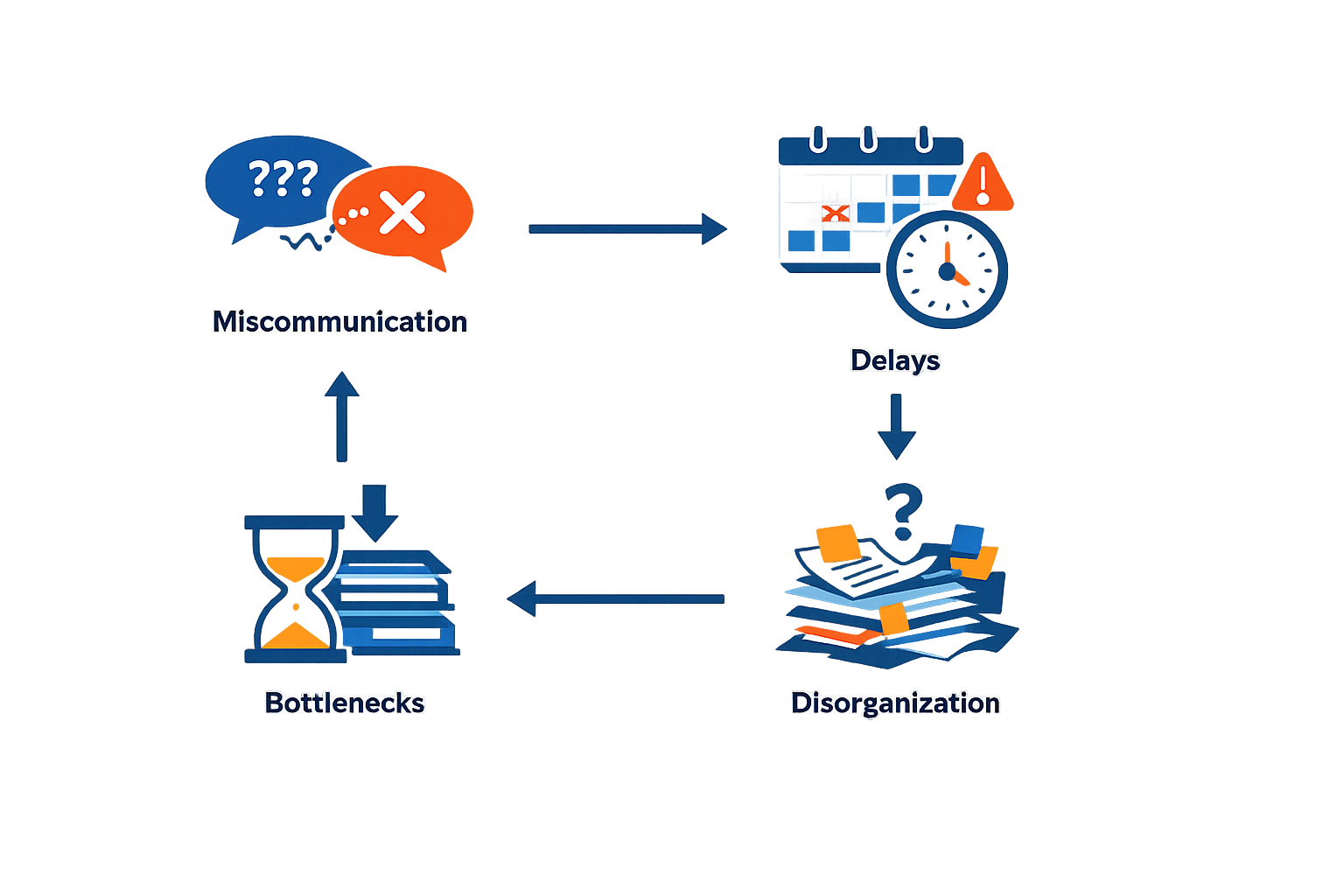
Teams operating without dedicated Agile Project Management Software face recurring friction that compounds with every sprint. The absence of purpose-built tooling turns what should be streamlined iteration cycles into manual coordination exercises that bleed time, obscure accountability, and fragment the single source of truth a delivery team depends on.
Disconnected Documentation and Lost Context
When project artifacts live in email threads, shared drives, and individual workstations, teams lose the ability to trace decisions back to their origin. A developer references one version of a user story while QA validates against another. Design mockups circulate as attachments rather than living documents tied to specific sprint commits. The result is rework, missed acceptance criteria, and scope drift that surfaces only when a feature reaches staging.
Without a centralized system to manage drawings, plans, and documents in one secure place, cross-functional visibility collapses. Product owners cannot confirm what was actually built. Retrospectives become exercises in memory reconstruction rather than data-driven process improvement.
Manual Workflow Enforcement and Compliance Gaps
Teams relying on spreadsheets and ad-hoc processes cannot enforce consistent workflows across sprints. Definition-of-done checklists exist in theory but vary in practice. Code review gates, testing protocols, and deployment sign-offs become negotiable when there is no system to standardize field workflows and compliance requirements.
This variability introduces risk. A feature ships without security review because the checklist was in someone's head, not in the toolchain. Regulatory requirements that demand audit trails and timestamped approvals become manual paperwork exercises that slow velocity and introduce gaps. Workflow automation addresses some of these challenges, but without Agile-specific constructs like sprint boundaries and backlog prioritization, generic automation cannot enforce iteration discipline.
Opaque Progress Tracking and Resource Allocation
Absence of real-time visibility into sprint health forces teams into reactive rather than proactive management. Burndown charts built in spreadsheets reflect yesterday's status, not today's blockers. Capacity planning relies on rough estimates rather than historical velocity data tied to actual story points delivered.
Resource allocation becomes guesswork. A team member is overcommitted across three epics, but no dashboard surfaces the conflict until stand-up reveals missed commitments. Dependencies between teams remain invisible until integration day exposes them as critical path blockers. The lack of a unified view means leadership cannot distinguish between a team trending toward on-time delivery and one silently accumulating technical debt that will surface in the next cycle.
Solution Steps
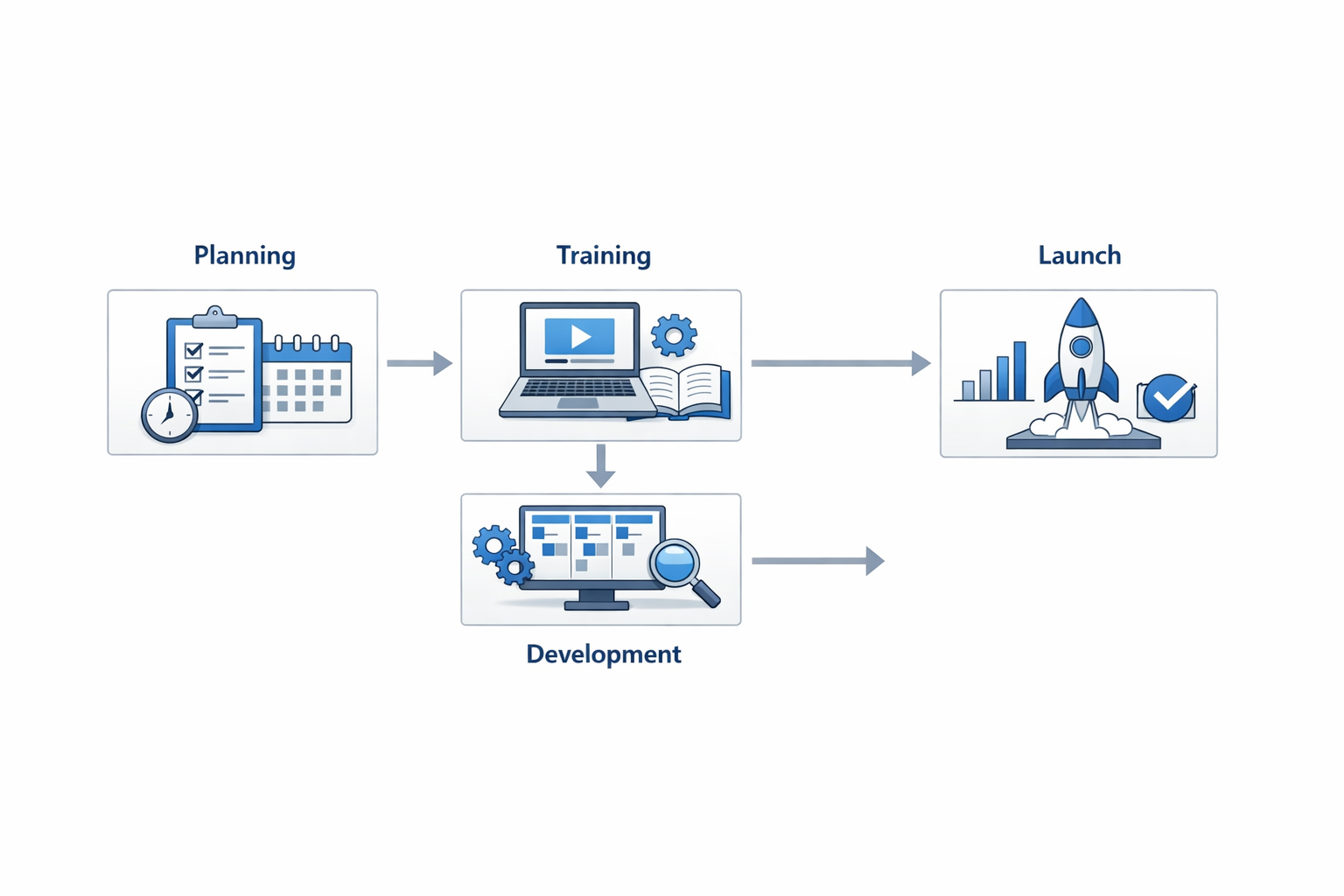
Implementing Agile project management software requires a structured approach that aligns the platform's capabilities with your team's actual workflow. The following steps provide a practical roadmap for selecting, configuring, and deploying tools that support sprint-based delivery without creating new bottlenecks.
Step 1: Map Your Current Workflow Before Evaluating Tools
Step 1
Document existing processes
Before comparing features, catalog how work currently moves through your organization. Identify where estimates are created, how scope gets approved, what triggers field execution, and how completion flows into invoicing. Tools that claim to support Agile often assume a development team's cadence; service businesses need platforms that handle customer-facing workflows, not just internal sprints.
A clear process map reveals which handoffs cause delays and which steps depend on manual follow-up. This baseline determines whether a platform will accelerate your operations or simply digitize existing friction.
Step 2: Prioritize Integration Over Feature Count
Step 2
Evaluate connection points
Agile project management software delivers value when it connects estimation, scheduling, task assignment, and invoicing in a single flow. Platforms that require manual data entry between modules create the same coordination overhead they promise to eliminate. Look for systems where approved scope automatically generates task checklists, and completed work triggers invoice creation without re-keying.
For teams managing field service or project-based work, workflow automation becomes the difference between a tool that supports Agile iterations and one that fragments them. The fewer times a team member must transcribe information from one system to another, the faster each sprint cycle completes.
Step 3: Configure the Platform Around Real Job Cycles
Step 3
Build workflows that match job structure
Once you've selected a platform, configure it to reflect how your team actually delivers work. Set up service catalogs, rate-card estimators, and approval workflows that mirror the sequence from inquiry to completion. Equipping a mobile workforce with tools for scanning, tasks, checklists, and timekeeping ensures that field execution stays synchronized with office coordination.
Step 4: Establish Clear Handoff Points Between Roles
Agile thrives on short feedback loops, but only when each role knows what triggers their next action. Define who verifies quotes, who schedules appointments, who confirms scope in the field, and who finalizes invoicing. The software should make these handoffs visible and automatic, not dependent on someone remembering to check a shared inbox.
Centralizing drawings, plans, and documents in one secure place reduces the risk that field teams work from outdated information. When the platform surfaces the current scope, approved changes, and customer-specific notes at the moment a technician needs them, iterations stay aligned with what was sold.
Step 5: Measure Cycle Time and Iterate on Bottlenecks
Step 5
Track time from inquiry to invoice
After the platform is live, measure how long each stage takes: lead response, estimate delivery, approval, scheduling, field completion, and payment collection. Agile project management software should shorten these intervals, not just make them more visible. If a step consistently delays the cycle, adjust the workflow or reassign responsibility.
Real-time insights into labor, materials, and profitability on every job let you identify which types of work benefit most from sprint-based planning and which require different approaches. The goal is continuous improvement in throughput, not adherence to a methodology for its own sake.
Tips and Tricks for Choosing Agile Project Management Software
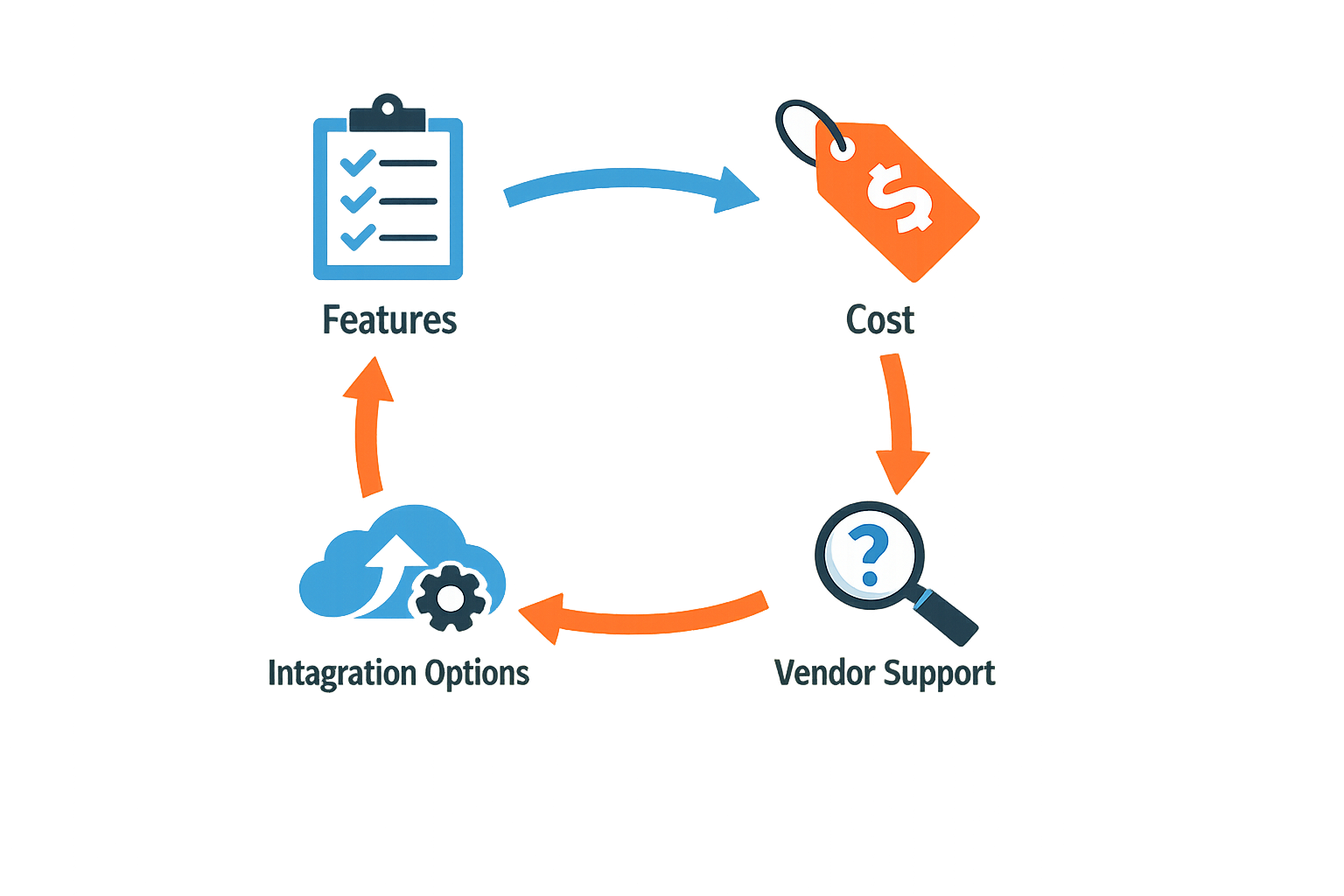
Selecting the right Agile project management software is not a one-size-fits-all decision. The platform that works for a five-person startup may collapse under the weight of a fifty-person operation, and the tool that excels at sprint planning may offer nothing for resource allocation or profitability tracking. The key is matching software capabilities to your team's actual workflow, not the workflow the vendor wants you to adopt.
Prioritize Adaptability Over Feature Count
A platform built to adapt and scale with your business will outperform a feature-rich system that forces you into rigid templates. Look for software that allows you to configure workflows to support your existing processes rather than requiring you to redesign operations around the tool. FieldPulse, for example, is designed to manage any kind of workflow and can be personalized to support bespoke processes, ensuring that field service teams maintain control over how work gets done from initial customer contact through payment.
Integrated analytics and dashboards are non-negotiable for spotting growth opportunities. Software that surfaces real-time insights into labor, materials, and profitability on every project enables you to make informed decisions without waiting for end-of-month reports. Over sixty prebuilt reports or the ability to create custom views means you can track what matters to your operation, not just what the vendor decided to measure.
Evaluate Real-Time Coordination and Accountability Tools
Agile teams depend on visibility into who is doing what, where, and when. Live GPS tracking helps teams route faster, keeps drivers accountable, and provides customers with accurate ETAs—all of which are essential for maintaining project timelines and client trust. When last-minute changes occur, the ability to adjust calendars quickly and send automated status updates to customers prevents coordination breakdowns that derail sprints.
Standardizing workflows with digital forms improves project efficiency and team coordination by ensuring that compliance checks, service documentation, and field data capture happen consistently across all jobs. If your platform does not guide technicians with the exact services to complete and materials to use, you are leaving execution quality to chance.
The right software does not just track work—it ensures that every position in your company, from dispatch to billing, performs at the highest level the way you want it.
Confirm Integration and Scalability Before Committing
Your Agile project management software must integrate seamlessly with your existing accounting, CRM, and communication tools. A platform that requires manual data entry between systems introduces delays and errors that undermine the speed Agile workflows are designed to deliver. Verify that the software can sync data with your preferred ERP and automatically reconcile purchase orders, invoices, and materials.
Scalability means more than handling a larger team. It means supporting more complex workflows, additional service lines, and higher transaction volumes without requiring a platform migration. Test whether the software can manage service agreements, work orders, and assets from a unified interface, and confirm that it provides 24/7 access for customers to view equipment, pay invoices, and schedule service. If the platform cannot grow with your business, you are buying a temporary solution, not a long-term foundation.
For teams looking to improve operational speed beyond project tracking, consider how workflow automation can eliminate repetitive tasks and accelerate handoffs between stages.
Conclusion
Agile Project Management Software has become essential for teams managing sprints and iterations in dynamic environments. Throughout this guide, we've explored how the right platform centralizes workflows, automates repetitive tasks, and provides real-time visibility into project progress — all critical capabilities for maintaining momentum across sprint cycles.
The evidence is clear: teams that standardize their workflows with digital tools see measurable improvements in both collaboration and delivery speed. When your software can centralize drawings, plans, and documents in one secure place while automating status updates, the entire team gains the clarity needed to execute efficiently. These aren't luxury features — they're the foundation of modern Agile practice.
Choosing the right Agile Project Management Software requires matching your team's sprint cadence and iteration structure to the platform's native capabilities. The solution you select should feel like an accelerant, not an obstacle. If your current tools require workarounds to support basic Agile ceremonies, you're paying a hidden tax on every sprint. For teams ready to eliminate that friction, exploring proven workflow automation for small business strategies can reveal where your next efficiency gains hide.
Ultimately, the software is a means to an end: delivering value to customers faster and with less waste. When your platform handles the mechanics of sprint tracking, resource allocation, and stakeholder communication automatically, your team can focus on what actually matters — solving problems and shipping work that moves the business forward. That shift in focus is where Agile Project Management Software pays for itself many times over.
Written by
Xenophon Giannis
Published November 6, 2026 · 11 min read
Xenophon Giannis is the founder and CEO of Xenco Labs, where he designs, builds, deploys and operates production AI software solo — on his own multi-node cluster, with his own LLM gateway and automation infrastructure. Twenty-five years in enterprise technology came first: a decade at AboveNet, hired as its first sales rep after bankruptcy and promoted until he ran the entire Western Pacific region, then sales leadership at Black Lotus and Nexusguard in DDoS mitigation. He writes about what he actually ships, and what actually breaks in production.
You Might Also Like
More from the Xenco Labs blog

Scheduling Software for Project Teams: Coordinate Resources
Explore how scheduling software for project teams helps coordinate resources, streamline workflows, and improve project management efficiency.

What is Information Technology: Digital Transformation for IT Leaders
Discover what IT leaders need to know about digital transformation, including strategies, challenges, and implementation insights in the context of what is information

How Wearable Technology Is Transforming Field Operations
Explore how wearable technology field operations are being transformed through smart devices that enhance efficiency, safety, and real-time communication.

Best Inventory Management Software for Small Warehouses
Explore the best inventory management software for small warehouses and growing businesses to streamline operations and improve efficiency.