
SEO for Technology Companies: Effective Search Strategies
Learn effective SEO for technology companies with long sales cycles and technical products to enhance visibility and drive conversions through proven strategies.
Learn effective SEO strategies for technology companies with long sales cycles and technical products to enhance visibility and drive conversions.
Introduction
SEO for IT companies is the practice of optimizing technology firms' digital presence to attract qualified prospects through organic search, addressing the unique challenges of technical products and extended enterprise sales cycles. Technology companies operate in a landscape where search visibility directly impacts pipeline quality. When your product requires a six-month evaluation cycle and your buyers are technical decision-makers researching solutions across multiple channels, organic search becomes more than a traffic source — it becomes the first filter in a complex buying process.
Most IT companies approach SEO as a ranking exercise. They optimize for keywords, track position changes, and celebrate movement from page two to page one. But rankings alone do not close contracts. For technology firms selling complex products or enterprise services, the objective is qualified build consultations and signed implementations — not vanity metrics. We have seen companies rank first for their target terms yet generate zero pipeline because their content spoke to the wrong buyer stage or failed to differentiate their technical approach.
The challenge intensifies when you consider what makes technology products difficult to market through search. Your buyers use technical terminology inconsistently. Your sales cycle spans months, requiring content that nurtures prospects across multiple touchpoints. Your competitors may have years of domain authority while you are building visibility from scratch. And unlike consumer products with clear search intent, enterprise technology searches often reflect research phases rather than purchase readiness. Understanding these dynamics shapes how we build search strategies that actually convert.
Effective SEO for IT companies starts with recognizing that your business context matters as much as your technical implementation. A good SEO strategy should show interest in what makes your offering unique — your integration capabilities, your deployment model, your support structure, the specific problems your technology solves better than alternatives. When those differentiators align with how your buyers search and evaluate solutions, you create content that ranks and converts. For insights on deploying technical solutions effectively, see our guide on best practices for deploying AI web apps.
Problem Statement
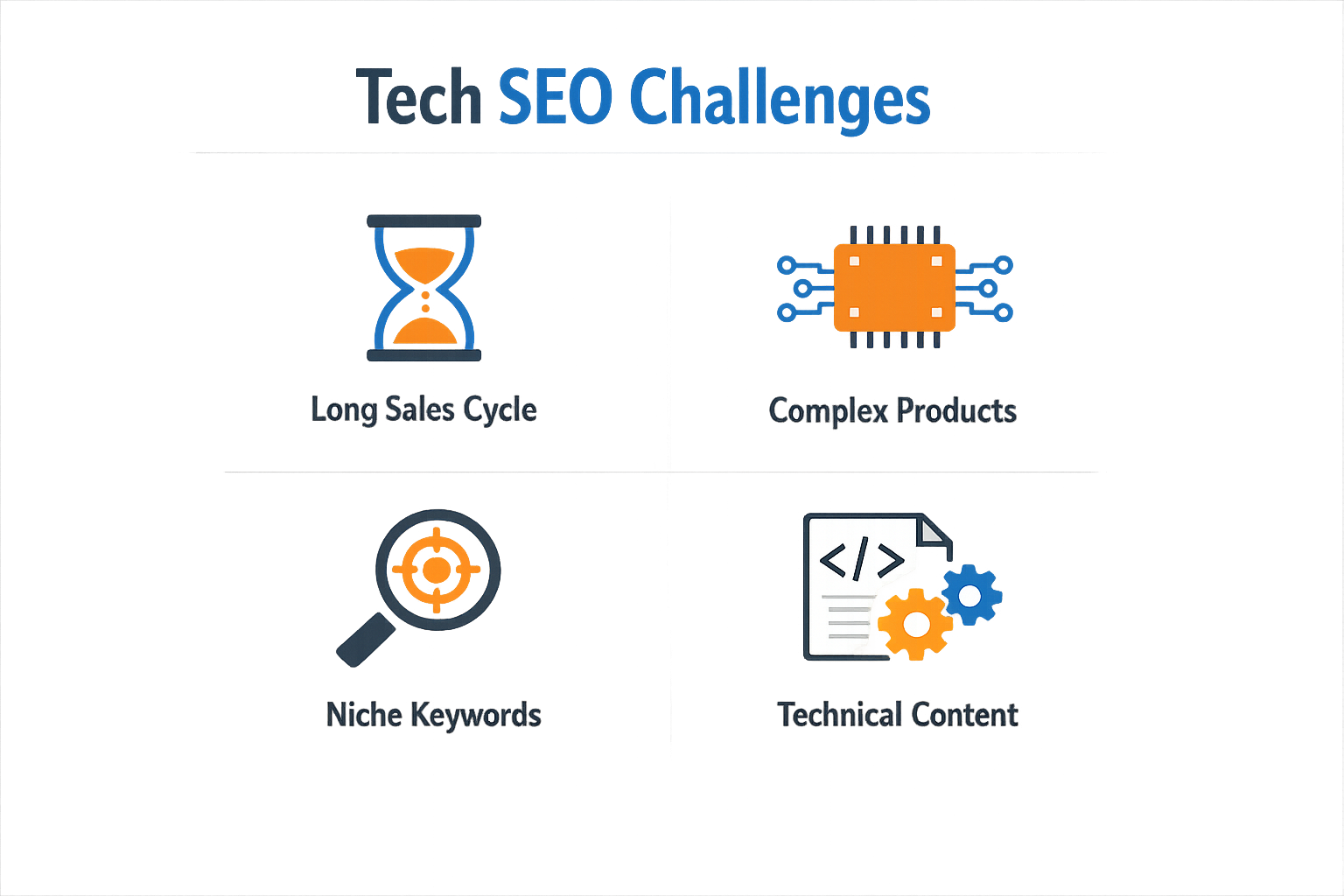
Technology companies face a distinct set of obstacles when implementing search strategies. Unlike consumer brands with short purchase cycles, IT firms operate in environments where a prospect might research for six months before scheduling a discovery call. The technical nature of the products compounds the challenge: explaining cloud infrastructure, API platforms, or enterprise software requires precision that traditional SEO frameworks rarely accommodate.
According to industry analysis, 68% of B2B buyers conduct independent online research before engaging with sales teams, making organic search visibility critical for technology companies competing in crowded markets. The first structural problem is role definition. Modern search visibility demands expertise across multiple disciplines — technical SEO, AI search optimization, content architecture, structured data implementation, and conversion measurement. Many technology companies attempt to hire a single "SEO specialist" only to discover the function requires capabilities that span eight operating areas, from keyword intelligence to machine-readable content formats. When the scope exceeds what one person can reasonably execute, visibility stalls.
The Long-Cycle Conversion Gap
Search rankings alone do not close enterprise deals. A technology company can dominate page one for competitive terms yet generate zero qualified pipeline if the content fails to address the buyer's actual evaluation criteria. The gap between visibility and conversion widens when companies optimize for traffic metrics rather than the specific questions a technical buyer asks at each stage of a prolonged decision process.
Another friction point is the mismatch between how search engines surface content and how technical buyers evaluate vendors. A prospect researching compliance frameworks or integration patterns needs architecture diagrams, implementation timelines, and security documentation — not generic thought leadership. When IT companies produce content optimized for search algorithms rather than buyer needs, the result is high bounce rates and low engagement from the audiences that matter.
Multidisciplinary Demands and Resource Constraints
The operating environment has shifted. Effective search now intersects with AI-generated overviews, entity recognition, and structured data that feeds generative experiences. Technology companies must decide what belongs with an in-house person, what requires software tooling, and what should be operated as a managed capability. Attempting to build every competency internally often means none are executed well.
Companies that treat SEO as a standalone tactic rather than an integrated function struggle to connect search visibility to pipeline outcomes. When search strategy is disconnected from product marketing, sales enablement, and technical documentation, the content produced serves no clear business objective. For insights on integrating technical deployment with visibility strategy, see Best Practices for Deploying AI Web Apps.
How Do Technology Companies Build Effective SEO Strategies?
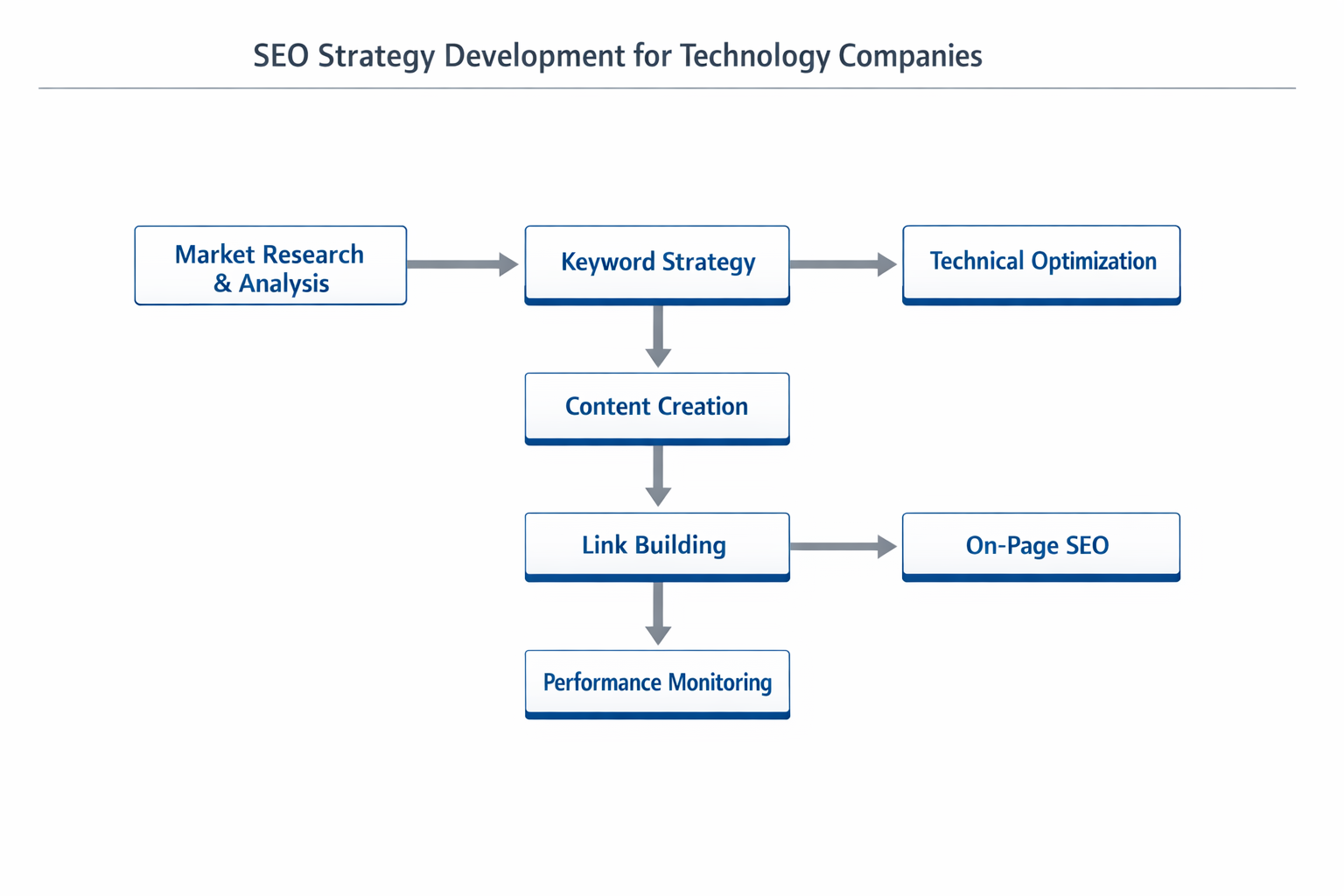
Technology companies need a methodical approach to SEO for IT companies that accounts for technical complexity and extended decision cycles. The steps below outline how to build a search strategy that connects product capabilities to buyer questions at each stage of evaluation.
Step 1: Audit Your Current Search Footprint
Step 1
Assess existing visibility and execution capacity
Before building new content or hiring, map what you already own. Use Google Search Console to identify which queries drive impressions, which pages receive traffic, and where rankings drop off. Cross-reference this data with your sales cycle: are prospects finding you during early research, or only when they already know your brand? Companies should assess their existing search footprint and execution burden to determine whether they need an internal hire, a managed partner, or a hybrid structure.
This audit reveals gaps between what buyers search for and what your site answers. If your technical documentation ranks but your use-case pages do not, you are visible to existing users but invisible to new prospects.
Step 2: Map Buyer Questions to Sales Stages
Step 2
Identify intent at each decision point
Technology buyers move through distinct phases: problem recognition, solution exploration, vendor comparison, and technical validation. Each phase generates different search behavior. Use tools like Ahrefs, DataForSEO, and Google Search Console to identify what buyers are asking. Early-stage queries focus on capabilities and architecture; late-stage queries focus on integration, compliance, and performance benchmarks.
Your content architecture should mirror this progression. If a prospect searches for "how to secure API endpoints," they are researching a problem. If they search for "API gateway comparison," they are evaluating vendors. If they search for "[your product] SAML configuration," they are preparing to deploy. Each query type requires different content.
Step 3: Build Content That Matches Technical Depth to Intent
Technology companies often write either too shallow (generic thought leadership) or too deep (documentation disguised as blog posts). The right depth depends on where the buyer is in their journey.
Early-stage content should explain problems and frameworks without requiring prior product knowledge. Mid-stage content should compare approaches and show how your architecture solves specific constraints. Late-stage content should provide implementation details, performance data, and integration guides.
The modern SEO role now spans technical search, keyword intelligence, content systems, and conversion layers — most companies try to hire one person for an entire function.
If your team lacks the capacity to produce this range of content consistently, consider whether the function belongs with an internal hire, a managed partner, or a hybrid model. SEO/GEO roles are evolving to require ownership of a comprehensive search stack, which includes content systems and conversion layers.
Step 4: Implement Technical SEO for Complex Products
Step 4
Ensure crawlability and structured data
Technology sites often bury valuable content behind JavaScript frameworks, gated documentation, or unclear navigation. Verify that your product pages, use-case guides, and technical resources are crawlable. Use structured data (Product, SoftwareApplication, HowTo, FAQPage schemas) to help search engines parse technical content. If your site includes interactive demos or configurators, ensure that the underlying content is indexable.
For companies with multiple product lines or modular platforms, internal linking becomes critical. A prospect researching one capability should discover related features through contextual links — this improves both discoverability and time-on-site, which signals relevance to search engines.
Many organizations building AI-powered tools face similar technical challenges. Best practices for deploying AI web apps often overlap with SEO for IT companies requirements: clean URL structures, accessible content, and performance optimization all serve both user experience and search visibility.
Step 5: Measure Pipeline Impact, Not Just Traffic
Technology companies with long sales cycles cannot rely on last-click attribution. A prospect may read five articles over three months before requesting a demo. Track assisted conversions, content engagement by account (if you have reverse-IP or CRM integration), and keyword rankings segmented by funnel stage.
Set up goal tracking in Google Analytics for high-intent actions: documentation downloads, trial signups, demo requests, and pricing page visits. Compare organic traffic sources to closed revenue over a six- or twelve-month window. If your SEO drives traffic but sales attributes pipeline to other channels, your content may be educating buyers who convert elsewhere — or you may need better conversion paths on high-traffic pages.
| Metric | Early-Stage Focus | Late-Stage Focus |
|---|---|---|
| Primary KPI | Impressions, new keyword rankings | Demo requests, trial signups |
| Content Type | Problem-focused guides, architecture overviews | Integration docs, comparison pages |
| Attribution Window | 90–180 days | 30–90 days |
| Success Signal | Increased branded search volume | Direct conversion from organic landing pages |
Tips and Tricks
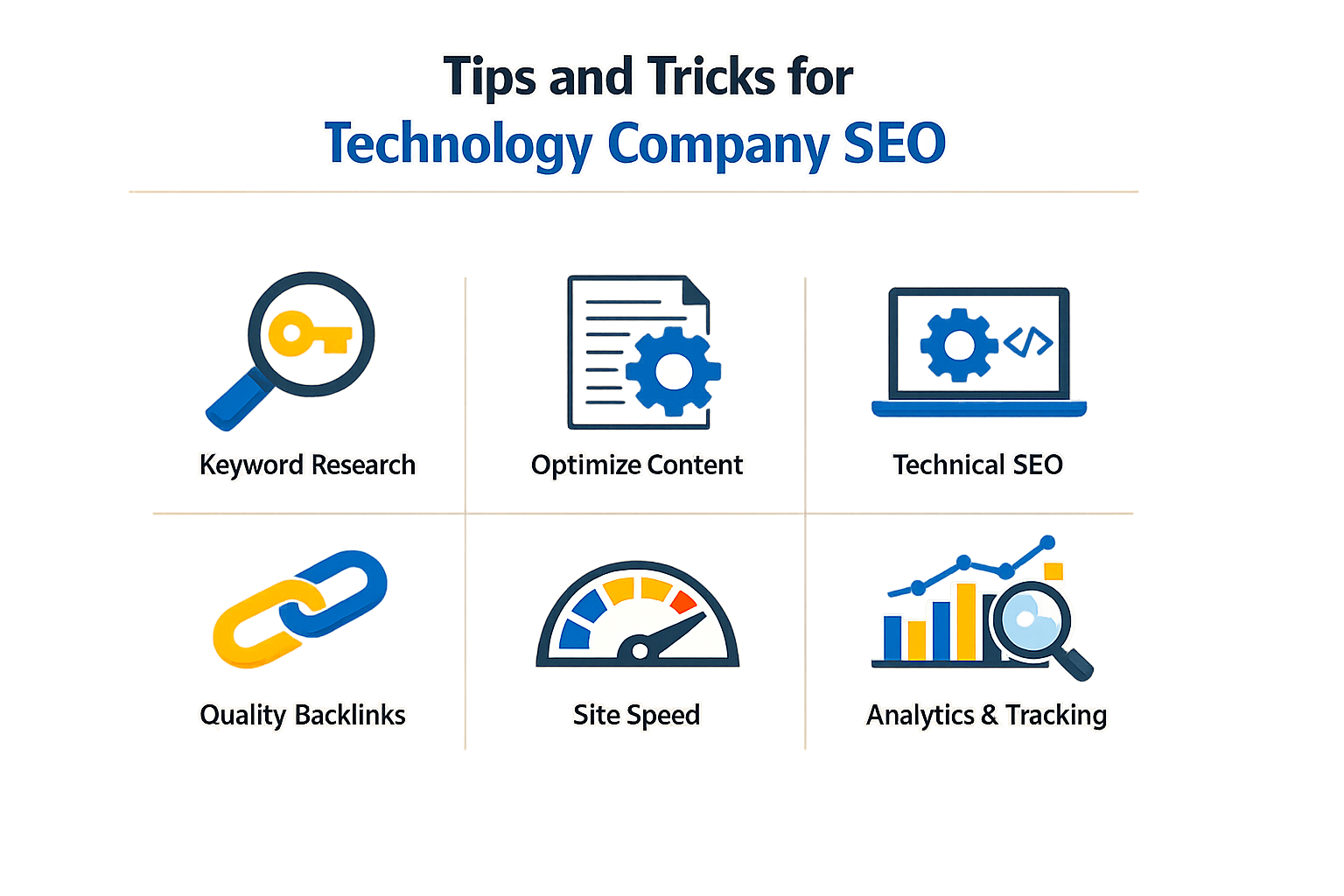
Once you have the foundation in place, these practical tips will help you refine your approach and avoid common pitfalls that slow down technical companies.
Build for Search From Day One
When launching a new site or product page, design with search engines in mind from the start rather than retrofitting SEO later. This means clean URL structures, logical information architecture, and semantic HTML before the first line of marketing copy goes live. Teams that treat SEO as an afterthought spend months undoing technical debt that could have been avoided in the planning phase.
Prioritize People-First Content
Search engines reward content that demonstrates experience, expertise, authoritativeness, and trustworthiness. For IT companies, this means writing for the practitioner first and the algorithm second. A detailed troubleshooting guide that solves a real problem will outperform keyword-stuffed fluff every time. Focus on answering the questions your prospects actually ask, using the language they use when they search.
Avoid the trap of updating publication dates on old content without substantive changes just to appear fresh. Search engines recognize this pattern. If you're refreshing content, add new data, update deprecated information, or expand sections that users find insufficient—make the update worth the new timestamp.
Audit Your SEO Partner's Recommendations
If you work with an external SEO consultant or agency, verify their advice against official documentation. Ask them to cite Google Search Central guidelines or other authoritative sources for their recommendations. Be especially cautious with firms offering "AEO" or "GEO" services (optimization for AI-generated search experiences)—these terms often signal speculative tactics rather than proven methods. A credible SEO will show you past client results and explain their process in plain language, not jargon designed to obscure weak fundamentals.
The best SEO advice comes with a citation to official guidance, not a vague promise about "secret" ranking factors.
Integrate SEO Into Product Development
For technology companies, product launches and feature releases create natural content opportunities. Coordinate with product teams to publish documentation, use cases, and technical explainers that target search queries your prospects use during evaluation. This cross-functional approach ensures your SEO strategy stays aligned with what you're actually building, rather than becoming a disconnected content exercise.
For teams deploying complex technical products, the same principles that govern solid engineering apply to SEO for IT companies—clarity, documentation, and measurable outcomes. You can see this overlap in best practices for deploying AI web apps, where technical rigor and discoverability go hand in hand.
Measure What Matters
Track metrics that connect to business outcomes, not vanity numbers. For IT companies with long sales cycles, this often means monitoring assisted conversions, content engagement depth, and keyword rankings for high-intent queries rather than raw traffic volume. A thousand visitors who bounce immediately are worth less than fifty who read three pages and download a whitepaper. Set up goal tracking that reflects your actual funnel, and review it monthly to catch trends before they become problems.
Conclusion
Effective SEO for IT companies requires a strategic approach that extends beyond traditional ranking metrics. The technical complexity of your products and the extended decision cycles of enterprise buyers demand content that educates, builds trust, and demonstrates expertise at every stage of the customer journey. Success is not measured by keyword positions alone — it is defined by qualified consultations and signed contracts.
The strategies outlined in this guide — from technical foundations and content architecture to conversion optimization and measurement frameworks — work together as an integrated system. Each element reinforces the others: technical excellence enables content discovery, strategic content builds authority, and conversion-focused design turns visibility into business outcomes. When you align your SEO program with how enterprise buyers actually research and evaluate technology solutions, you create a sustainable competitive advantage.
Implementation requires discipline and patience. The same long sales cycles that make IT SEO challenging also create opportunities for companies willing to invest in comprehensive, authoritative content. Start with technical fundamentals, build a content library that addresses real buyer questions, and measure what matters to your business. For teams looking to strengthen their technical execution, best practices for deploying AI web apps offers complementary guidance on building performant, search-friendly technical infrastructure.
The landscape of search continues to evolve, but the core principle remains constant: deliver genuine value to the people researching solutions to complex problems. When your SEO strategy serves that objective, rankings and revenue follow.
FAQ
What is SEO for IT companies?SEO for IT companies is the practice of optimizing technology firms' online presence to attract qualified prospects through organic search, addressing the unique challenges of technical products, long sales cycles, and enterprise decision-making processes.
How does SEO for technology companies differ from general SEO?Technology company SEO focuses on extended sales cycles, technical buyer personas, and complex product evaluation processes. Success metrics emphasize qualified consultations and signed implementations rather than traffic volume, and content must address multiple buyer stages across months-long research periods.
What are the biggest SEO challenges for IT companies?IT companies face challenges including technical product complexity, inconsistent buyer terminology, long evaluation cycles, multidisciplinary SEO skill requirements, and the need to balance technical depth with accessibility for different buyer stages.
How long does it take to see SEO results for technology companies?Technology companies typically see initial ranking improvements within 3-6 months, but meaningful pipeline impact often requires 6-12 months due to extended sales cycles. Track assisted conversions and content engagement by account to measure progress before closed revenue appears.
Should technology companies hire an in-house SEO specialist or use an agency?The decision depends on execution capacity and scope. Modern SEO spans technical optimization, content systems, keyword intelligence, and conversion measurement. Many companies benefit from a hybrid approach: strategic direction from a managed partner combined with in-house content production aligned to product roadmaps.
Sources(13)
- Google Search Central documentation
- Google Search Central documentation
- Google Search Central documentation
- Google Search Central documentation
- Managed Search & Content Intelligence
- Xenco Labs — Digital Growth Strategy
- Local Service Business OS
- Google Search Central documentation
- Google Search Central documentation
- Google Search Central documentation
- Google Search Central — AI features and your website
- local-service-business-os (operational_policy)
- digital-growth-strategy (xl_local_os_editorial)
Written by
Xenophon Giannis
Published October 18, 2026 · 13 min read
Xenophon Giannis is the founder and CEO of Xenco Labs, where he designs, builds, deploys and operates production AI software solo — on his own multi-node cluster, with his own LLM gateway and automation infrastructure. Twenty-five years in enterprise technology came first: a decade at AboveNet, hired as its first sales rep after bankruptcy and promoted until he ran the entire Western Pacific region, then sales leadership at Black Lotus and Nexusguard in DDoS mitigation. He writes about what he actually ships, and what actually breaks in production.
You Might Also Like
More from the Xenco Labs blog

Lead Generation for IT Companies: Enterprise Strategies
Learn effective lead generation for IT companies and infrastructure strategies, turning search demand into a strong sales pipeline.
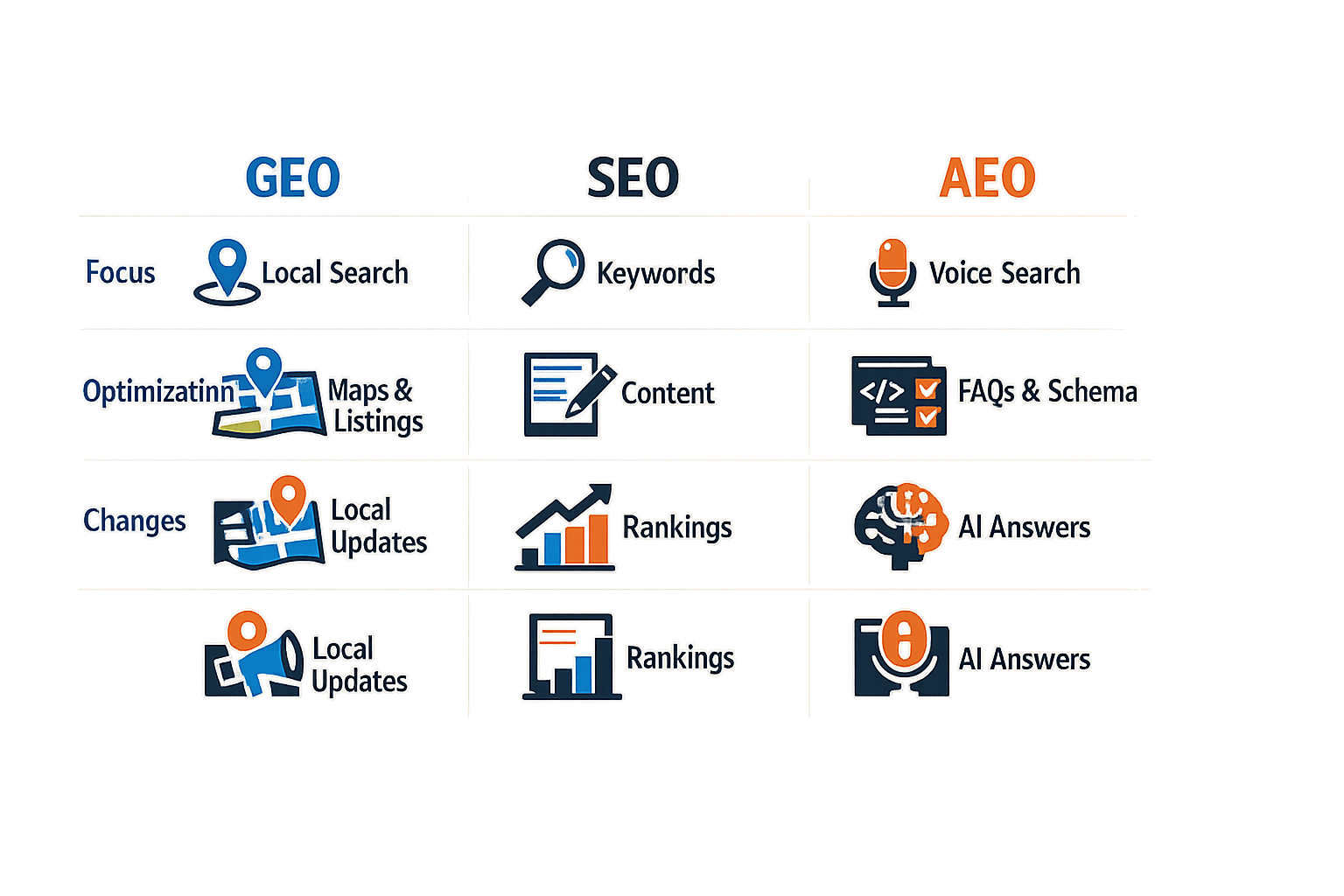
Geo vs SEO: AEO vs SEO: Key Changes for Search Teams (+ GEO Explained)
Explore the differences between AEO vs SEO and GEO, and understand what changes for search teams and what remains the same in modern search optimization. Learn about geo

SEO Manager Job Description: In-House vs Agency
Explore in-house SEO vs agency options through the SEO Manager job description, covering key responsibilities and when each approach fits your organization.
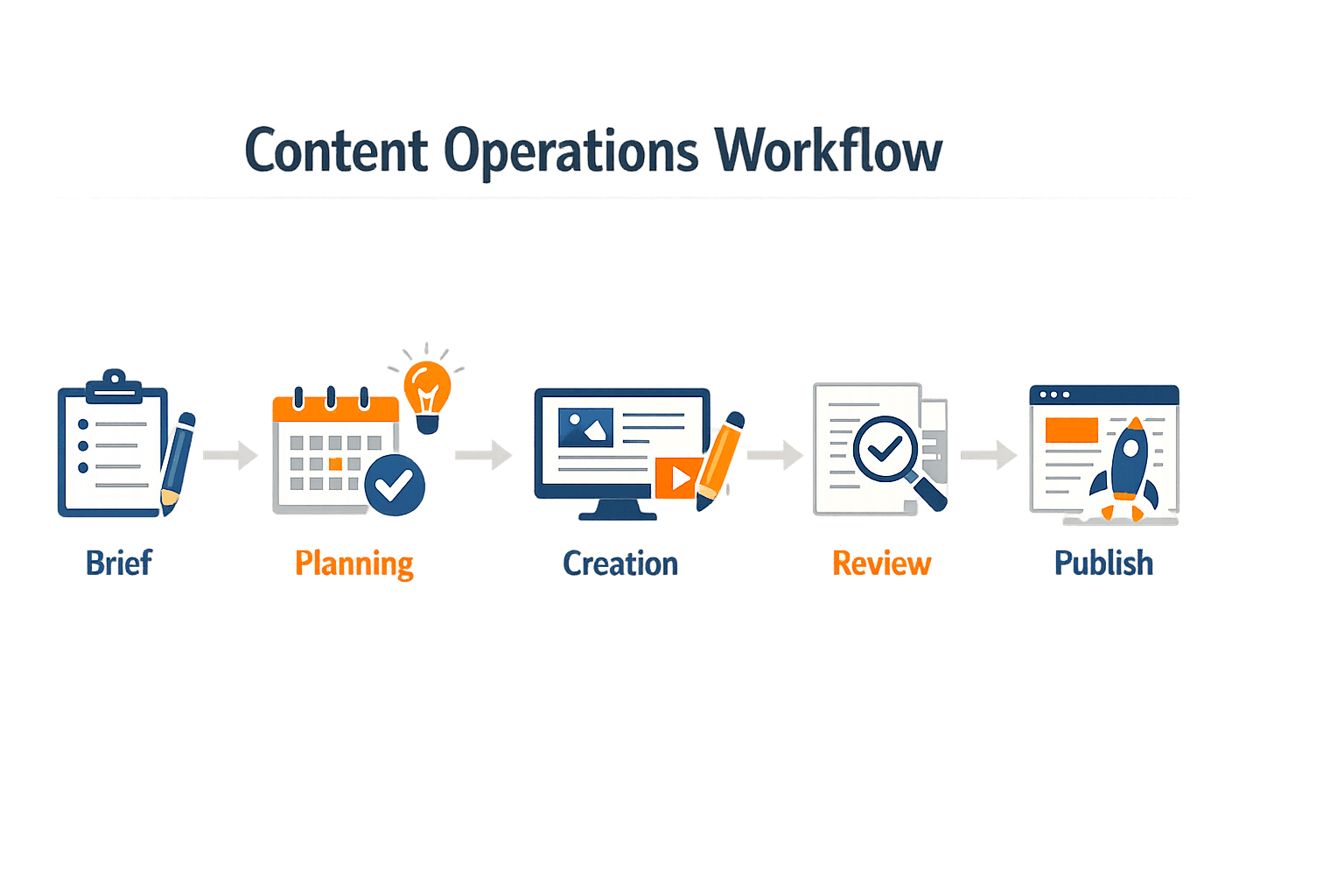
SEO Content Brief to Published Page: Content Operations Workflow
Explore the content operations workflow from seo content brief to published page, ensuring efficiency and quality at every stage.