
AI Search Engine Optimization: GEO, AEO and Visibility Guide - ai
Master ai search optimization with proven GEO and AEO strategies. Learn how to optimize content for AI-powered search engines and boost visibility with ai search
Introduction to AI Search Optimization
AI search engine optimization is the practice of structuring content so that AI-powered search systems can parse, cite, and surface your information in response to user queries. Search is changing faster than most content teams can adapt. AI-powered answer engines now intercept queries before users ever see a list of blue links. Google's AI Overviews, ChatGPT's search integration, and standalone platforms like Perplexity are rewriting the rules for how content gets discovered, evaluated, and surfaced.
Traditional SEO assumed that ranking on page one meant visibility. AI search engine optimization operates under a different assumption: your content must be synthesized, cited, and trusted by language models that decide what information to surface in a single generated response. The shift is not hypothetical—it is happening in live search results today.
We have spent the past two years tracking how AI engines select sources, structure answers, and attribute credit. The patterns are consistent: content that directly answers questions, provides clear context, and demonstrates topical authority gets cited. Content optimized primarily for keyword density or backlink volume often gets ignored. The gap between these outcomes is widening.
This guide walks through the mechanics of ai search engine optimization, covering what GEO and AEO mean in practice, why they matter for organic visibility, and how to implement changes that improve performance in both traditional and AI-driven search. You will also find best practices for deploying AI web apps that complement content optimization efforts. We focus on what works, what does not, and how to measure results when the metrics themselves are still evolving.
Expect concrete examples, sourced claims, and a framework you can apply whether you are optimizing a single page or an entire content library. The goal is not to chase every new AI platform but to build content that remains discoverable as search continues to evolve.
Explore AI search optimization strategies including GEO, AEO, and how to enhance visibility in AI answers.
What is AI Search Engine Optimization?
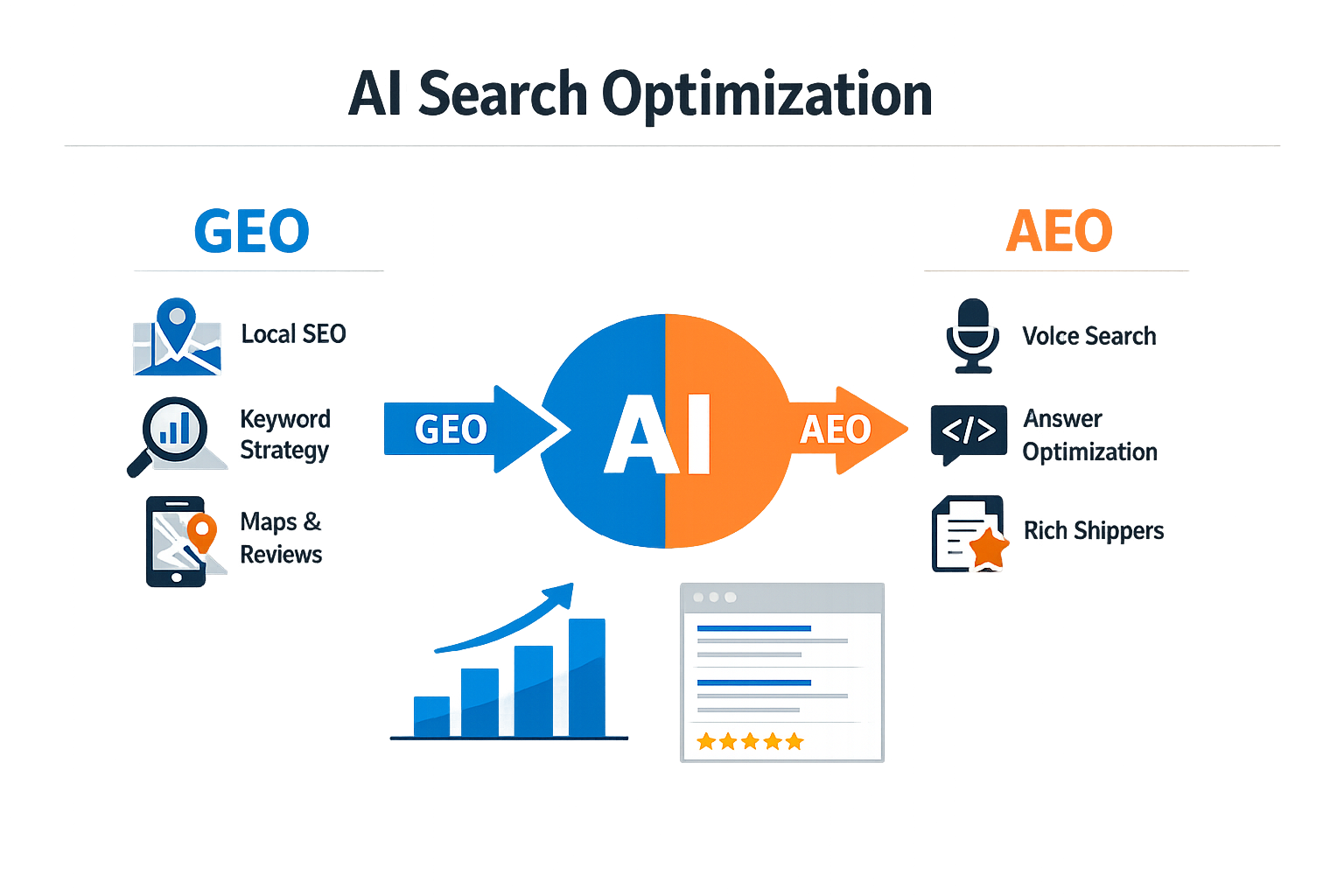
AI search engine optimization is the practice of structuring content so that AI-powered search systems — including large language models, generative AI overviews, and chatbot interfaces — can parse, cite, and surface your information in response to user queries. Unlike traditional SEO, which targets ranked lists of blue links, ai search engine optimization prioritizes being selected as the source for a synthesized answer.
The discipline combines two overlapping strategies: Generative Engine Optimization (GEO) and Answer Engine Optimization (AEO). GEO focuses on optimizing for AI-generated responses in systems like Google's AI Overviews, ChatGPT, and Perplexity. AEO targets structured answer boxes and featured snippets that have existed in search for years but now feed into generative systems. Both require machine-readable content, entity clarity, and authoritative sourcing.
The Core Components of AI Search Engine Optimization
Modern ai search engine optimization spans several technical and editorial layers. You need structured data that tells machines what your content is — not just what it says. You need entity disambiguation so systems know whether "Mercury" refers to a planet, an element, or a car brand. You need citation-worthy prose that can be extracted cleanly without distortion.
The operational side is broader than most companies expect. Best practices for deploying AI web apps require coordination across technical SEO, content operations, and machine-readable markup — roles that used to sit in separate departments. A single "SEO person" cannot own the full stack; the modern function includes keyword intelligence, schema implementation, content architecture, conversion tracking, and AI-readiness audits.
How GEO and AEO Interrelate
GEO and AEO are not competing strategies — they are two lenses on the same goal. AEO techniques (structured answers, FAQ schema, concise definitions) make content digestible for generative systems. GEO techniques (source authority, entity linking, citation hygiene) ensure that when an AI synthesizes an answer, your content is the one it quotes.
Both depend on the same infrastructure: clean HTML semantics, accurate structured data, and editorial discipline that prioritizes clarity over cleverness. A page optimized for featured snippets will often perform well in AI Overviews if it also demonstrates topical authority and cites reputable sources. The inverse is equally true — content built for generative citation tends to rank well in traditional search because the signals overlap.
Official guidance on optimizing for generative AI features should be the foundation of any AEO or GEO strategy.
The practical reality is that most organizations need to rebuild their content operations to support both. That means auditing existing pages for entity clarity, adding schema where it is missing, and training editorial teams to write with machine readers in mind — without sacrificing human readability.
Why AI Search Optimization Matters
AI-powered search engines now mediate how millions of users discover information, making optimization for these systems a practical necessity rather than an experimental tactic. When Google displays AI Overviews or ChatGPT surfaces your content in conversational answers, you gain visibility in contexts where traditional blue-link rankings never appear. The traffic quality from these placements tends to be higher — users who click through from AI-generated summaries spend more time on pages and engage more deeply because the AI has already pre-qualified their intent.
The shift matters because user behavior is changing faster than most content strategies can adapt. Search queries increasingly resemble natural questions rather than keyword strings, and AI systems reward content that directly answers those questions with clarity and structure. If your pages remain optimized only for traditional ranking signals, you risk becoming invisible in the growing share of searches resolved entirely within AI interfaces. This is not a distant threat; it is measurable today in referral patterns and zero-click search rates.
Visibility in Zero-Click Environments
AI search engines often answer queries without requiring a click, extracting and synthesizing information from multiple sources into a single response. Your content can still drive value in these scenarios if it becomes the cited source behind the answer. Being featured as a supporting link in an AI Overview or referenced in a ChatGPT response builds brand authority even when users do not visit your site immediately. Over time, repeated exposure in AI-generated answers positions your domain as a trusted reference, which compounds into direct traffic and branded searches.
The challenge is that zero-click visibility requires content structured for extraction. AI systems parse pages looking for clear answers to specific questions, not for keyword density or backlink profiles. Pages that use semantic HTML, descriptive headings, and concise factual statements are easier for AI to interpret and cite. If your content is buried in long paragraphs without clear topical breaks, the AI may skip it entirely in favor of a competitor's better-structured page.
Traffic Quality and User Intent Alignment
Clicks originating from AI-enhanced search results carry stronger intent signals than average organic traffic. When an AI Overview presents your page as a supporting link, the user has already seen a summary of your content and chosen to dig deeper. This pre-qualification means higher engagement metrics: longer sessions, lower bounce rates, and better conversion rates for lead-generation or e-commerce goals. Traditional SEO often optimizes for volume; ai search engine optimization prioritizes relevance and intent match, which translates to measurable business outcomes.
Aligning content with user needs rather than solely attracting search engine visits has always been sound strategy, but AI systems enforce this principle algorithmically. Pages designed to help people — with clear answers, transparent sourcing, and logical structure — naturally perform better in AI-mediated discovery. This is not about gaming a new algorithm; it is about making content that AI systems can confidently recommend because it genuinely serves the user's query. For practical deployment strategies that complement your content work, see best practices for deploying AI web apps.
The primary purpose of creating content should be to help people, ensuring it is useful to visitors who land on your page.
Competitive Differentiation
Most organizations still optimize exclusively for traditional search, leaving AI search channels under-exploited. Early adoption of GEO and AEO techniques creates a visibility gap that competitors will need months or years to close. If your content consistently appears in AI Overviews while competitors remain absent, you capture mindshare in a high-trust environment where users see fewer alternatives. This advantage compounds as AI systems learn which sources provide reliable answers — once your domain is established as authoritative in a topic area, it becomes harder for newcomers to displace you.
The differentiation extends beyond rankings into operational efficiency. Content optimized for AI search tends to perform better across all channels: it is clearer for human readers, easier for voice assistants to parse, and more shareable in social contexts. Investing in ai search engine optimization is not a siloed tactic; it is a forcing function that improves overall content quality and user experience, which benefits every downstream metric from organic traffic to customer satisfaction.
How to Implement AI Search Engine Optimization
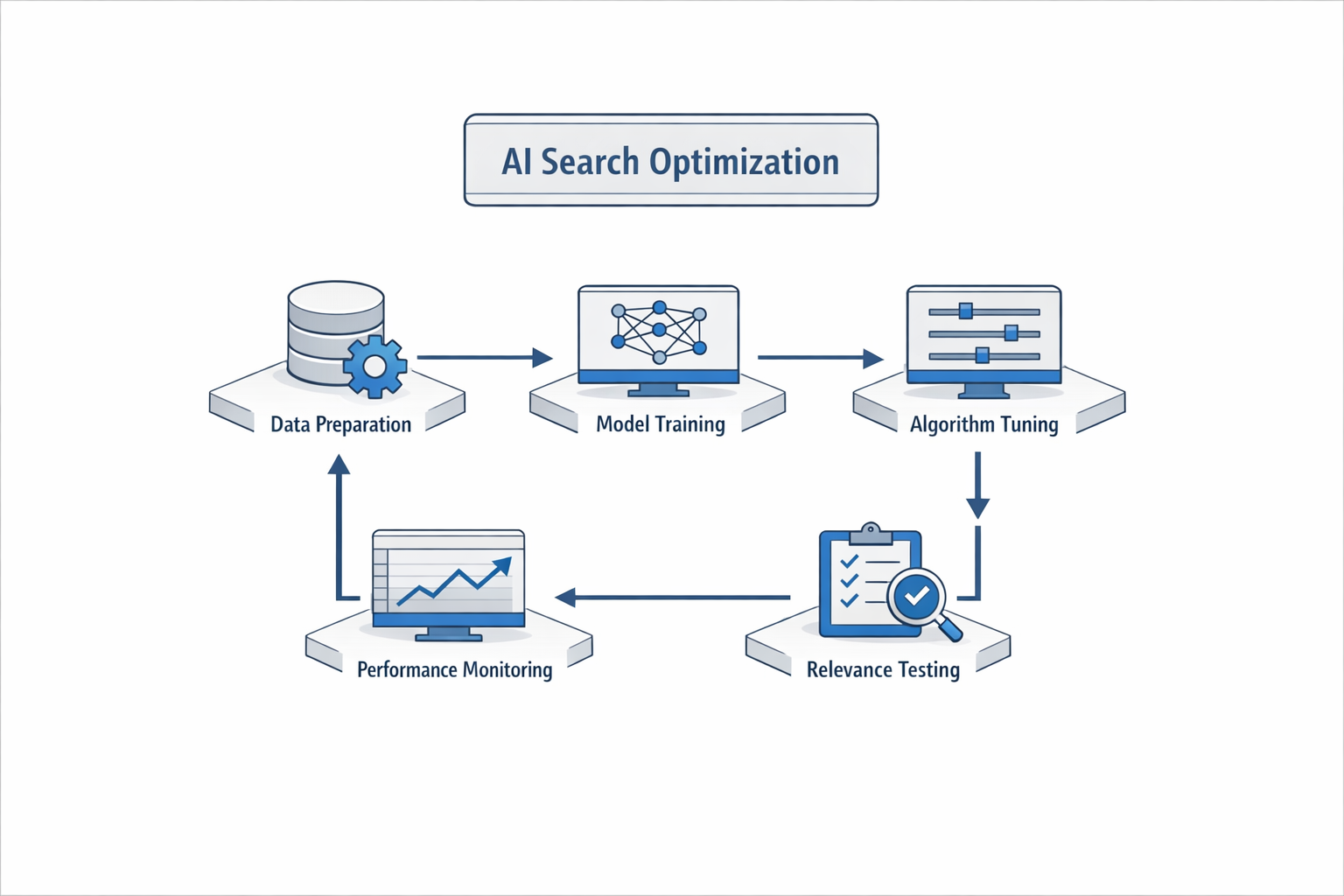
Implementing ai search engine optimization requires a structured approach that builds on traditional SEO fundamentals while addressing the unique requirements of AI-powered search systems. The process centers on ensuring your content is indexed, structured for machine interpretation, and positioned to answer the queries AI systems prioritize.
Step 1: Ensure Indexing and Snippet Eligibility
Before any AI feature can surface your content, the foundational requirement is straightforward: your pages must be indexed and eligible to appear in Google Search with a snippet. According to Google's official guidance, "to be eligible to be shown as a supporting link in AI Overviews or AI Mode, a page must be indexed and eligible to be shown in Google Search with a snippet." This means verifying that crawling is allowed in robots.txt, that Googlebot can access your content, and that you haven't blocked snippet generation through meta tags or other preview controls.
Step 1
Audit indexing status
Use Google Search Console to verify which pages are indexed. Check for crawl errors, robots.txt blocks, or noindex directives that might prevent pages from appearing in search results. Ensure that your preview control settings are visible to Googlebot and configured to allow snippet generation.
Step 2
Structure content for machine interpretation
Organize content with clear hierarchical headings (H2, H3), descriptive subheadings that frame specific questions or topics, and paragraph structures that deliver direct answers early. AI systems parse structured content more reliably than long, unbroken text blocks.
Step 3: Deploy Search Intelligence Tools
Effective ai search engine optimization depends on understanding what queries your audience is asking and how AI systems are currently answering them. Tools like Ahrefs, DataForSEO, and Google Search Console help identify the questions buyers are asking, the topics AI Overviews are covering in your space, and where gaps exist in current coverage. Track which queries trigger AI features, monitor whether your content appears as a supporting link, and analyze the structure of competing content that does surface.
Step 4: Optimize for Answer-Worthy Content
AI systems prioritize content that directly answers user intent. This means writing with clarity, front-loading key information, and avoiding promotional language that obscures factual answers. Structure each page or section around a specific question or problem, provide the answer in the first paragraph, then support it with evidence, examples, or procedural steps. Use bullet lists for multi-part answers, comparison tables for evaluating options, and clear procedural steps for how-to content.
| Content Type | AI-Friendly Structure | Weak Structure |
|---|---|---|
| Definitions | Direct answer in first sentence, then context | Long preamble before definition |
| Procedures | Numbered steps with clear outcomes | Narrative description without sequence |
| Comparisons | Table or structured list | Paragraph-based prose |
Step 5: Maintain Technical Hygiene
AI search engine optimization doesn't override traditional SEO requirements—it builds on them. Ensure fast page load times, mobile responsiveness, secure HTTPS connections, and clean URL structures. Implement structured data where appropriate (FAQ schema, HowTo schema, Article schema) to help AI systems parse your content's purpose and structure. Monitor Core Web Vitals and address technical issues that could prevent indexing or degrade user experience when visitors arrive from AI-powered search results.
For organizations managing multiple content types or large site structures, consider best practices for deploying AI web apps to ensure technical infrastructure supports both user-facing features and search system requirements.
Best Practices for AI Search Engine Optimization
Effective ai search engine optimization requires discipline around content purpose, technical infrastructure, and measurement. The practices below reflect what works when search engines extract answers from your content rather than simply ranking pages.
Build Content to Help People First
The most effective practice is the simplest: create content to solve real problems. AI systems evaluate whether your page serves the visitor's intent, not whether it satisfies a keyword density target. Write for the person searching, then validate that structure and markup make the content machine-readable. When content exists primarily to attract search traffic rather than to help users, AI engines detect the mismatch and deprioritize it.
Use Tools That Surface Real Search Behavior
Effective optimization depends on understanding what buyers actually ask. Tools like Google Search Console, Ahrefs, and DataForSEO reveal the questions driving search volume and the entities AI systems associate with your topics. These platforms help you identify gaps between what users need and what your content currently addresses. Prioritize tools that show query intent and entity relationships rather than just keyword volume.
For best practices deploying AI web apps, the same principle applies: instrument systems to capture real user behavior, then optimize based on observed patterns rather than assumptions.
Structure Content for Answer Extraction
AI systems parse content to extract direct answers. Use clear headings, concise definitions, and scannable lists. Place the most important information early in each section. When a page answers a question, state the answer explicitly in the first paragraph under the relevant heading. Avoid burying key facts in dense prose or requiring the reader to synthesize information across multiple paragraphs.
Step 1
Audit existing content for answer clarity
Review your top-performing pages and identify where the main answer appears. If it takes more than two paragraphs to reach the core information, restructure the section to front-load the answer.
Maintain Technical Hygiene
AI systems rely on clean HTML, fast load times, and accessible structure. Ensure heading hierarchy is logical (H1 → H2 → H3), images include descriptive alt text, and pages render correctly on mobile devices. Broken internal links and slow server response times degrade both traditional SEO and AI answer extraction. Run regular technical audits to catch issues before they accumulate.
Verify Business References and Service Claims
When evaluating SEO or AI optimization services, check business references and ask past clients whether the work produced measurable results. Verify that any vendor claiming expertise in ai search engine optimization can cite official guidance and demonstrate a track record of improving visibility in AI-generated answers. Avoid providers who promise specific rankings or guarantee inclusion in AI overviews—those outcomes depend on factors no vendor controls.
Disclose Automation and AI Use Appropriately
When automation or AI generates content, disclose the process where users might reasonably ask how the content was created. Transparency about content production methods builds trust and aligns with search engine guidance. The disclosure does not need to be lengthy—a brief note explaining the role of AI in research, drafting, or data analysis is sufficient.
Common Mistakes in AI Search Engine Optimization
Practitioners new to ai search engine optimization often stumble over the same pitfalls that traditional SEO specialists encountered a decade ago, plus a few unique to generative engines. The most damaging errors stem from treating AI search as a checklist rather than a system that rewards clarity, structure, and verifiable claims. Many teams waste months chasing guarantees that do not exist or optimizing for signals that AI engines ignore.
Expecting Guaranteed Rankings in AI Answers
No vendor can promise your content will appear in a specific position within ChatGPT, Perplexity, or Google AI Overviews. AI engines synthesize answers from multiple sources based on query context, user history, and real-time relevance scoring. A realistic optimization engagement focuses on improving citability and structured data coverage, not first-place placements. When evaluating service providers, ask whether they cite official documentation and provide evidence-based recommendations rather than ranking guarantees.
Ignoring Official Guidance
Google and other platforms publish specific documentation on optimizing for AI experiences, yet many practitioners rely on speculation or outdated traditional SEO tactics. Before implementing recommendations from consultants or agencies, verify they reference official sources and current best practices. Unsolicited outreach promising dramatic AI visibility gains without citing authoritative documentation is a red flag.
Overloading Content with Keywords
AI engines parse semantic meaning and entity relationships, not keyword density. Stuffing the focus keyword into every heading and paragraph degrades readability and signals low-quality content to both human readers and language models. Instead, use the primary keyword naturally in the title, one or two subheadings, and the introduction, then focus on related concepts and entities that answer the user's intent.
Neglecting Structured Data and Schema Markup
Many sites skip structured data entirely or implement it incorrectly, assuming AI engines will infer relationships from unstructured text. While large language models can extract some meaning, explicit schema markup for entities, FAQs, how-tos, and reviews dramatically improves the likelihood of citation. Validate your markup with official testing tools and monitor for errors that prevent parsing.
Failing to Audit Before Optimization
Jumping into AI search tactics without understanding your current visibility, competitor positioning, and technical foundation wastes resources. A proper audit identifies which pages already appear in AI answers, which schema types are missing, and where content gaps exist. When working with external providers, grant read-only access to analytics and search tools at the audit stage — never provide full administrative credentials before verifying their process and references. For teams building internal capabilities, best practices for deploying AI web apps provide a framework for systematic rollout and validation.
A realistic AI search audit estimates the work involved and the types of improvements possible, not guaranteed placements or traffic multipliers.
Treating AI Optimization as a One-Time Project
AI engines update their models, citation logic, and data sources continuously. Content that performs well today may lose visibility if competitors publish more current, better-structured answers or if the engine's priorities shift. Effective ai search engine optimization is an ongoing process: monitor citation frequency, refresh outdated claims, expand entity coverage, and adapt to new schema types as they emerge.
Ignoring Client Feedback and References
When hiring external help, many organizations skip reference checks or accept vague testimonials. Ask specific questions: Did the provider deliver measurable improvements in AI citations? Were deliverables completed on schedule? Did they explain their methods with supporting documentation? Providers who cannot or will not connect you with past clients often lack a track record worth validating.
Frequently Asked Questions about AI Search Optimization
What is the difference between SEO, AEO, and GEO?
SEO (Search Engine Optimization) focuses on ranking in traditional search results. AEO (Answer Engine Optimization) targets featured snippets and direct answers in search interfaces. GEO (Generative Engine Optimization) optimizes for AI-generated responses in tools like ChatGPT, Perplexity, and Google's AI Overviews. All three share foundational practices — structured content, authoritative sourcing, clear entity relationships — but GEO requires additional emphasis on citation-friendly formats and machine-readable context.
Do I need to hire a specialist for ai search engine optimization?
It depends on your team's current capabilities and the scope of work required. Modern search roles increasingly combine SEO, AI-search visibility, content operations, technical implementation, conversion, analytics, and automation. If your organization lacks expertise in structured data, entity modeling, or AI citation tracking, outside help may accelerate progress. Before hiring, verify that any consultant cites official documentation for their recommendations and can demonstrate measurable outcomes in AI visibility, not just promises.
How do I know if my content is being cited by AI engines?
Track mentions in AI Overviews, ChatGPT responses, and Perplexity citations by running branded and topic queries through each platform. Set up monitoring for your domain name and key entity names in AI responses. Many enterprise SEO platforms now offer GEO tracking modules that log citation frequency and context. Manual spot-checking remains necessary — automated tools often miss nuanced attributions or paraphrased references that do not include explicit links.
Can I optimize for AI search without changing my existing content?
Partially. Adding structured data, improving internal linking, and clarifying entity relationships can improve AI visibility without rewriting articles. However, content originally written for keyword density or traditional SEO patterns often lacks the clear, citation-friendly structure that AI engines prefer. Expect to refactor introductions, add explicit definitions, and reorganize sections to support direct answer extraction. Small structural changes typically yield better results than complete rewrites.
What should I avoid when evaluating ai search engine optimization advice?
Be cautious of vendors who promise guaranteed rankings in AI responses or claim proprietary access to AI engine algorithms. Evaluate any SEO's recommendations and tools they use before making significant changes to your site based on a third-party tool's audit. Avoid services that recommend manipulative schema markup, keyword stuffing in structured data, or link schemes disguised as entity-building. If a consultant cannot cite official guidance from Google, OpenAI, or other platform documentation, their advice is speculative at best.
How long does it take to see results from ai search engine optimization?
AI citation visibility can appear within days for high-authority domains with strong structured data, or take months for newer sites building entity recognition. Traditional SEO timelines — three to six months for meaningful organic growth — still apply to the foundational work that supports AI visibility. Faster results come from optimizing existing high-traffic pages rather than publishing new content, since AI engines prioritize sources they already trust.
Is ai search engine optimization different for local businesses?
Yes. Local AI search relies heavily on Google Business Profile data, consistent NAP (name, address, phone) citations, and location-specific structured data. AI engines pull local answers from Maps, review platforms, and business directories more than from website content alone. Local businesses should prioritize schema markup for LocalBusiness, Service, and FAQPage types, and ensure their GBP content includes the specific services and geographic areas they want to appear for in AI-generated local recommendations.
Should I focus on one AI platform or optimize for all of them?
Optimize for the platforms your audience actually uses. Google's AI Overviews dominate search traffic for most industries, making them the default priority. If your audience skews technical or research-focused, Perplexity citations may matter more. ChatGPT visibility matters when users rely on it for recommendations or comparisons in your category. The foundational work — clean structured data, authoritative content, clear entities — benefits all platforms. Platform-specific tactics should come after you have the basics right.
For a broader view of how AI optimization fits into modern web application strategy, see our guide on best practices for deploying AI web apps.
Conclusion and Next Steps
AI search engine optimization represents a fundamental shift in how content earns visibility — not through keyword density or backlink volume, but through structured clarity and answer-ready formatting. The strategies outlined in this guide — entity markup, conversational query targeting, source attribution, and multimodal optimization — are not speculative tactics. They are the technical requirements AI systems use to parse, evaluate, and surface content in generative answer engines and AI overviews.
Success in this environment requires a different metric than traditional SEO. Rankings matter less than citation rates; traffic volume matters less than qualified engagement. A piece of content that appears in three AI-generated answers and drives two consultation requests outperforms a page that ranks third for a commercial keyword but generates no conversions. This shift in measurement — from exposure to outcome — aligns with how service businesses actually grow.
Your immediate next steps depend on your current technical foundation. If your site lacks schema markup, start there: implement Organization, Article, and FAQ schemas on your highest-value pages. If you have structured data but thin content, prioritize expanding pillar pages with entity-rich sections that answer follow-up questions explicitly. If you are already optimized for traditional search, audit your content for conversational phrasing and add explicit question-answer pairs where natural.
The transition to AI-native optimization is not a one-time project. Search engines continue to refine how they extract and attribute information, and the systems that generate AI answers evolve rapidly. Monitor your citation appearances in AI overviews, track which content blocks get pulled into answers, and adjust your formatting based on what actually gets used — not what a tool predicts. For practical deployment patterns and technical infrastructure that supports AI-driven workflows, see our guide on best practices for deploying AI web apps.
The practitioners who succeed in ai search engine optimization are the ones who treat it as a content operations problem, not a marketing problem. Build repeatable processes for entity research, schema deployment, and answer-quality review. Document what works, discard what does not, and refine your approach based on measurable outcomes — consultations booked, implementations signed, and revenue attributed to organic search. That operational discipline, applied consistently, is what separates visibility from noise.
Sources(15)
- Google Search Central — AI features and your website
- Google Search Central documentation
- Google Search Central — Spam policies for Google web search
- Google Search Central documentation
- Google Search Central documentation
- Google Search Central documentation
- Google Business Profile guidelines
- Google Business Profile Help — Guidelines for representing your business on Google
- Google Search Central documentation
- Google Search Central documentation
- Google Search Central — Local business (LocalBusiness) structured data
- Google Business Profile guidelines
- Google Search Central documentation
- managed-search-content (shared_fact)
- managed-search-content (xl_local_os_editorial)
Written by
Xenophon Giannis
Published October 18, 2026 · 22 min read
Xenophon Giannis is the founder and CEO of Xenco Labs, where he designs, builds, deploys and operates production AI software solo — on his own multi-node cluster, with his own LLM gateway and automation infrastructure. Twenty-five years in enterprise technology came first: a decade at AboveNet, hired as its first sales rep after bankruptcy and promoted until he ran the entire Western Pacific region, then sales leadership at Black Lotus and Nexusguard in DDoS mitigation. He writes about what he actually ships, and what actually breaks in production.
You Might Also Like
More from the Xenco Labs blog

Lead Generation for IT Companies: Enterprise Strategies
Learn effective lead generation for IT companies and infrastructure strategies, turning search demand into a strong sales pipeline.
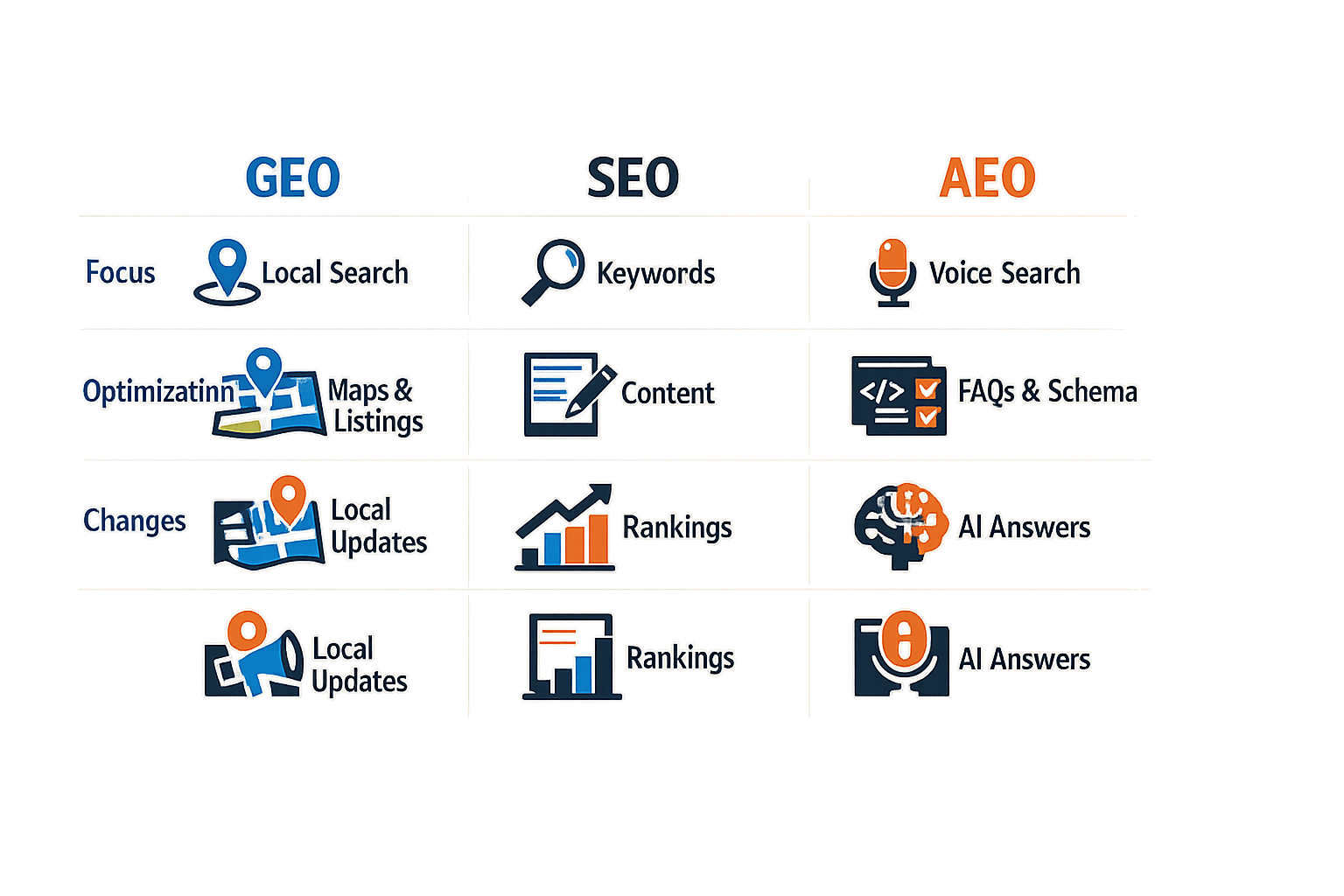
Geo vs SEO: AEO vs SEO: Key Changes for Search Teams (+ GEO Explained)
Explore the differences between AEO vs SEO and GEO, and understand what changes for search teams and what remains the same in modern search optimization. Learn about geo

SEO Manager Job Description: In-House vs Agency
Explore in-house SEO vs agency options through the SEO Manager job description, covering key responsibilities and when each approach fits your organization.
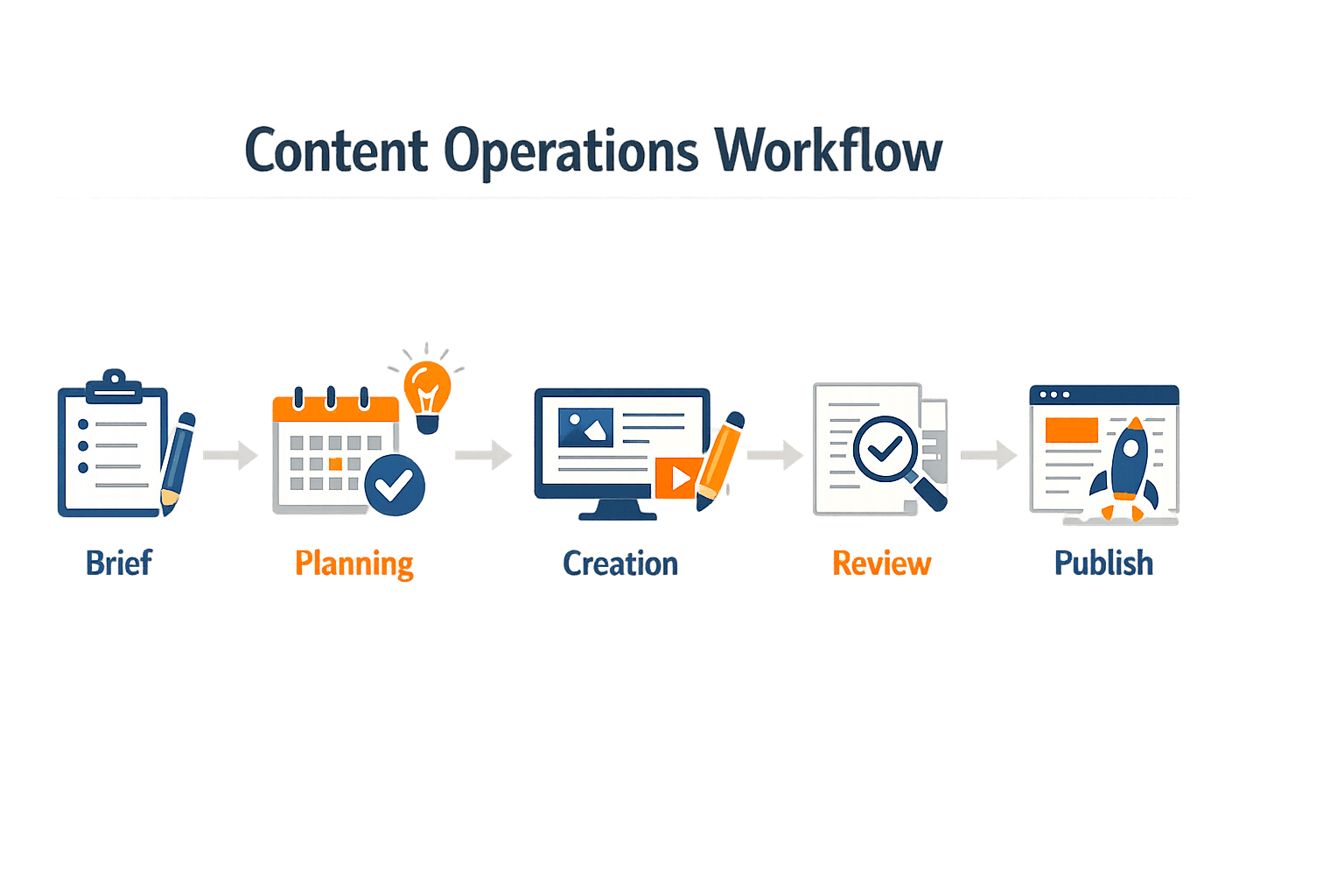
SEO Content Brief to Published Page: Content Operations Workflow
Explore the content operations workflow from seo content brief to published page, ensuring efficiency and quality at every stage.