
Programmatic SEO Examples: Templated Pages and Content Abuse
Explore programmatic SEO examples: when templated pages are beneficial and when they lead to content abuse. Learn the line between scale and spam.
Introduction
Programmatic SEO examples demonstrate how templated pages can either serve users efficiently or flood the web with thin content. At its core, the approach involves creating templated pages that populate with structured data — think location pages, product catalogs, or comparison grids. When executed well, these pages answer specific queries efficiently. When executed poorly, they waste both user time and search engine resources.
The conversation around programmatic SEO examples centers on a simple question: does the page exist because someone will find it useful, or does it exist because an algorithm might rank it? Search engines have grown increasingly sophisticated at distinguishing between the two. Google's helpful content system, spam policies, and core algorithm updates now actively penalize sites that generate pages for search engines rather than people.
What makes this topic particularly relevant now is the intersection of AI-generated content and programmatic techniques. Tools that once required manual template design can now produce thousands of pages with minimal human oversight. This capability amplifies both the benefits and the risks. Companies exploring best practices for deploying AI web apps face similar questions about when automation serves users and when it simply creates noise.
The challenge for marketers and SEO practitioners is navigating the line between scale and spam. Templated pages work when they organize genuine information that users need in different contexts — city-specific service pages for a national business, model-year comparisons for an automotive site, or ingredient breakdowns for a recipe platform. They fail when the template becomes a shell with no substantive variation, when data sources are thin or outdated, or when the primary goal is keyword coverage rather than user value.
B2B companies with existing subject-matter expertise and a marketing team can benefit significantly from programmatic approaches by improving content velocity and search intelligence. The key differentiator is whether the organization has the knowledge corpus and quality control to ensure each generated page carries real information. A programmatic page about industrial valve specifications built from engineering documentation serves a purpose; a programmatic page about "best plumbers in [city]" scraped from directory listings does not.
This article examines programmatic SEO examples through the lens of what works, what doesn't, and where the boundary sits. We'll look at the structural problems that lead to penalties, the strategic steps that make templated content valuable, and the operational practices that keep programmatic efforts on the right side of search quality guidelines.
What Makes Programmatic SEO Examples Fail?
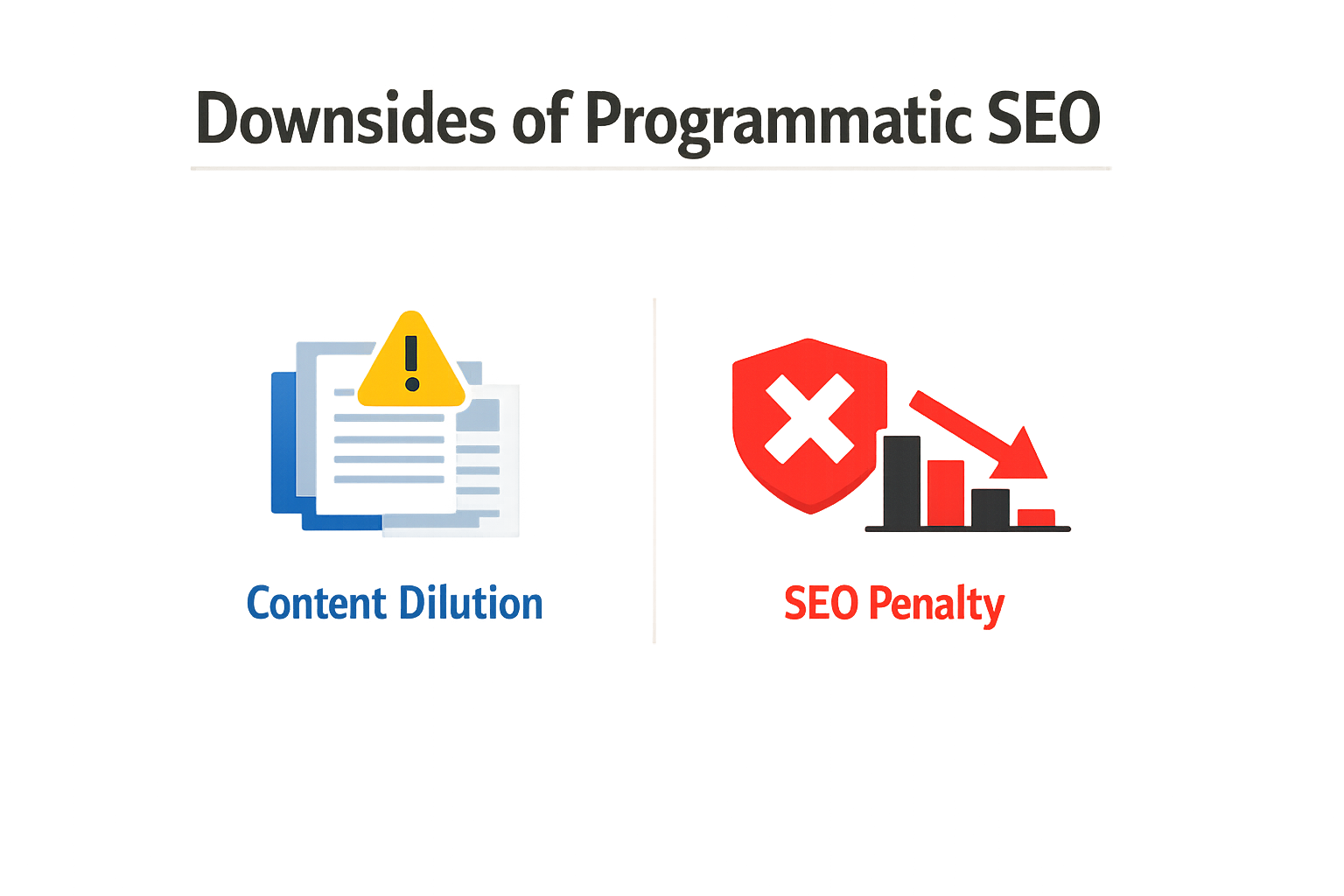
Programmatic SEO examples show that automation operates at the intersection of efficiency and intent. When executed well, templated pages deliver structured answers to real queries at scale. When executed poorly, they flood indexes with shallow variations that serve the publisher's ranking ambitions more than the searcher's needs. The difference is not always obvious from the outside, but search engines have become increasingly aggressive at drawing that line.
When Templates Become Manipulation
The core risk in programmatic approaches is confusing volume with value. A template that swaps city names or product attributes across thousands of pages can technically answer different queries, but if the substantive content remains identical, the pages offer no unique insight. Google's guidance emphasizes people-first content over search engine-first content — meaning pages should exist because users benefit from them, not because an algorithm might rank them.
Content dilution happens when template density outpaces the data or expertise needed to differentiate each instance. A local service template populated with generic placeholder text and minimal location-specific detail creates the appearance of coverage without the substance. Search engines now evaluate whether a page cluster demonstrates meaningful differentiation or simply repackages the same information under different URLs.
The Visibility-Risk Trade-Off
Hiring professionals or deploying automated systems to scale content production can improve visibility and save time, but it also introduces risk if the process prioritizes quantity over quality. The same tools that enable rapid deployment can amplify poor editorial decisions across thousands of pages simultaneously. When a programmatic strategy misfires, the correction effort scales with the original deployment — fixing one template may require republishing or de-indexing an entire category.
Best practices for deploying AI web apps apply here: automation should enhance human judgment, not replace it. The most common failure mode is launching a programmatic build without validating that each generated page meets the editorial standard you would apply to a hand-written piece. If you would not publish a single instance of the template as a standalone article, publishing a thousand of them does not improve the outcome.
When Templated Pages Help: Solution Steps
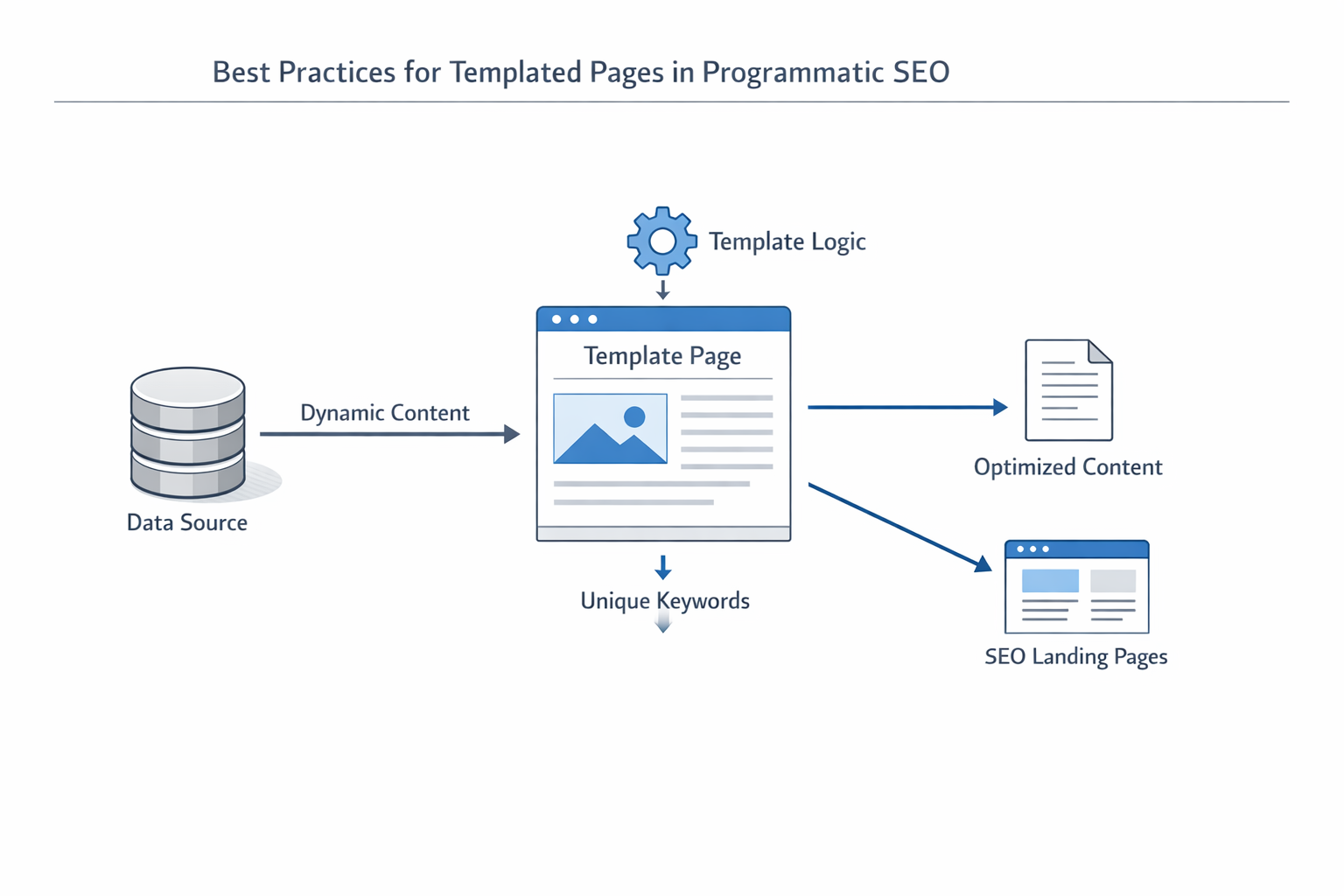
Templated pages work when they solve a real information-retrieval problem at scale. The difference between helpful automation and spam comes down to whether the template serves the user's intent or merely fills index slots. A well-executed programmatic SEO strategy treats templates as structural scaffolding for genuinely differentiated content, not as a shortcut to bulk publishing.
Step 1: Start with Search Intelligence
Step 1
Map buyer intent to data inventory
Before building a single template, audit what buyers are actually asking. Tools like Ahrefs and Google Search Console reveal the queries that drive traffic and conversions. Cross-reference those queries against your structured data inventory — product specs, location attributes, service variations, pricing tables. If a query pattern repeats across dozens or hundreds of entities in your data set, you have a candidate for templated scale. If the query is one-off or your data cannot answer it uniquely per entity, a template will produce thin pages.
Search intelligence is not a one-time exercise. Buyer language shifts, competitors enter the space, and new product attributes become decision factors. A programmatic SEO roadmap that ignores ongoing search intelligence will drift into irrelevance even if the templates themselves remain technically sound.
Step 2: Build a Knowledge Corpus Before You Build Templates
Step 2
Assemble source-grounded content inputs
A knowledge corpus is the structured collection of facts, claims, and supporting evidence that populate your templates. This includes product documentation, approved marketing claims, subject-matter expertise, authoritative external sources, and any data that differentiates one templated page from another. The corpus must be versioned and auditable — when a product spec changes or a claim is updated, every page that references it must reflect the change.
Templates that pull from a shallow or stale corpus produce pages that all say the same thing in slightly different words. That pattern is exactly what search engines flag as low-value content. A robust corpus lets each page answer a specific query with specific facts, even when the structure is identical.
Step 3: Design Content Architecture That Prioritizes User Journeys
Step 3
Convert keywords into decision paths
Content architecture translates keyword clusters into a hierarchy of pillar pages, supporting articles, comparison pages, and conversion moments. Templated pages fit into this architecture when they represent a repeating decision point — for example, city-specific service pages or product-variant comparison tables. Each template should map to a distinct stage in the buyer journey and provide the information needed to move forward.
When templates are designed in isolation from the broader content architecture, they create navigation dead ends. A user lands on a templated page, finds no clear next step, and bounces. Effective programmatic SEO weaves templates into a network of internal links that guide users from broad questions to specific solutions.
Step 4: Validate Every Page with ScoreCraft-Style QA
Before publishing at scale, test a sample of templated pages against SEO and content-quality diagnostics. Check for unique value per page, source attribution, structural markup, crawlability, and whether the page answers the target query better than competing results. If a template produces pages that fail these checks, fix the template or retire the concept. Publishing thousands of low-quality pages and hoping search engines overlook them is not a strategy — it is a liability.
For teams managing large-scale programmatic SEO, best practices for deploying AI web apps offer parallel lessons in maintaining quality at scale. The principles of structured inputs, version control, and automated validation apply equally to content production and application deployment.
Step 5: Measure and Iterate
Programmatic SEO is not a launch-and-forget tactic. Track per-page performance — impressions, clicks, conversions, bounce rate, time on page. Identify which templates drive engagement and which produce pages that users immediately abandon. Use that data to refine templates, update the knowledge corpus, and retire low-performing page sets. A measurement loop that feeds back into content architecture and template design is what separates mature programmatic SEO from content spam.
Tips and Tricks for Effective Programmatic SEO

Programmatic SEO examples at scale require discipline. The difference between a valuable resource and a spam farm often comes down to a few operational choices made before the first template runs.
Submit Sitemaps Early and Update Them Frequently
Using sitemaps helps Google discover and prioritize which pages to crawl, especially for sites with rapidly changing content. When you generate hundreds or thousands of pages, a sitemap is not optional — it is the mechanism that tells search engines which URLs matter and in what order to crawl them. Submit your sitemap through Google Search Console as soon as the first batch of pages goes live, and regenerate it whenever you add new pages or retire old ones.
Manage Multi-Regional and Multi-Lingual Content Deliberately
For multi-regional and multi-lingual sites, it is crucial to manage different language variations effectively to enhance SEO. If your programmatic system generates pages in multiple languages or for multiple locales, each variant must have proper hreflang tags, distinct URLs, and content that reflects the target region's conventions — not just machine-translated boilerplate. A poorly implemented multi-lingual template set can trigger duplicate content penalties faster than a monolingual one.
Use 301 Redirects When Retiring or Consolidating Pages
When moving a page permanently, it is important to use a 301 redirect to inform search engines of the new location. Programmatic systems often retire outdated pages in bulk — city pages for discontinued services, product variants that no longer exist. If you delete a URL without redirecting it, you lose any authority it accumulated. Map retired URLs to the closest surviving equivalent, or to a category page if no direct match exists.
Step 1
Audit before you scale
Before generating the full page set, audit a sample batch of 20–50 pages for duplicate titles, thin content, and broken internal links. Fix template errors at small scale; they multiply at large scale.
Step 2
Monitor crawl budget and index coverage
Use Google Search Console's Index Coverage report to track how many of your programmatic pages are indexed versus excluded. If exclusions spike, investigate whether the template is producing low-quality variants that Google is choosing to ignore.
How Do You Avoid Irresponsible Programmatic SEO Examples?
It is important to research the potential advantages and damages that irresponsible SEO practices can cause to a website. Programmatic SEO attracts vendors who promise ten thousand pages overnight with no editorial oversight. The cost of cleaning up a penalized site — or rebuilding trust after a manual action — is higher than the cost of doing it right the first time. Vet any third-party tool or consultant against Google's own documentation, and treat promises of instant rankings as a red flag.
For teams managing AI-driven web applications alongside programmatic content, the same discipline applies: automation does not eliminate the need for quality control. The principles in best practices for deploying AI web apps — testing, monitoring, and incremental rollout — translate directly to programmatic page generation.
A programmatic system is only as good as the editorial rules you enforce before the first page goes live.
Conclusion
Programmatic SEO examples demonstrate a spectrum from legitimate scale to outright abuse. The line between the two is not drawn by the technology itself but by the intent behind deployment and the value delivered to the user who lands on the page. Templates that serve distinct, useful answers to real queries earn their place in the index; templates that manufacture thin variations to harvest impressions do not.
The problem is never automation — it is the substitution of volume for substance. When templated pages help, they do so because a practitioner mapped genuine demand to structured data and built a system that answers questions faster than manual publishing could. When they harm, it is because someone mistook ranking for success and scaled content without scaling value.
Success in programmatic SEO is not measured by keyword coverage or indexation rate. It is measured by the qualified actions that follow: consultations booked, implementations signed, problems solved. If your templated pages do not move that needle, the infrastructure is decoration. Build systems that serve users first, and the search engines will follow. Build systems that serve search engines first, and you are one algorithm update away from starting over.
For practitioners deploying automated content at scale, the operational principles remain constant: start with verified demand, structure data that answers it completely, and monitor whether the pages you publish convert intent into outcome. The rest is execution detail. If you are building AI-driven systems to support this work, apply the same scrutiny to deployment hygiene — see Best Practices for Deploying AI Web Apps for a framework that prioritizes reliability over speed.
FAQ
What are programmatic SEO examples?Programmatic SEO examples include location-based service pages, product comparison grids, model-year catalogs, and ingredient breakdowns — any templated page set that answers a repeating query pattern with structured data.
How do programmatic SEO examples differ from spam?Programmatic SEO examples serve users when each page offers unique, valuable information. They become spam when templates swap keywords without adding substance, creating thin variations that exist only for rankings.
What tools support programmatic SEO examples?Ahrefs and Google Search Console reveal query patterns. Content management systems with template engines and structured data sources enable page generation. Quality control tools validate each page before publication.
Can programmatic SEO examples work for B2B companies?Yes. B2B companies with subject-matter expertise and a knowledge corpus can use programmatic SEO examples to scale content that answers specific buyer questions across product lines, industries, or use cases.
Related reading
Content Audit: Content Refresh - How to Decide What to Keep, Update
How to Get More Google Reviews: Google Review Link Without Breaking
Local Landing Pages: Location Pages SEO: Service-Area and City Pages
Sources(15)
- Google Search Central documentation
- Google Search Central documentation
- Google Search Central documentation
- Google Search Central — Spam policies for Google web search
- Google Search Central — AI features and your website
- Google Search Central documentation
- ServiceTitan
- Managed Search & Content Intelligence
- ServiceTitan
- Local Service Business OS
- Google Search Central documentation
- Google Search Central documentation
- google-search-central (source_extract)
- llms-txt-proposal (source_extract)
- google-search-central (source_extract)
Written by
Xenophon Giannis
Published October 18, 2026 · 13 min read
Xenophon Giannis is the founder and CEO of Xenco Labs, where he designs, builds, deploys and operates production AI software solo — on his own multi-node cluster, with his own LLM gateway and automation infrastructure. Twenty-five years in enterprise technology came first: a decade at AboveNet, hired as its first sales rep after bankruptcy and promoted until he ran the entire Western Pacific region, then sales leadership at Black Lotus and Nexusguard in DDoS mitigation. He writes about what he actually ships, and what actually breaks in production.
You Might Also Like
More from the Xenco Labs blog

Lead Generation for IT Companies: Enterprise Strategies
Learn effective lead generation for IT companies and infrastructure strategies, turning search demand into a strong sales pipeline.
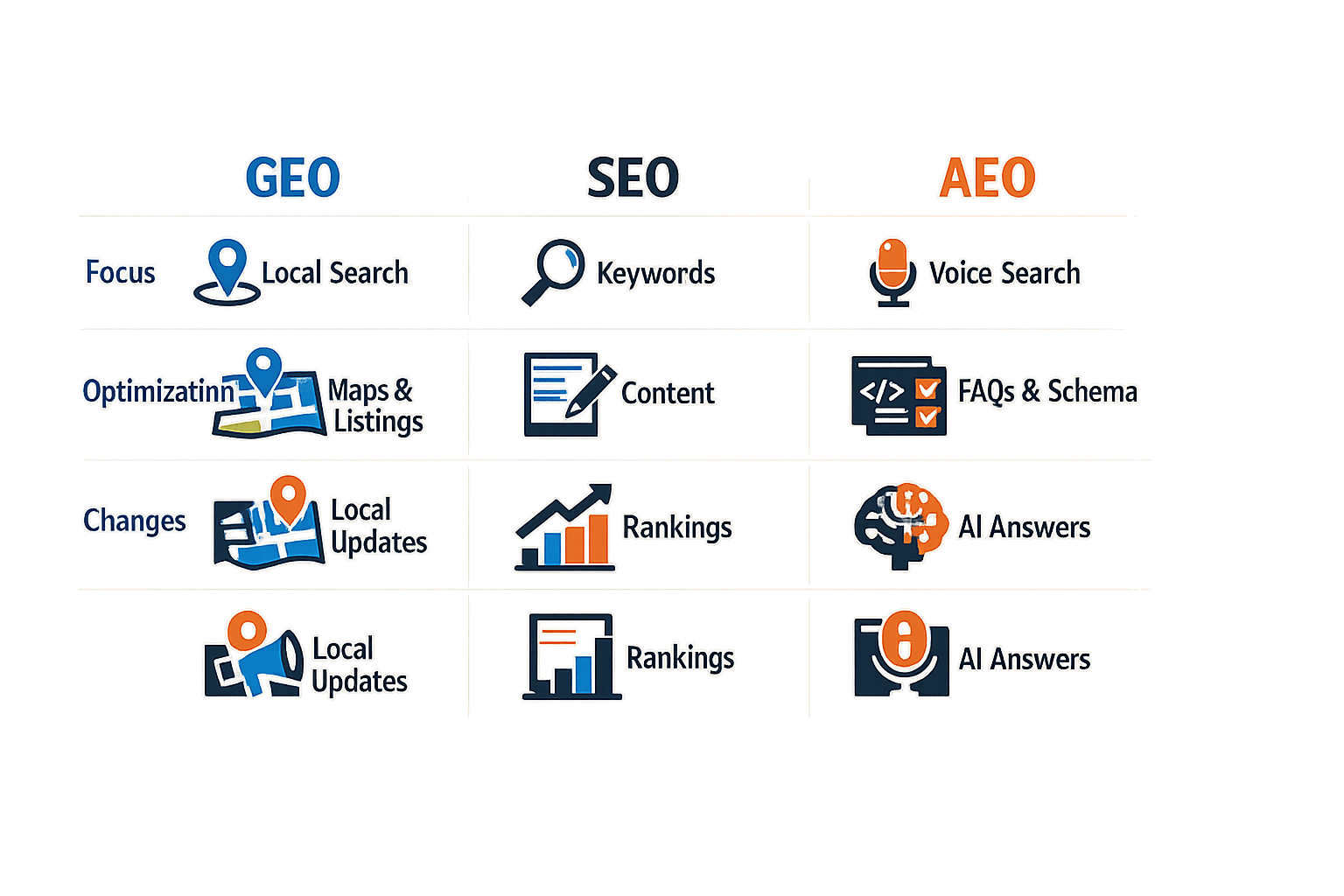
Geo vs SEO: AEO vs SEO: Key Changes for Search Teams (+ GEO Explained)
Explore the differences between AEO vs SEO and GEO, and understand what changes for search teams and what remains the same in modern search optimization. Learn about geo

SEO Manager Job Description: In-House vs Agency
Explore in-house SEO vs agency options through the SEO Manager job description, covering key responsibilities and when each approach fits your organization.
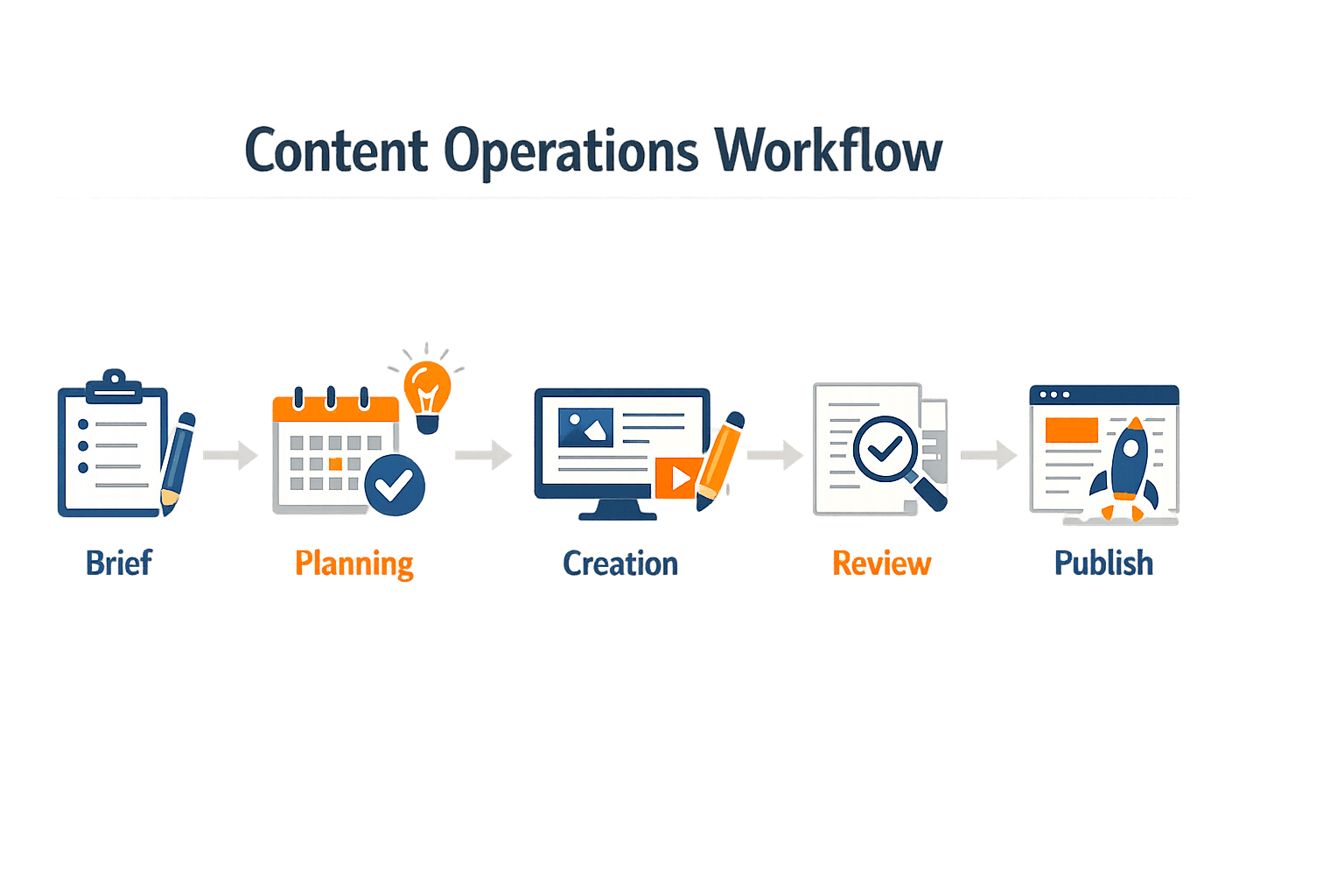
SEO Content Brief to Published Page: Content Operations Workflow
Explore the content operations workflow from seo content brief to published page, ensuring efficiency and quality at every stage.