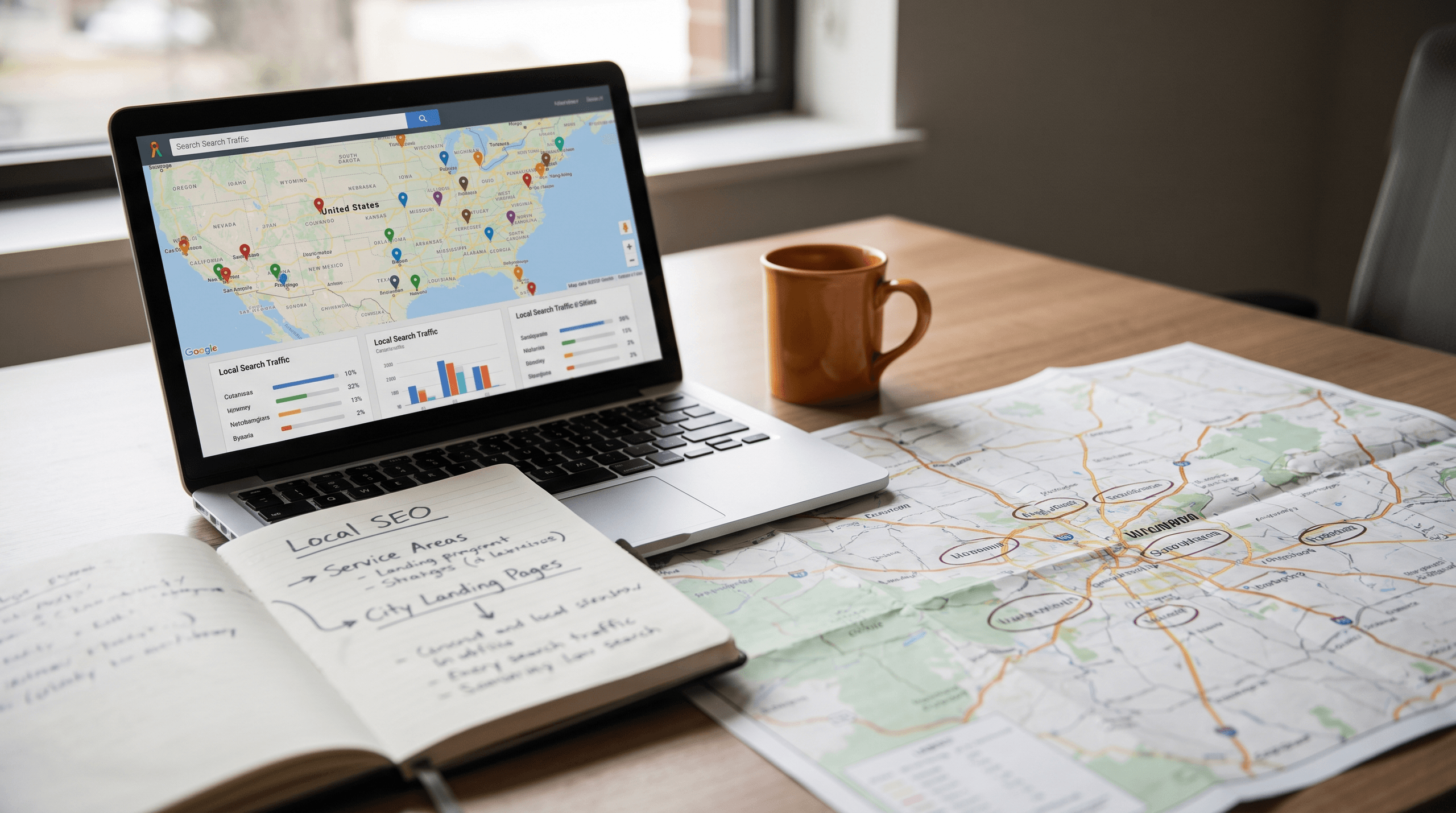
Local Landing Pages: Location Pages SEO: Service-Area and City Pages
Learn how to create effective local landing pages SEO strategies with service-area and city pages that enhance local search without falling into doorway page traps.
Introduction
Location pages SEO is the practice of creating dedicated service-area and city pages that help multi-location businesses rank for geographic search queries without triggering Google's doorway page penalties. Service businesses face a structural challenge: you operate across multiple cities, but search users type location-specific queries. A plumber in metro Atlanta serves Marietta, Alpharetta, and Roswell, but searchers in each city expect results that speak directly to their location. The solution — dedicated service-area and city pages — sounds straightforward until you realize Google's doorway page guidelines sit between you and scalable local visibility.
The distinction matters because the penalty for getting it wrong is severe. Templated pages that swap city names into identical content get classified as doorway pages, triggering manual actions that can remove entire domains from search results. Yet businesses with legitimate multi-location operations need a way to communicate their geographic coverage without triggering those filters. The difference lies not in whether you create location-specific pages, but in how you build them and what value they deliver to users who land there.
This guide walks through the practical mechanics of building location pages that satisfy both user intent and search engine quality standards. We focus on the structural decisions that separate effective local landing pages from thin doorway content — the research depth, content differentiation, and technical implementation that make location pages seo work without risking your domain's standing. For teams managing AI-powered web applications that generate or serve location content dynamically, understanding these distinctions becomes even more critical; you can review deployment considerations in our best practices for deploying AI web apps resource.
What Makes Location Pages Different from Doorway Pages
The core difference is intent and execution. Doorway pages exist to capture search traffic and funnel users elsewhere; they provide minimal unique value and typically follow a template where only location names change. Legitimate service-area pages, by contrast, serve as genuine landing destinations that address location-specific user needs — local service details, area-specific pricing considerations, regional case studies, and content that demonstrates actual operational presence in that market.
Google evaluates these pages against its helpful content framework: does the page demonstrate experience, expertise, authoritativeness, and trustworthiness for this specific location? A page that simply replaces "Atlanta" with "Marietta" in otherwise identical copy fails this test. A page that discusses Marietta's specific permitting requirements, references local landmarks, includes testimonials from Marietta customers, and addresses questions unique to that service area passes it. The technical structure may look similar — both are location-targeted landing pages — but the substance and user value differ fundamentally.
Structured data plays a supporting role here. Local Business markup helps Google understand your operational details — hours, departments, service radius — but it does not excuse thin content. You can implement perfect schema and still get classified as a doorway page if the visible content lacks substance. The markup amplifies quality; it does not create it.
Understanding the Problem: Doorway Pages
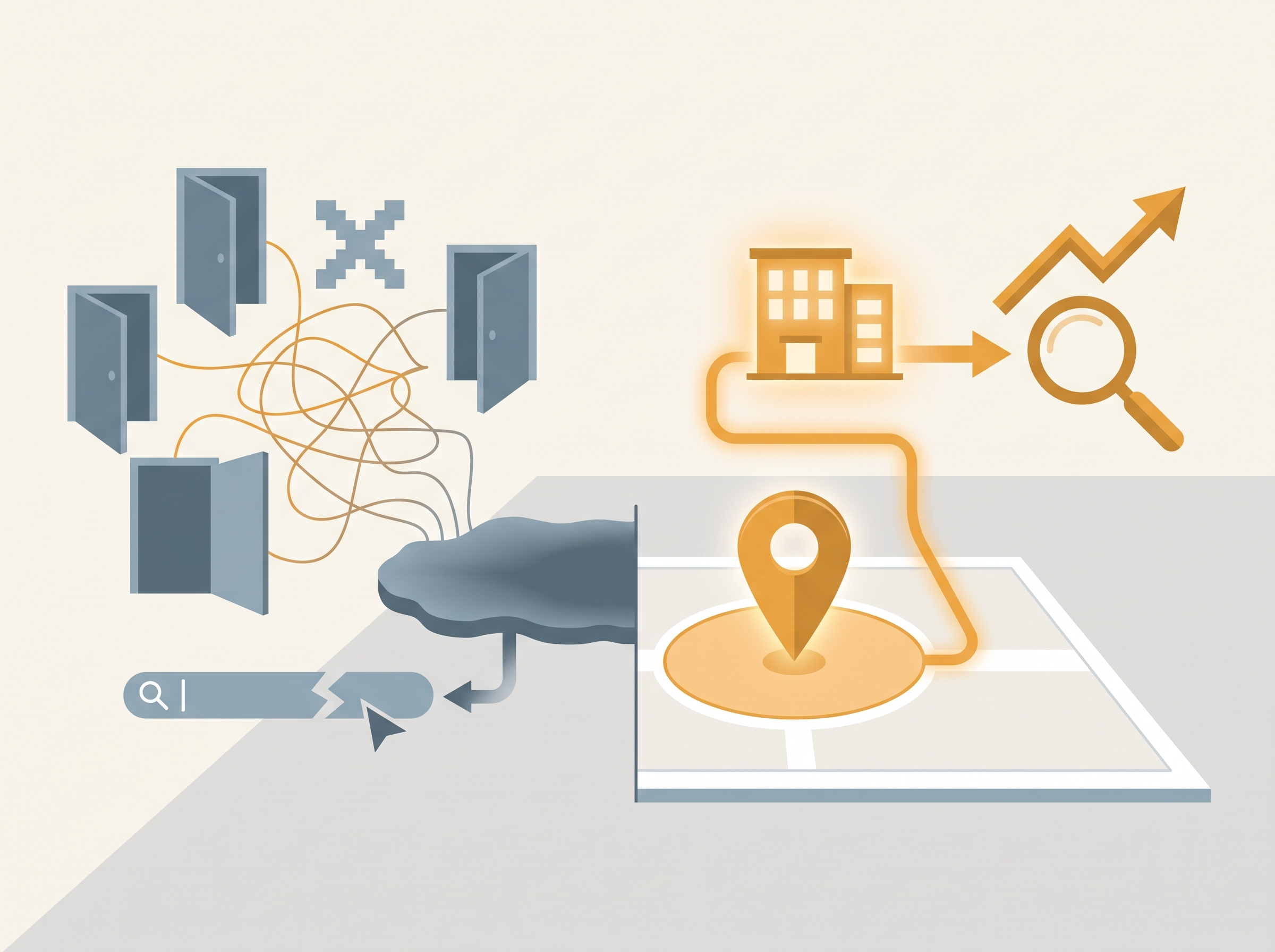
Doorway pages are thin, low-quality pages created primarily to rank for specific search queries rather than to serve users. They typically feature minimal unique content, exist in large batches targeting similar keywords with minor geographic variations, and funnel visitors toward a single conversion point. When a service business generates dozens of near-identical city pages—each swapping only the location name in templated copy—those pages cross into doorway territory.
The core problem is intent mismatch. A searcher looking for "plumbing services in Riverside" expects substantive information about service availability, local expertise, or customer testimonials specific to Riverside. A doorway page delivers generic boilerplate with "Riverside" inserted three times, then redirects attention to a contact form. Search engines recognize this pattern and devalue or exclude these pages from rankings, undermining the entire location pages SEO strategy.
Why Search Engines Penalize Doorway Pages
Search algorithms prioritize pages that answer the query behind the search. Doorway pages fail this test because they optimize for crawlers, not humans. When Google's quality raters evaluate a site, they look for original research, local detail, and utility—attributes doorway pages intentionally omit to scale production. According to Google's 2024 spam update documentation, sites that deploy doorway tactics risk manual actions, algorithmic suppression, or complete de-indexing of the offending URLs — a penalty that affected approximately 45% of spam-flagged sites in the first quarter of 2024.
Beyond penalties, doorway pages erode trust. A visitor who lands on a hollow city page and finds no local proof points will bounce immediately, signaling poor engagement to both analytics and search engines. Conversion rates plummet because the page never established credibility. The short-term ranking gain—if any—comes at the cost of long-term brand equity and organic visibility.
Consequences of Using Doorway Pages
Deploying doorway pages triggers a cascade of negative outcomes. First, search engines may apply a site-wide quality adjustment, suppressing rankings even for legitimate pages. Second, competitors who invest in substantive local content will outrank you, capturing the traffic you hoped to win. Third, internal teams waste resources maintaining pages that generate no ROI, diverting effort from high-value content and best practices for deploying AI web apps that could automate smarter local-page generation.
The operational cost is equally steep. Managing hundreds of doorway pages means constant URL hygiene, redirect maintenance, and explaining to stakeholders why traffic never materializes. When an algorithm update hits, you face an emergency audit to identify and prune violating pages—often under time pressure that forces hasty decisions. The alternative—building fewer, richer location pages from the start—avoids this technical debt entirely and aligns with sustainable location pages SEO principles.
Steps to Build Effective Service-Area and City Pages
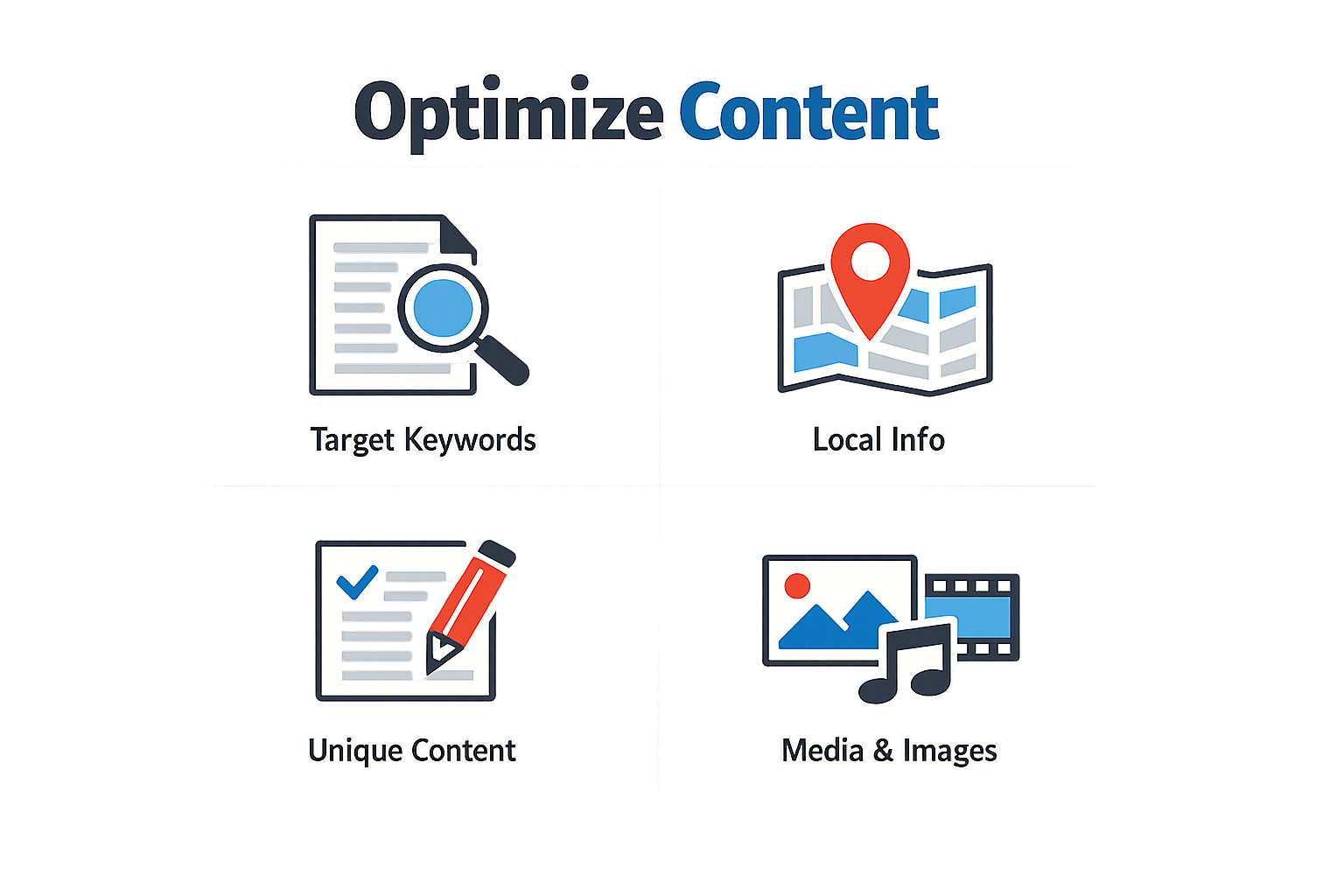
Building service-area and city pages that avoid doorway page penalties requires a structured approach. The goal is to create pages that serve users first while signaling genuine local relevance to search engines. These steps prioritize unique content, technical hygiene, and strategic crawl management.
How Do You Audit and Prioritize Your Service Areas?
Start by inventorying every location you genuinely serve. Not every city or ZIP code needs its own page — prioritize areas where you have verifiable business activity: physical presence, completed projects, active customer base, or documented service history.
Step 1
Catalog real service footprint
List locations where you have tangible proof of service delivery. Physical offices, job sites, customer testimonials, or billing records all count. If you cannot produce evidence that you operate in a location, do not build a page for it.
For multi-location businesses, this means mapping service areas to actual operational capacity. A plumber with trucks dispatched from three hubs should build pages around those hubs and their immediate service radii, not every municipality within a hundred-mile range.
How Do You Create Unique, Substantive Content for Each Location?
Doorway pages fail because they duplicate thin content across dozens of URLs. Effective location pages seo strategies require genuine differentiation. Each page must answer: why does this location matter to a user searching here?
Step 2
Develop location-specific narratives
Write unique introductions that reference local landmarks, service challenges specific to the area, or case studies from that geography. Include details that cannot be copy-pasted to another city page without sounding absurd.
Examples of substantive differentiation:
- Service variations (coastal cities need rust-resistant materials; mountain towns require cold-weather solutions)
- Local regulations or permitting requirements
- Testimonials or project galleries tied to that specific area
- Driving directions from recognizable local landmarks
If you find yourself using find-and-replace to swap city names into a template, stop. That is the doorway page pattern.
How Do You Implement Local Business Structured Data?
Structured data tells Google exactly what your page represents. Local Business schema is the clearest signal that a page serves a legitimate location-based purpose rather than attempting to manipulate rankings.
Include schema markup with:
- Business name and address (if you have a physical location)
- Service area boundaries (if you operate without a storefront)
- Phone number and hours of operation
- Coordinates (latitude/longitude) when applicable
For service-area businesses without physical storefronts, use the areaServed property to define coverage zones. This schema type explicitly supports businesses that travel to customers.
How Do You Manage Crawl Budget and Indexing Signals?
Large-scale location page deployments risk wasting crawl budget on low-value URLs. Google may struggle to crawl sites with hundreds of location pages if those pages do not demonstrate clear differentiation.
Step 3
Optimize crawl efficiency
Eliminate duplicate content to focus crawling on unique content rather than unique URLs. Use sitemaps to prioritize your strongest location pages, and return 404 or 410 status codes for any removed or consolidated pages.
Using sitemaps helps Google discover and prioritize which pages to crawl on your site, especially important for sites with rapidly changing content. Submit location pages in a dedicated sitemap section so you can monitor indexing rates separately from your main content.
If you have more than fifty location pages, audit indexing status monthly. Pages that remain unindexed after sixty days likely lack sufficient differentiation or inbound links — candidates for consolidation or deeper content development.
How Do You Build Location-Specific Authority?
Location pages perform when they attract genuine local signals: links from local directories, mentions in community sites, citations in local news, or engagement from users in that geography.
Step 4
Earn local validation
For each priority location page, pursue at least three local citations: chamber of commerce listings, industry-specific directories, or partnerships with local organizations. Ensure NAP (name, address, phone) consistency across all citations.
Internal linking also matters. Connect location pages to relevant service pages, blog posts about local projects, or case studies tied to that area. A location page that sits orphaned in your site architecture signals low priority to both users and crawlers.
For organizations deploying AI-driven tools to manage large location page sets, best practices for deploying AI web apps can help ensure your content generation maintains quality thresholds at scale.
Tips and Tricks for Optimizing Your Local Landing Pages
Once your service-area pages are live, a few targeted optimizations can push them from functional to high-performing. These tactics address the technical and content layers that search engines use to evaluate local relevance — and they help you avoid the common mistakes that turn legitimate pages into liabilities.
Add Local Business Structured Data
Structured data tells Google exactly what your page represents. For location pages, implement LocalBusiness schema on every service-area page, specifying the business name, address (if you have a physical location in that area), service hours, and contact information. If you operate from a single headquarters but serve multiple areas, use the areaServed property to declare coverage zones without fabricating addresses.
Google's structured data documentation confirms that LocalBusiness markup supports departmental data, operating hours, and customer reviews, all of which strengthen your page's eligibility for enhanced local search features.
Use Root-Relative URLs and Clean Link Structures
Internal link hygiene matters more on location pages because you are often cross-linking dozens of similar URLs. Use root-relative paths (/services/pressure-washing/san-francisco) instead of parent-relative paths (../../san-francisco) to prevent broken or duplicate URL chains. Google's URL structure guidance warns that parent-relative links can generate bogus URLs when crawlers follow them from unexpected contexts — and those phantom URLs dilute crawl budget and create indexing confusion.
If your CMS generates dynamic URLs for filters or search parameters, block Googlebot's access to those patterns in robots.txt or via the URL Parameters tool in Search Console. Dynamic URLs that produce infinite variations or duplicate content are a fast track to indexation bloat.
Optimize CTAs for High-Intent Pages
Service-area pages often attract users who are close to a decision. Place conversion elements — quote request forms, phone numbers, booking widgets — above the final third of the page. Users scanning for a local provider expect immediate access to contact options; burying the CTA at the bottom forces them to scroll past content they may not need, increasing bounce rates.
For best practices deploying AI web apps that handle lead capture, ensure your forms load quickly and validate inputs client-side before submission — every second of delay costs conversions on mobile.
Monitor Indexation and Search Console Signals
After deploying location pages, track their indexation status weekly. Use Search Console's Coverage report to identify pages that are crawled but not indexed, or pages flagged as duplicates. If Google consistently refuses to index a page, the content is likely too thin or too similar to another page — add more differentiated local detail or consolidate the pages.
A location page that Google won't index is a signal, not a mystery — it means the page doesn't offer enough distinct value to justify its own URL.
Check the Performance report for impressions and click-through rates by query. If a page ranks for generic terms but not for [service] + [city] queries, revisit the on-page keyword placement and the quality of your local content. Low CTR on branded or geo-modified queries usually means your title tag or meta description doesn't match search intent.
Frequently asked questions
What is the difference between location pages SEO and doorway pages?
Location pages SEO focuses on creating substantive, unique pages for each service area with genuine local content, testimonials, and area-specific details. Doorway pages are thin, templated pages that swap city names into identical copy solely to rank for geographic keywords, violating Google's quality guidelines.
How many location pages should I create for my service business?
Create location pages only for areas where you have verifiable business activity — physical presence, completed projects, customer testimonials, or documented service history. Quality beats quantity; three rich, well-researched pages outperform fifty thin templates.
Can I use the same template for multiple city pages?
Using a rigid template where only city names change creates doorway pages. Instead, use a flexible content framework that requires unique local research, specific examples, and differentiated details for each location before publishing.
Conclusion
Building effective location pages SEO strategies requires discipline, local substance, and a commitment to serving users rather than gaming algorithms. The difference between a legitimate service-area page and a doorway page comes down to one principle: does the page answer a real user's question about your real presence in that location, or does it exist solely to rank?
When you invest in unique local content—customer stories, area-specific service details, genuine photos, and verifiable contact information—you create pages that satisfy both search engines and the people searching. These pages convert because they demonstrate expertise and proximity. They survive algorithm updates because they were never trying to exploit a loophole.
The service businesses that succeed in local search treat each city page as a micro-site that proves their commitment to that community. They avoid template sprawl, they link internal resources strategically, and they measure performance by leads generated, not just rankings achieved. If you're building a local presence at scale, the best practices for deploying AI web apps can help automate content personalization without sacrificing the local signals that matter.
Start with your strongest markets, build pages that reflect real operations, and expand only when you can maintain that standard. The alternative—thin, templated pages that offer nothing beyond keyword insertion—wastes development time and invites penalties. Local SEO rewards the patient operator who builds once and builds right.
Related reading
SEO Forecasting: SEO KPIs & Forecasting: Build a Search Forecast
Sources(13)
- Google Search Central — Local business (LocalBusiness) structured data
- Google Search Central documentation
- Google Business Profile guidelines
- Google Search Central documentation
- Google Business Profile guidelines
- Google Business Profile Help — Guidelines for representing your business on Google
- Google Business Profile guidelines
- Google Search Central documentation
- Google Search Central documentation
- Google Search Central — Article structured data
- google-search-essentials (source_extract)
- llms-txt-proposal (source_extract)
- google-search-central (source_extract)
Written by
Xenophon Giannis
Published October 18, 2026 · 14 min read
Xenophon Giannis is the founder and CEO of Xenco Labs, where he designs, builds, deploys and operates production AI software solo — on his own multi-node cluster, with his own LLM gateway and automation infrastructure. Twenty-five years in enterprise technology came first: a decade at AboveNet, hired as its first sales rep after bankruptcy and promoted until he ran the entire Western Pacific region, then sales leadership at Black Lotus and Nexusguard in DDoS mitigation. He writes about what he actually ships, and what actually breaks in production.
You Might Also Like
More from the Xenco Labs blog

How to Design a Request a Quote Form That Captures Qualified Jobs
Learn how to design a request a quote form that effectively captures qualified jobs and leads for your business with proven field strategies.

Speed to Lead: Lead Response Time for Service Businesses: Why Speed
Discover how lead response time impacts conversion rates for service businesses and learn proven strategies to improve your response speed. Speed to lead is crucial

General Contractor Website Design: Features for Winning Jobs
Learn the essential features of general contractor website design that help service businesses win jobs and attract clients effectively.

Landscaping SEO: SEO for Landscaping: How to Get Found Locally
Learn effective landscaping SEO strategies to enhance local visibility and attract customers to your landscaping business online.