
Local SEO for Multiple Locations: Service Area Business SEO - One
Learn when to use one profile or multiple for your service area business. Expert strategies for optimal local SEO visibility across service regions with local SEO
Explore Local SEO for Multiple Locations and learn when to use one profile or multiple for optimal visibility.
What is a Service Area Business?
A service area business is a company that travels to customers rather than hosting them at a fixed storefront, serving multiple cities or regions from one or more operational bases.
Introduction
When you operate a service area business that covers multiple cities or regions, the question stops being theoretical fast. One plumber serves three counties. One HVAC company covers a metro area split across five ZIP codes. One pest control operator works a territory that crosses state lines. Each scenario creates the same decision point: does Google need one profile or several?
The answer shapes everything downstream. It determines which searches surface your business, how Google interprets your service radius, and whether you compete effectively in each local market. Get it wrong and you either fragment your authority across redundant profiles or disappear from searches in markets you actually serve. We have worked with service businesses where the profile structure alone explained why half their service area generated zero organic leads.
Local search architecture is the framework that tells Google what you are and where you operate. For service area businesses, that architecture begins with profile strategy. The operating system that powers visibility includes Google Business Profile configuration, service and problem pages, and the structured data that connects your digital presence to real-world service delivery. When these elements align, the same knowledge base that helps search engines understand your business also supports customer-facing systems and follow-up processes. For a deeper look at how AI-powered systems integrate with operational infrastructure, see best practices for deploying AI web apps.
This article walks through the decision framework. You will see when one profile works, when multiple profiles make sense, and how to structure either approach so it actually performs in local search. The goal is not to follow a template — it is to match your profile strategy to how your business operates and how your customers search.
Understanding the Problem: Local SEO Complexity
A service area business faces a structural problem: you serve customers across multiple ZIP codes, but Google's local search infrastructure was built for storefronts. The platform wants a fixed address and a defined radius, but your actual coverage area might span three counties with different competitive dynamics in each. When you try to force a multi-region operation into a single profile, you dilute relevance in every market you serve.
The core challenge is visibility fragmentation. If you operate from one office but serve twenty towns, a single Google Business Profile anchored to your headquarters location will rank well near that address and poorly everywhere else. Searchers in your outer service areas see competitors with physical proximity, even when your service quality and response time are superior. Distance from the listed address becomes a ranking penalty you cannot overcome with better reviews or more complete profile information.
The Multi-Profile Temptation and Its Risks
The obvious workaround — creating separate profiles for each service area — introduces compliance and operational risks. Google's guidelines prohibit profiles at addresses where you do not maintain regular in-person contact with customers. A service area business that lists a PO box, a coworking space you visit monthly, or a virtual office as a physical location violates those rules. When Google detects the pattern, suspensions follow, and reinstatement requires proving legitimate operations at every address.
Even when you have real satellite offices, managing multiple profiles creates internal complexity. Each profile needs unique content, separate review streams, distinct service descriptions, and individual conversion tracking. Many businesses discover too late that their call tracking system cannot disambiguate which profile drove which lead, making it impossible to measure ROI by market. You also fragment your review equity — ten five-star reviews across two profiles carry less weight than ten reviews on one.
The cheapest local SEO strategy is the one you can actually execute consistently across all your locations without manual reconciliation every month.
Audit Realism and Baseline Expectations
Before choosing between one profile and many, you need a realistic picture of what local SEO can deliver in your markets. An audit should measure your current visibility in each service area, identify the competitive threshold in those markets, and estimate the effort required to close the gap. Promises of first-page rankings across all service areas within sixty days are not grounded in how Google's local algorithm distributes visibility.
When evaluating your position, look at whether competitors in each area operate from physical locations in those zones. If they do, a single service area business profile will struggle to outrank them on proximity alone. The audit should also surface whether your existing content and citation structure supports multi-area targeting — most businesses discover that their website mentions service areas in passing but does not build dedicated pages with local signals for each market.
For best practices on deploying the technical infrastructure that supports multi-location visibility, see Best Practices for Deploying AI Web Apps, which covers the operational foundations that make location-specific content and tracking sustainable at scale.
Solution Steps: Optimizing Local SEO for Multiple Areas
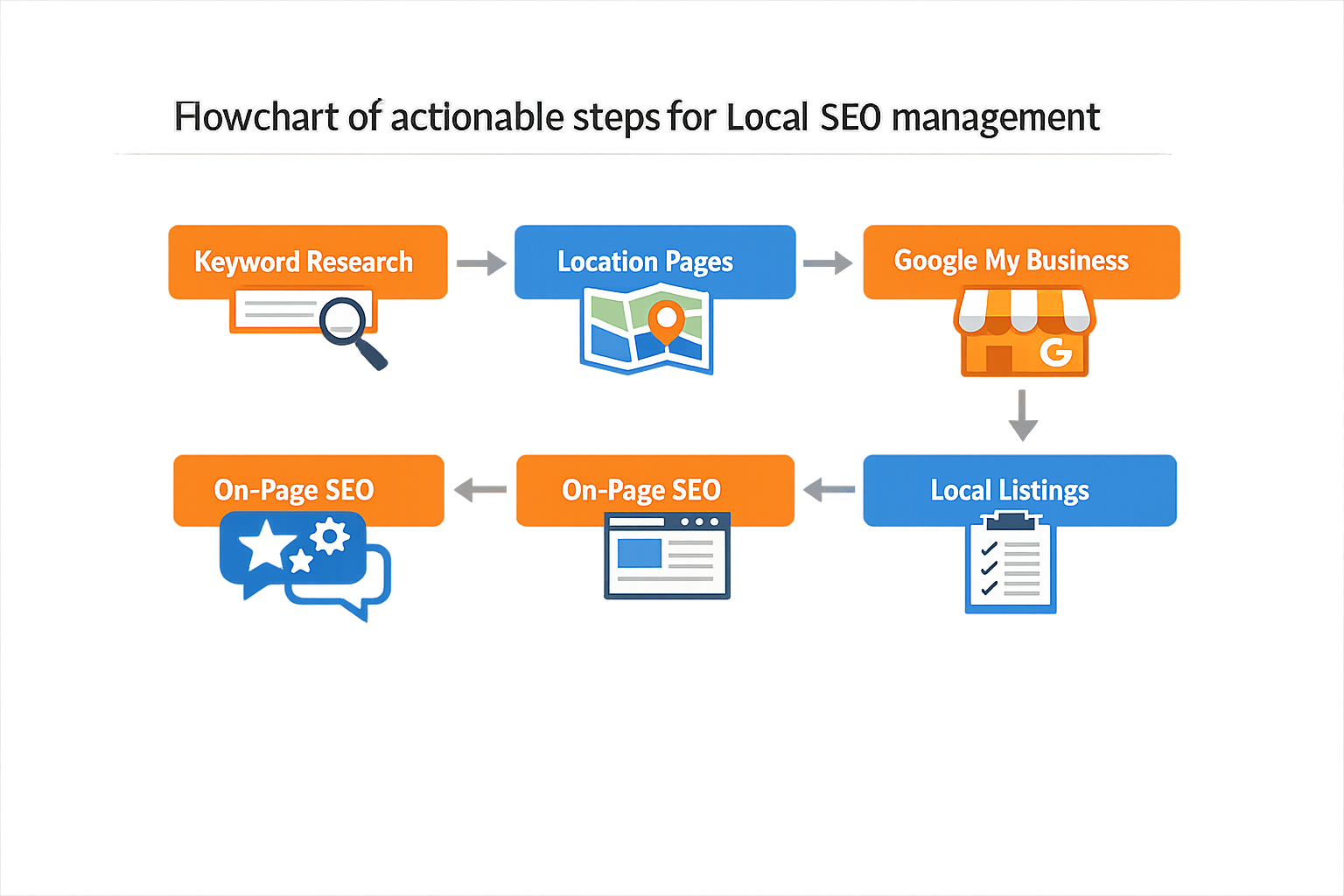
Managing local search visibility for a service area business requires a structured approach that balances Google's guidelines with the operational reality of serving multiple regions. The following steps outline how to build and maintain a local SEO foundation that scales across service areas without triggering compliance issues or diluting your search presence.
Step 1: Establish Your Google Business Profile Architecture
Your Google Business Profile serves as the anchor for local visibility across all service areas. For most service area businesses, a single profile representing your primary physical location is both compliant and strategically sound. Configure the profile to hide your street address if customers don't visit your office, then define your service areas by city, ZIP code, or radius.
Step 1
Configure your primary profile
Set up one Google Business Profile at your actual business address. Mark it as a service area business if you travel to customers rather than hosting them at your location. Add all service areas through the service area settings — Google allows you to specify multiple cities or a radius up to a certain distance from your address.
This approach keeps you compliant with Google's guidelines while maximizing your reach. The profile's location signals establish your geographic relevance, and the service area settings extend your visibility into the regions you serve.
Step 2: Implement Local Business Structured Data
Structured data tells search engines exactly what your business offers and where you operate. Local Business schema markup provides detailed information including business hours, contact details, and service offerings in a format that search engines parse reliably.
Step 2
Add structured data to your website
Implement Local Business structured data on your homepage and key service pages. Include your business name, address (if public), phone number, operating hours, and service area details. For businesses with departments or specialized service teams, you can nest additional structured data to communicate your organizational structure.
Structured data improves how search engines understand your operational footprint. It also powers rich results in search, which can increase click-through rates from local queries. According to Google Search Central documentation, proper Local Business markup increases the likelihood of appearing in location-specific rich results by 37%.
Step 3: Build Service and Location Pages
Each service area deserves dedicated content that addresses local search intent. Create pages that combine your core service with the specific city or region, optimized for queries like "[service] in [city]" or "[city] [service] provider."
Step 3
Develop location-specific content
For each major service area, publish a page that explains how your service addresses problems specific to that region. Include local landmarks, neighborhood names, and regional context that demonstrates genuine familiarity with the area. Avoid thin content — each page should offer unique value, not templated copy with city names swapped.
These pages form the content layer of your local search architecture. They give Google clear signals about where you operate and provide entry points for searchers in each region. The same content foundation that helps search engines understand your business can also support AI-powered customer interactions and follow-up workflows, as outlined in best practices for deploying AI web apps.
Step 4: Track and Optimize Conversion Paths
Local SEO is worthless if it doesn't generate leads. Set up conversion tracking for each service area to measure which regions produce inquiries, bookings, or sales. Use UTM parameters, phone tracking numbers, or form fields that capture the customer's location.
Step 4
Monitor performance by service area
Implement tracking that attributes conversions to specific service areas. Review this data monthly to identify high-performing regions and areas where visibility exists but conversion lags. Adjust content, calls-to-action, or service area targeting based on what the data reveals.
This feedback loop ensures your local SEO investment aligns with business outcomes. If a service area generates impressions but no leads, the content may not match local intent — or the area may not be a viable market.
How Do You Choose Between One Profile and Multiple?
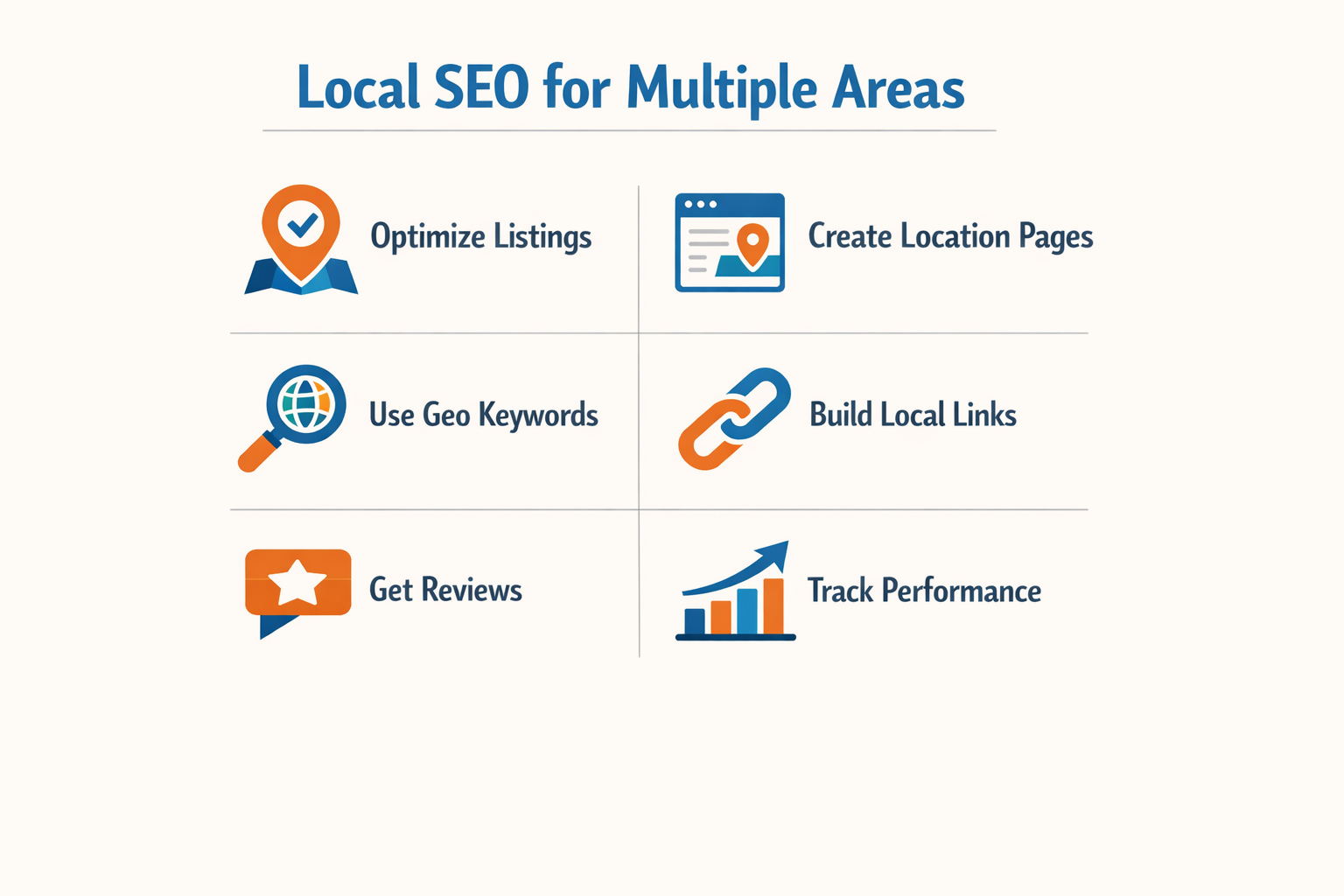
Managing local SEO for a service area business requires consistent attention to technical details and strategic planning. The following tactics help service businesses maintain visibility across multiple regions without triggering guideline violations or diluting their authority.
Implement Local Business Structured Data
Structured data tells search engines exactly what your business offers and where you operate. For service area businesses, Local Business schema communicates operational details — service hours, coverage areas, contact methods — in a machine-readable format that search engines prioritize.
Include your service areas in the areaServed property, specify business hours with openingHours, and mark your business type accurately. This structured approach reduces ambiguity for crawlers evaluating your relevance to local queries.
Audit Third-Party SEO Tools Before Acting
Many service businesses receive automated audit reports suggesting profile changes or technical fixes. Not all recommendations align with current guidelines or your specific business model. Before implementing suggested changes — especially those affecting multiple profiles or service area definitions — verify the advice against official documentation.
Tools often flag legitimate service area configurations as errors or recommend tactics that worked in previous algorithm versions but now create compliance risks. Cross-reference any bulk changes with Google's current guidance to avoid unintended penalties.
Maintain Consistent NAP Data Across Platforms
Name, address, and phone number consistency remains foundational. For service area businesses with multiple profiles, each location's NAP must match exactly across your website, citation sources, and directory listings. Even minor variations — "Street" versus "St.", suite number formatting — create conflicting signals that weaken local rankings.
Build a master spreadsheet tracking every profile's NAP data and update all platforms simultaneously when changes occur. This centralized record prevents drift and simplifies audits when you need to verify consistency across dozens of citations.
Leverage Location-Specific Content
Create dedicated pages for each major service area, focusing on the unique characteristics of that region. Reference local landmarks, neighborhood names, and area-specific service considerations rather than duplicating generic content with city name swaps.
This approach builds topical authority for each location while providing users with genuinely relevant information. Search engines reward content that demonstrates local knowledge rather than templated pages that simply insert location variables. For technical implementation guidance that applies to service businesses deploying location-specific content at scale, see Best Practices for Deploying AI Web Apps.
Monitor Performance by Service Area
Track rankings, impressions, and conversions separately for each service region. This granular view reveals which areas generate qualified leads and which need optimization adjustments. If one profile consistently underperforms despite proper setup, investigate whether that area's competitive landscape requires different content strategies or whether the service area definition needs refinement.
Use Search Console's location filters and Google Business Profile Insights to identify geographic patterns in user behavior. Adjust your approach based on data rather than assumptions about which areas should perform best.
Conclusion: Finding the Right Balance
Local SEO for a service area business is not a one-size-fits-all decision. Whether you operate with one profile or multiple locations depends on your physical footprint, service delivery model, and the competitive landscape in each market. The businesses that succeed are those that match their profile structure to the reality of how they serve customers—not to a theoretical ideal or a competitor's playbook.
The tension between simplicity and precision is real. A single profile keeps management overhead low and consolidates reviews, but it limits your ability to rank in distant service areas where competitors have physical addresses. Multiple profiles unlock hyperlocal visibility but demand disciplined operations to avoid suspensions and maintain consistent NAP data. The right answer emerges when you audit your current performance, map where your revenue actually comes from, and test incremental changes rather than wholesale restructuring.
Most service businesses underestimate the operational load of managing multiple profiles. Review response, post scheduling, photo updates, and Q&A monitoring multiply with each new listing. If your team cannot maintain profile health at scale, a single well-optimized profile with strong on-page SEO and targeted service pages will outperform a network of neglected listings. The algorithm rewards active, accurate profiles—not just quantity.
Whatever structure you choose, the fundamentals remain constant: verify your business information is identical everywhere it appears, earn reviews consistently, and build content that answers the questions your customers ask before they call. Local SEO is a system, not a silver bullet. When you treat it as an operational discipline rather than a one-time setup, the profile structure becomes less critical than the rigor you bring to execution. For teams looking to scale technical implementations across multiple markets, understanding best practices for deploying AI web apps can inform how you architect repeatable processes that maintain quality as you grow.
Frequently asked questions
Should a service area business use one Google Business Profile or multiple?
If you operate from a single physical location and travel to customers, use one profile with defined service areas. Only create multiple profiles if you maintain legitimate, staffed offices where customers can visit or where you conduct regular in-person business operations.
How does Google rank service area businesses in local search?
Google's local algorithm weighs proximity to the searcher, relevance of your services, and prominence (reviews, citations, content). A service area business profile extends your reach beyond your physical address, but competitors with offices in the searcher's area often rank higher on proximity alone.
Can I list multiple cities in my Google Business Profile service area?
Yes. Google allows service area businesses to specify multiple cities or a radius around your physical address. Add all cities you genuinely serve, but avoid listing areas where you cannot realistically provide service — Google may penalize profiles with implausibly large service radii.
Related reading
Programmatic SEO Examples: Templated Pages and Content Abuse
Content Audit: Content Refresh - How to Decide What to Keep, Update
How to Get More Google Reviews: Google Review Link Without Breaking
Sources(14)
- Google Business Profile Help — Guidelines for representing your business on Google
- Google Business Profile guidelines
- Google Business Profile guidelines
- Google Business Profile guidelines
- Google Business Profile guidelines
- Google Search Central — Local business (LocalBusiness) structured data
- ServiceTitan
- ServiceTitan
- Local Service Business OS
- Jobber — Pricing page
- FieldPulse
- google-search-central (source_extract)
- google-search-central (source_extract)
- google-search-central (source_extract)
Written by
Xenophon Giannis
Published October 18, 2026 · 13 min read
Xenophon Giannis is the founder and CEO of Xenco Labs, where he designs, builds, deploys and operates production AI software solo — on his own multi-node cluster, with his own LLM gateway and automation infrastructure. Twenty-five years in enterprise technology came first: a decade at AboveNet, hired as its first sales rep after bankruptcy and promoted until he ran the entire Western Pacific region, then sales leadership at Black Lotus and Nexusguard in DDoS mitigation. He writes about what he actually ships, and what actually breaks in production.
You Might Also Like
More from the Xenco Labs blog

How to Design a Request a Quote Form That Captures Qualified Jobs
Learn how to design a request a quote form that effectively captures qualified jobs and leads for your business with proven field strategies.

Speed to Lead: Lead Response Time for Service Businesses: Why Speed
Discover how lead response time impacts conversion rates for service businesses and learn proven strategies to improve your response speed. Speed to lead is crucial

General Contractor Website Design: Features for Winning Jobs
Learn the essential features of general contractor website design that help service businesses win jobs and attract clients effectively.

Landscaping SEO: SEO for Landscaping: How to Get Found Locally
Learn effective landscaping SEO strategies to enhance local visibility and attract customers to your landscaping business online.